
Why are people protesting against the Boston Consulting Group?

In San Francisco, Boston, Dallas and other cities around the country, protesters have marched and chanted outside the offices of the Boston Consulting Group (BCG).
The demonstrators were demanding accountability for BCG’s role in creating a deadly new aid distribution system backed by the US and Israel that a United Nations official described as using starvation as a bargaining chip.
Founded in 1961 and headquartered in Boston, Massachusetts, BCG is one of the most prominent consulting firms in the United States and advises clients on a large number of topics, including security and humanitarian issues.
BCG is one of the world's three largest management consulting firms by revenue and is no stranger to controversy. It has been reported to have worked with Isabel dos Santos, who was accused of exploiting Angola's natural resources.
It is also reported to have been one of the firm's "critical" in helping Saudi Arabia's Crown Prince Mohammed bin Salman consolidate his grip on power in the kingdom.
New MEE newsletter: Jerusalem Dispatch
Sign up to get the latest insights and analysis on Israel-Palestine, alongside Turkey Unpacked and other MEE newsletters
Middle East Eye examines the BCG’s role in Gaza’s humanitarian crisis and efforts to hold the consulting firm accountable.
Collaboration with Gaza Humanitarian Foundation
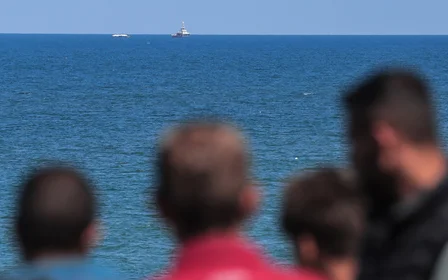
Between October 2024 and May 2025, BCG helped establish the controversial US- and Israeli-backed Gaza Humanitarian Foundation (GHF).
The GHF began to invite increased scrutiny in early June as evidence of massacres at GHF aid sites emerged, prompting BCG to cancel its contracts with GHF and describe their previous cooperation as “unapproved”.
“Two former partners initiated this work, even though the lead partner was categorically told not to. This work was not a BCG project. It was orchestrated and run secretly outside any BCG scope or approvals. We fully disavow this work. BCG was not paid for any of this work,” BCG wrote on their website.
But a Financial Times (FT) investigation revealed that BCG’s cooperation with the GHF was extensive and discussed with senior BCG figures, while the Washington Post's reporting showed that BCG was filing monthly invoices of over $1m a month.
The FT investigation found that BCG was originally contacted by Orbis, an American security company working on behalf of an Israeli think tank, to do a feasibility study for a new Gaza aid operation.
BCG then helped create Safe Reach Solutions (SRS), a mercenary firm that would provide security at aid sites, along with GHF.
At one point, SRS reportedly chastised a contractor under its command for refusing to shoot Palestinian children.
GHF’s executive director resigned hours before GHF’s public launch in May, claiming it was impossible to implement GHF’s Gaza aid plan “while also strictly adhering to humanitarian principles of humanity, neutrality, impartiality and independence”.
UN aid chief Tom Fletcher also criticised the GHF, describing it as “a fig leaf for further violence and displacement”.
BCG planned to bill GHF around $4m for work that included developing financial models of what the UN described as “ethnic cleansing” in Gaza.
The model included “voluntary relocation”, where Palestinians in Gaza would have been given $5,000, rent subsidies for four years and subsidised food for a year. The model predicted that a quarter of the population would leave, and three-fourths of them would never return, according to FT.
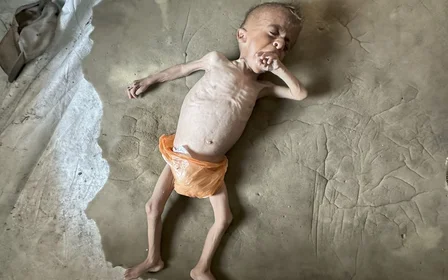
As Israeli air strikes indiscriminately kill Palestinians and children starve to death under Israel’s suffocating siege, such an offer could hardly be considered voluntary and was widely condemned by rights groups.
Why is the GHF controversial?
Set up to bypass UN aid distribution networks that have been in place for decades, but that Israel alleges are now linked to Hamas, GHF sites have proven deadly for Palestinians seeking aid.
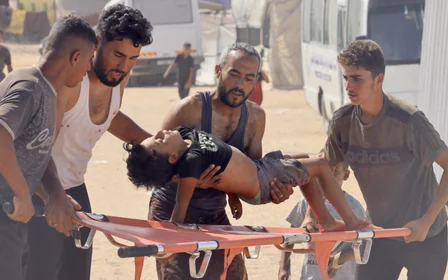
Israeli soldiers have admitted to deliberately killing unarmed Palestinian aid seekers at GHF distribution sites, with one Israeli soldier describing the aid centres as “killing fields”.
Over a thousand Palestinian aid-seekers have been killed, mostly at GHF sites, since May, according to the UN.
Yet as malnutrition spreads across Gaza, hungry Palestinians have little choice but to brave Israeli bullets to search for aid.
Israel alleges that violence at the aid sites is necessary to stop the aid from being stolen by Hamas.
However, an internal US review examined 156 instances of stolen or lost aid and found no evidence that Hamas was stealing it. Rather, Israel directly or indirectly caused the loss or theft of aid in 44 instances, according to the findings.
Meanwhile, Israel has admitted that it supports anti-Hamas gangs notorious for stealing aid.
How other aid organisations reacted to BCG
On 13 June, Save the Children International became the first charity to pause cooperation with BCG over its role in the GHF.
Save the Children CEO Inger Ashing said BCG’s modelling of a plan for the forced displacement of Palestinians in Gaza “disregards fundamental rights and dignity, and raises serious ethical and legal questions” - and that Save the Children would suspend work with BCG pending the outcome of an external investigation.
Several days later, BCG’s chief risk officer and the leader of its social-impact practice resigned from their roles.
Yet despite the international outcry against GHF, some humanitarian aid organisations have been hesitant to cut ties with GHF.
Although the World Food Programme told The New Humanitarian that it planned to review its ties with BCG, other humanitarian aid organisations, including some that decried the GHF, did not indicate that they were considering ending their relationship with BCG.
What protests have there been against BCG?
Some protesters have found BCG, with dozens of locations across the US, an accessible target to protest against the killing of aid seekers in Gaza.
On 25 July, demonstrators banged pots and pans outside BCG’s headquarters in the Seaport district of Boston.

A security guard at the building seriously injured one protester when he pushed the protester into a metal pole, breaking several ribs.
“Very quickly, a security guard ran from within the building without me noticing him, and slammed into me and pushed me away from the door with all his strength,” the protester, who asked to remain anonymous, told Middle East Eye.
Multiple witnesses corroborated the account, and the protester was later taken by ambulance to a hospital with a trauma centre.
On 25 July, at least a dozen protesters were arrested when demonstrators staged a sit-in at a BCG facility in Dallas.
Protesters also demonstrated outside a BCG office in Dallas on Thursday.
On the west coast of the United States, the Palestinian Youth Movement (PYM) organised protests outside of BCG’s offices in San Francisco and San Diego.
“The time to act is now! The genocide in Gaza had reached a critical moment with thousands facing starvation due to the brutal siege on the strip… we will make ourselves heard,” a statement from the San Diego chapter of PYM said.
Middle East Eye delivers independent and unrivalled coverage and analysis of the Middle East, North Africa and beyond. To learn more about republishing this content and the associated fees, please fill out this form. More about MEE can be found here.