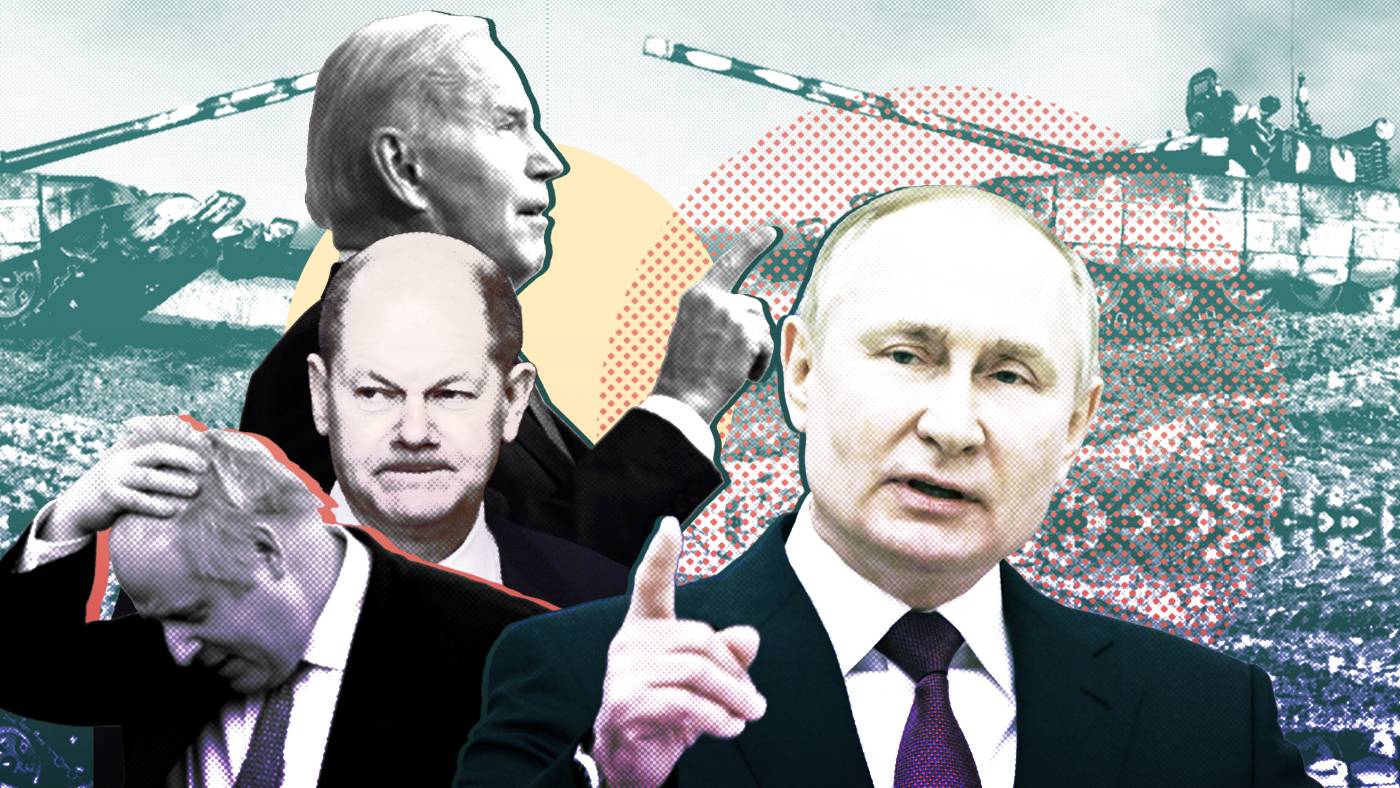
Ukraine crisis: Why Putin is negotiating with the West at the barrel of a gun

In a column earlier this month, Middle East Eye's editor-in-chief David Hearst took a long view of the Ukraine crisis, diving into history and geopolitical developments that brought the west and Moscow facing off for the first time in years.
Drawing on his own years of reporting from Russia and other former Soviet lands, Hearst asks some serious questions of both Russian and Western policy post-Cold War:
Ask yourself whether this situation was inevitable, and whether indeed it is black and white. Was Nato’s eastern expansion wise, if all it has done is move the line of confrontation eastwards? Did it cement democracy or provoke civil war?
Should the West have ignored repeated warnings from Putin about legitimate Russian concerns, which he expressed from the Munich conference of 2007 onwards? Should Bush have torn up a treaty with Russia in order to advance missile defence in Poland? Could Ukraine have escaped being ravaged by the competing forces of Russian and Ukrainian nationalism, and emerged masters of their own land? War and separatism were absolutely not inevitable.
Ukraine crisis: Why Putin is negotiating with the West at the barrel of a gun