

Gaza medical volunteer describes ‘horrific and unspeakable’ situation in hospitals

Fares, a medical student who is volunteering in Gaza’s al-Aqsa Hospital tells Middle East Eye’s contributor Ahmed Al Sammakk that the situation is “horrific and unspeakable” right now.
“Two days ago, a bag of body parts was brought to the hospital. A man identified his niece from her hand and another relative from a leg. He was unable to identify other relatives by the other body parts,” he said.
Fares says that roads to hospitals have been bombed, houses levelled, with hundreds trapped under the rubble.
“Most of the injuries are compounded fractures, especially in the pelvis, and second and third degree burns. Two days ago, I couldn’t identify the sex of a wounded person, because the burns were so severe,” he said.
He also added that surgical procedures are only being carried out where lives can be saved, while those with non-life threatening wounds, including fractures, are postponed.
All hospitals are operating above their full capacity, and many patients are unable to make it to hospitals due to the bombing and severity of their wounds.
 “In some cases, patients can’t come back and get their dressings changed, and some wounds rot. Some cases come back with worms coming out. One patient had to have his leg amputated twice because of infections due to poor hygiene,” he said.
The total cutting of all water resources in the besieged enclave has made it almost impossible for residents to have access to clean water. Many have resorted to bathing in the sea, which causes skin irritation, or drinking contaminated water.
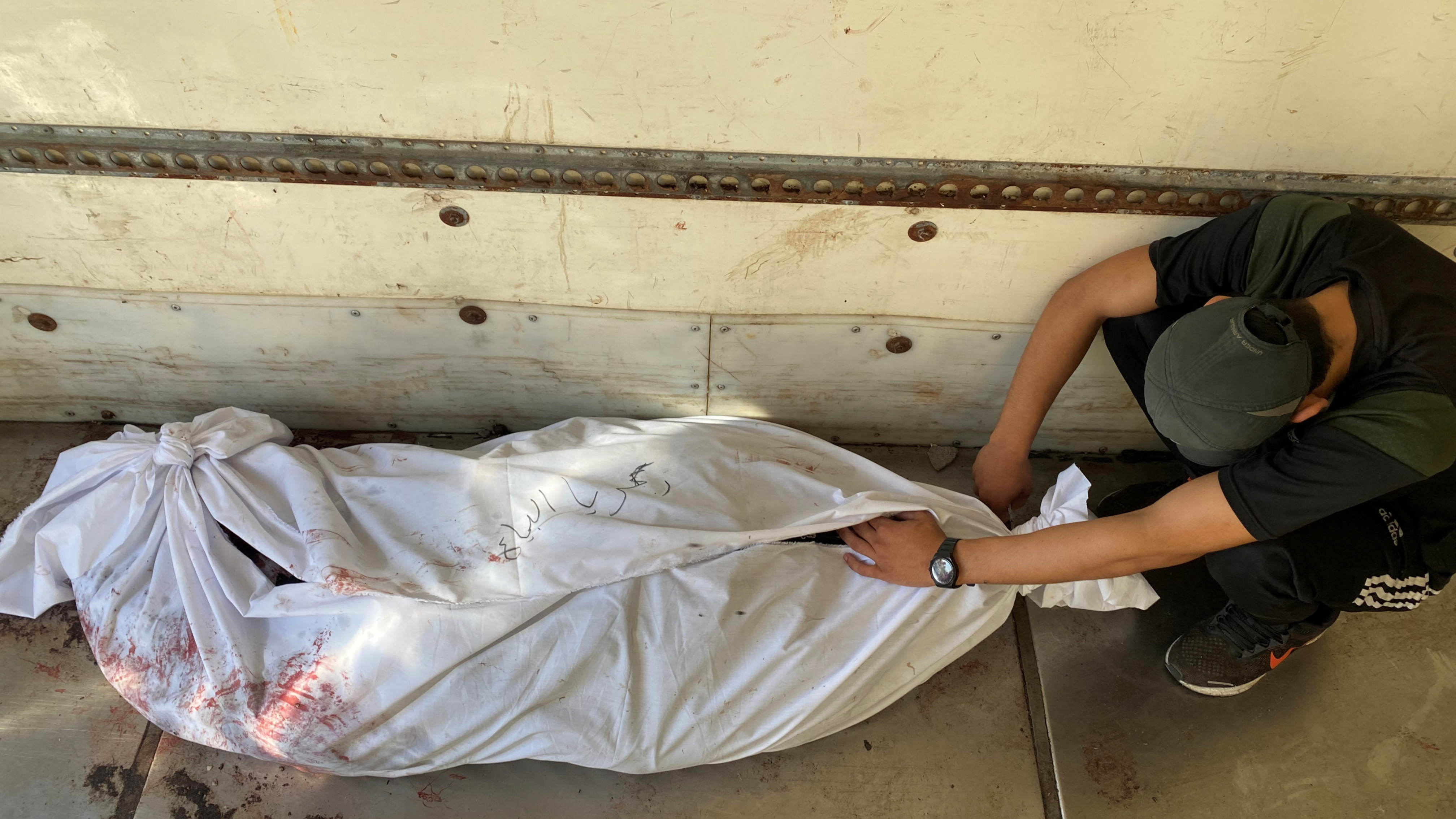
“Hospitals are running out of medical supplies, including anaesthesia. One doctor was forced to perform an amputation surgery without anaesthesia in an infected environment. Even if the surgery is successful, the patient is likely to develop an infection,” Fares explained.
Many people are also unable to call emergency services due to the unstable telecommunications networks. Some have resorted to using cars or donkeys to bring people to hospitals.
The Palestinian Ministry of Health estimates that two main hospitals in the enclave will totally shut down in the next 24 hours if immediate aid is not delivered.