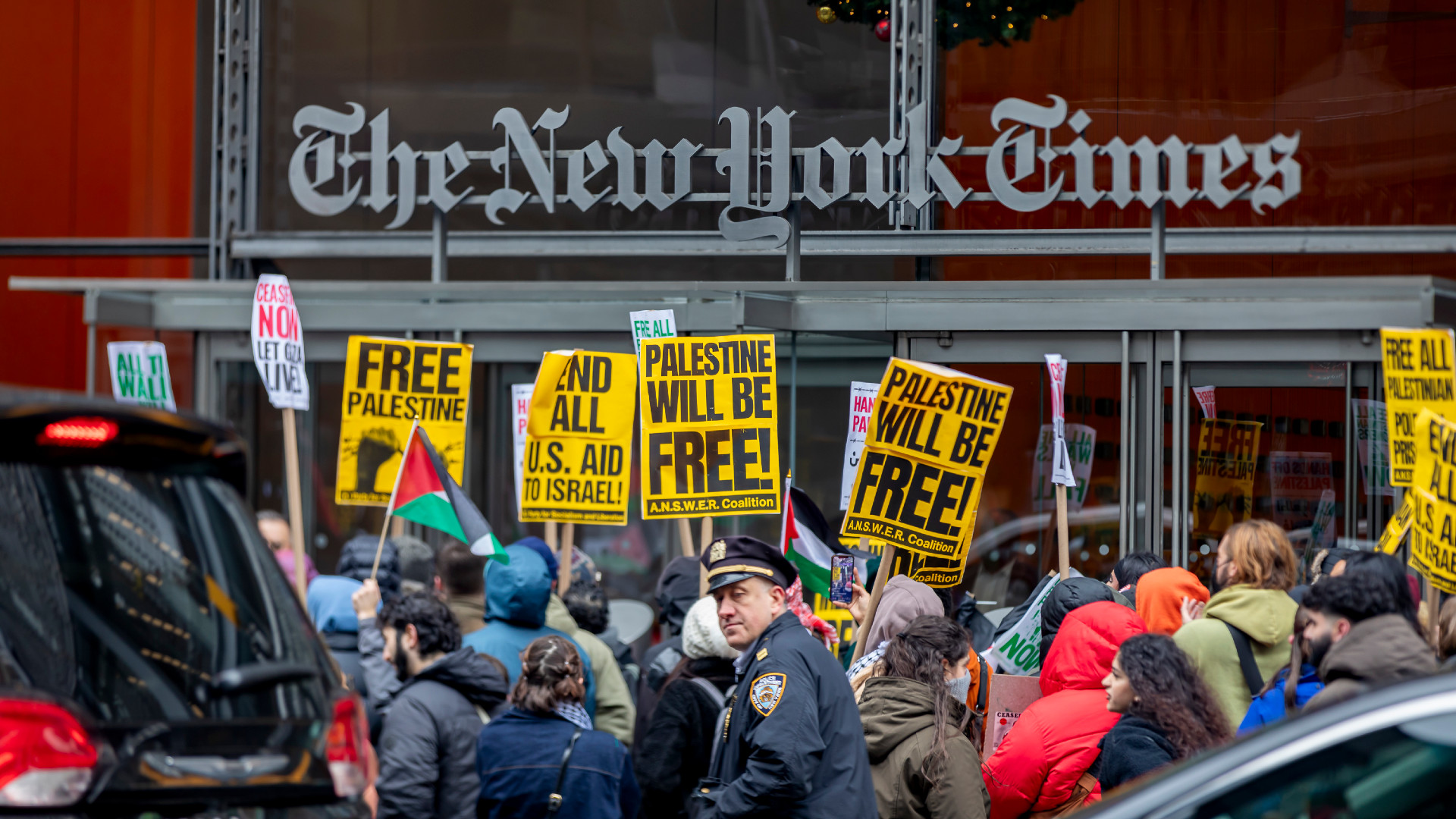
Opinion: Why the leaked New York Times Gaza memo is just the tip of the iceberg

More than 20 years ago, journalism scholar Barbie Zelizer criticised The New York Times's pro-Israel bias and called on observers to challenge its "status as a newspaper of record on the Middle East".
Last week, The Intercept obtained a leaked New York Times memo suggesting that the paper instructed its reporting staff to avoid using terms such as "genocide", "ethnic cleansing", and "occupied territories" in its reporting on the ongoing Gaza war.
The leaked Times memo also instructs reporters to avoid using words like "slaughter" and "massacre" when describing Israeli-perpetrated violence against Palestinians.
This is serious journalistic malpractice - indeed, Israeli leaders have made ethnic cleansing an explicit goal, declared genocidal intent, and Israel has long illegally occupied Palestinian territory - but it doesn't come close to capturing the scale of The Times's pro-Israel, anti-Palestinian bias.
In December, The Times claimed to have uncovered a programme of systematic rape by Palestinian men who attacked Israel on 7 October. But the Times' investigation has since been thoroughly debunked, with the paper forced to scrap a planned related podcast.
Instead of investigating its own journalists for allegedly manipulating Israeli sources and producing a report that relied on false Israeli propaganda, The Times focused its attention on trying to find out which of its employees leaked information about the rape investigation.
But even all of this is just the tip of the proverbial iceberg.
There is significant scholarly literature about western media coverage of the Israel-Palestine conflict, with most of the empirical data serving as a damning indictment of western reportage.
But no outlet has been studied more - or come across looking worse in the data - than The New York Times.
Read more: Why the leaked New York Times Gaza memo is just the tip of the iceberg - Opinion by Mohamad Elmasry