Who was Abu Obeida, Hamas's military spokesman?

Editor's note: This profile was first published in May 2024. On 29 December 2025, Hamas announced that Abu Obeida had been killed in August during Israel's genocidal war on Gaza.
One of Hamas's most important public figures, Abu Obeida, served as the military spokesman for the Izz al-Din al-Qassam Brigades, the Palestinian group's military wing, for nearly two decades.
His profile increased dramatically since the Hamas-led surprise attack on Israel in October 2023, and the subsequent Israeli war on the Gaza Strip.
Best known for his speeches, during which he provided battlefield updates, Abu Obeida would often boast about Hamas's military achievements, and taunt Israel, which in return made several attempts to kill him.
For that reason, Abu Obeida's real identity was never revealed. However on 29 December, Hamas formally announced his death and said that his birth name was Huthaifa Samir al-Kahlout.
New MEE newsletter: Jerusalem Dispatch
Sign up to get the latest insights and analysis on Israel-Palestine, alongside Turkey Unpacked and other MEE newsletters
A hero for many in the Arabic-speaking world, Abu Obeida's name was often chanted at pro-Palestine rallies and songs would also be sung in his honour.
His seniority in Hamas - which is designated as a terrorist group by the US, UK and other countries - earned him a place on Washington's sanctions list, along with other leaders of the Palestinian movement.
Who is Abu Obeida and where was he born?
Details about Abu Obeida’s early life are limited.
In 2005, he told a reporter his family were forcibly expelled by Zionist militias from historic Palestine in 1948, arriving at a village in the Gaza Strip that he did not name. During the same interview, he implied he was in his early 20s, which indicated he was born in the early to mid-1980s.
In 2014, sources at the group said only a few people knew of his real identity.
His name was likely a reference to Abu Ubaidah ibn al-Jarrah, a close companion of the Prophet Muhammad and a famed Muslim commander.
On 29 December, when Hamas's military wing, the Izz al-Din al-Qassam Brigades, announced his death, the group's new spokesman described him as a senior leader who headed the al-Qassam Brigades' media office.
"Today, we mourn Abu Obeida, whose real name was the great leader Huthaifa Samir al-Kahlout, who passed away after two decades of frustrating the enemies," the spokesman said.
What is Abu Obeida’s role in Hamas?
Abu Obeida’s first known appearance came in 2004. He gave a press conference in October of that year to provide battlefield updates during an Israeli ground offensive into the northern Gaza Strip.
He continued to act as the military spokesman giving media interviews and releasing pre-recorded speeches via Hamas’s website and other online platforms.
As such, Abu Obeida was the first and only Hamas figure to assume the role of military spokesman, which is a part of the group's media office, which was formally established in 2004.
His media appearances were often linked to military confrontations with Israel.
What did Abu Obeida say?
One of Abu Obeida’s main duties was announcing military achievements by the group.
His first major appearance came in 2006, when he announced the capture of Israeli soldier Gilad Shalit.
He was also the first to announce the capture of another soldier, Shaul Aron, during the 2014 Israeli war on Gaza, and revealed his identity card number in a recorded video.
 At first, Israeli officials denied Aron had been kidnapped, before later saying that he had been killed by Hamas and that his body was held by the group.
"How is the enemy hiding the disappearance of soldier Shaul Aron, whose ID number is 6092065?" said Abu Obeida. "This soldier is now a prisoner held by Hamas."
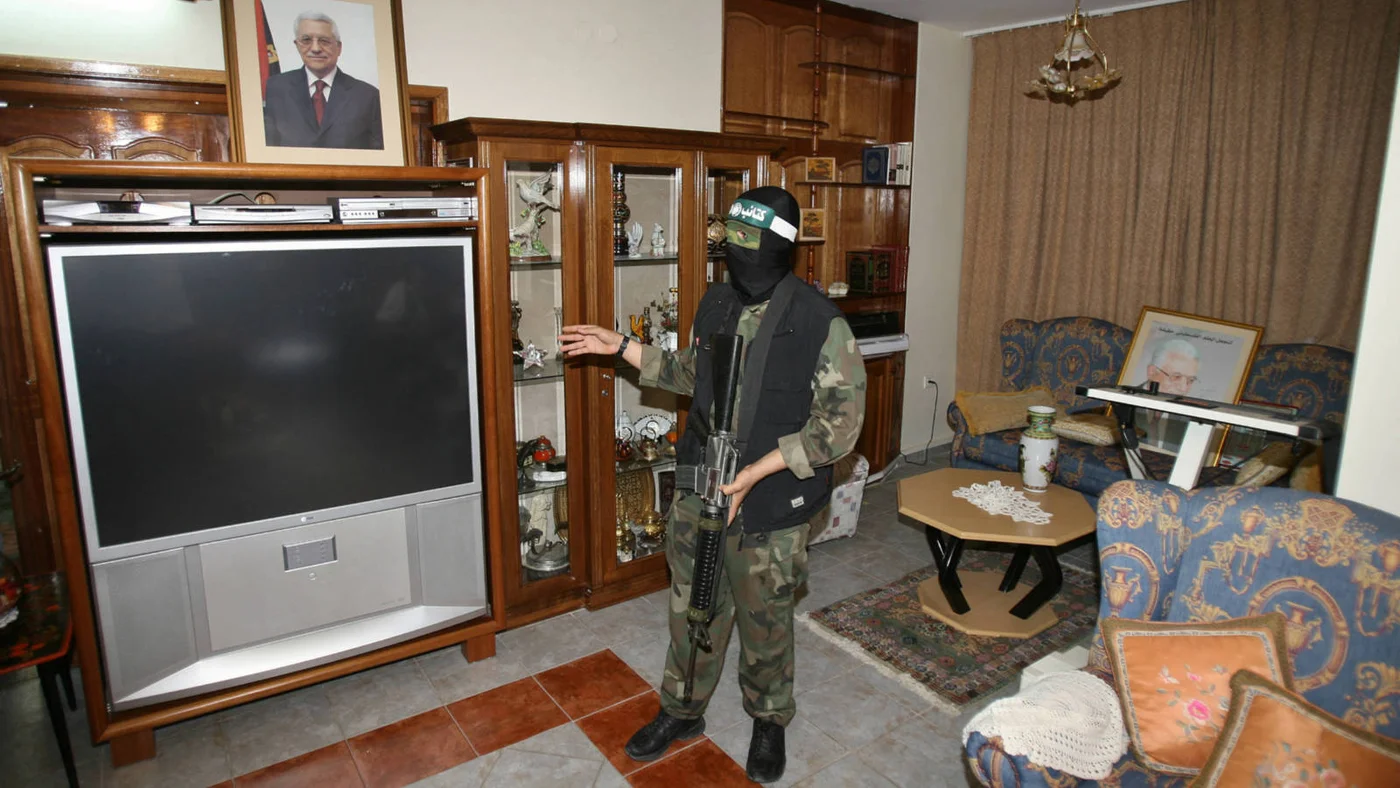
Also during the 2014 war, Abu Obeida announced that Mohammed al-Dief, the general commander of the al-Qassam Brigades, survived an Israeli assassination attempt, after much media speculation about his fate.
Occasionally, he made statements outside od wartime, such as in 2022 when he commented on the re-arrest of six Palestinian prisoners who had escaped from an Israeli jail. He vowed that Hamas would free all six prisoners during a future prisoner exchange deal with Israel.
“Al-Qassam Brigades says clearly… that if the heroes of the ‘freedom tunnel [escape]’ liberated themselves from underground this time, we promise them and our free prisoners that they will be liberated soon, God willing, from above ground.”
What role did Abu Obeida play on 7 October?
Some of Abu Obeida's most important speeches came after Hamas's 7 October attack and the subsequent Israeli war on Gaza.
Two days after the war started, he warned in a speech that an Israeli captive would be executed for every Israeli bombing of a residential building housing innocent civilians. The threat was never carried out.
Days later, he said in another speech that the planning for the 7 October attack began in 2021, following that year's 11-day war in May.
Around 4,500 members of the group were involved in executing the operation, he said, including 3,000 who participated on the ground.
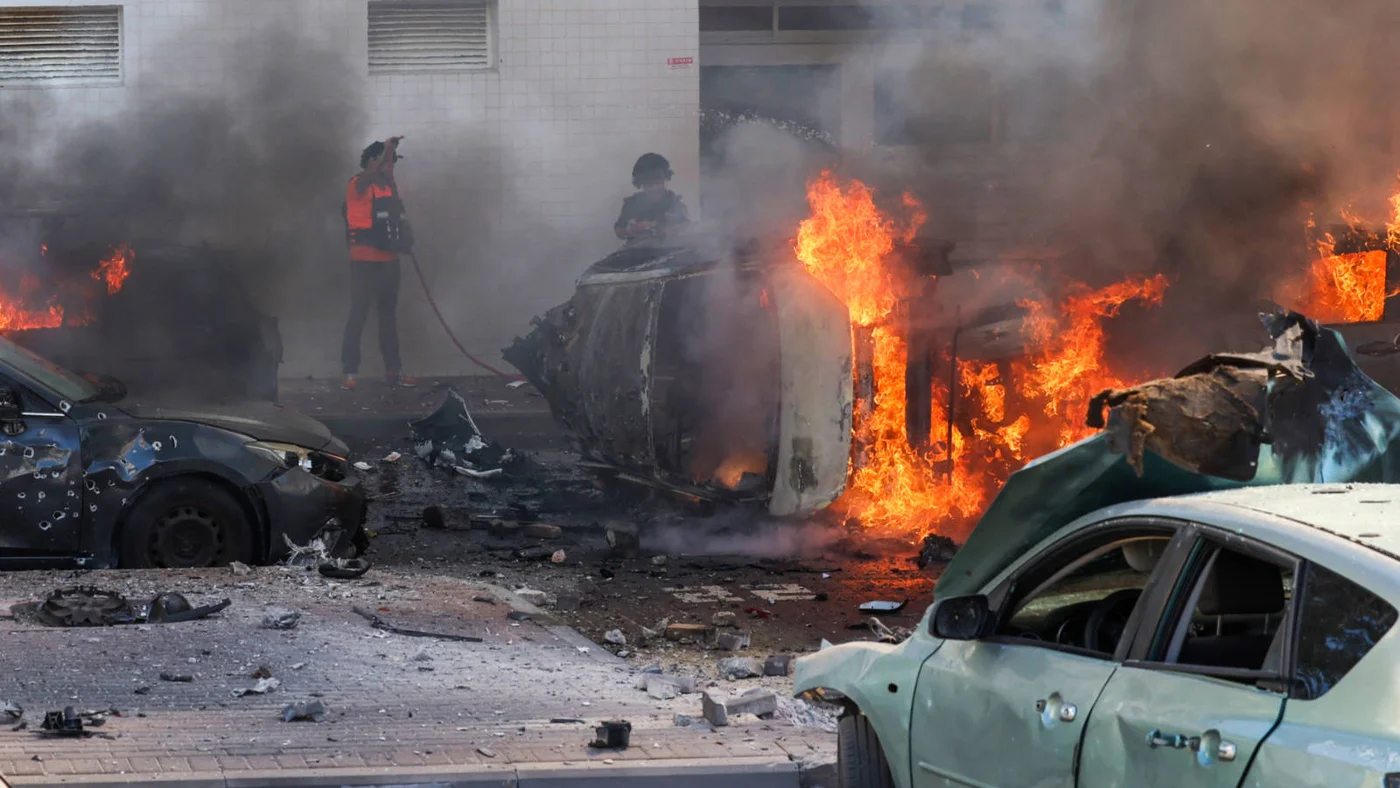
Abu Obeida also detailed the goals of the attack, dubbed "Operation al-Aqsa Flood". The main target, he said, was destroying the "Gaza Division" in the Israeli military, which is part of its Southern Command.
Other targets included military positions subordinated to the division and beyond, including inside 22 kibbutzim that surround the Gaza Strip, according to Abu Obeida.
"The strategic deception, military planning and dazzling execution [of the operation] have shocked this enemy," he said during one speech.
"The enemy knows they suffered a serious strategic failure… After this resounding and unprecedented failure, they are now committing the most horrific crimes against innocent civilians".
One of his most famous speeches came on 28 October, when he criticised Arab leaders for their inability to bring humanitarian aid into Gaza.
God forbid, he said, that Palestinians ask Arab rulers to militarily intervene in Gaza - but their inability to bring in even relief supplies had surprised Hamas.
The phrase "God forbid" later became a slogan widely used by Arabs to reference their states' unwillingness to intervene against the Israeli attacks.
Why did Abu Obeida cover his face with a red keffiyeh?
In all of his appearances, Abu Obeida was dressed in a military uniform with his face covered, earning him the title "the masked one" in the Arab-speaking world.
Since rising to prominence, his face cover was always that of traditional Arab headwear, coloured in red and known as keffiyeh among Palestinians.
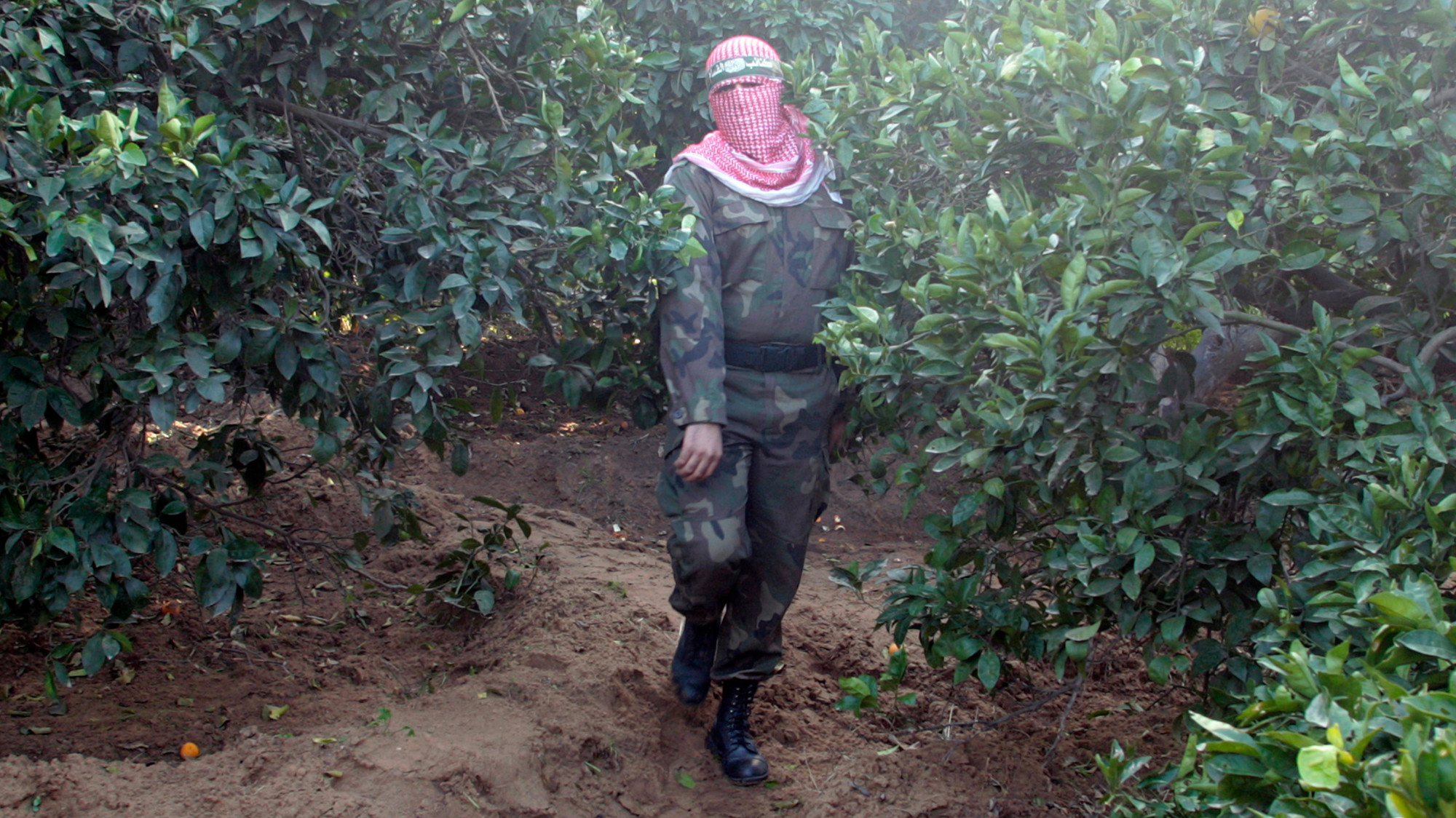
The red keffiyeh has long been used by Hamas members as a face cover, including the group’s first commanders, Yasser Al-Namrouti and Emad Akel, who were killed by Israeli forces in 1993.
Mohammed Deif also covered his face with a red keffiyeh in his last known media appearance, published in 2005.
What did the Arab world think of Abu Obeida?
Abu Obeida, who was seen as a symbol of Palestinian resistance, gained a hero-like status in the Arabic-speaking world, where Hamas enjoys widespread support.
His fiery and eloquent speeches, confident tone and incognito identity all added to his popularity.
His words were often backed by video evidence of Hamas attacks on Israeli targets, which boosted his credibility and public trust in his statements.
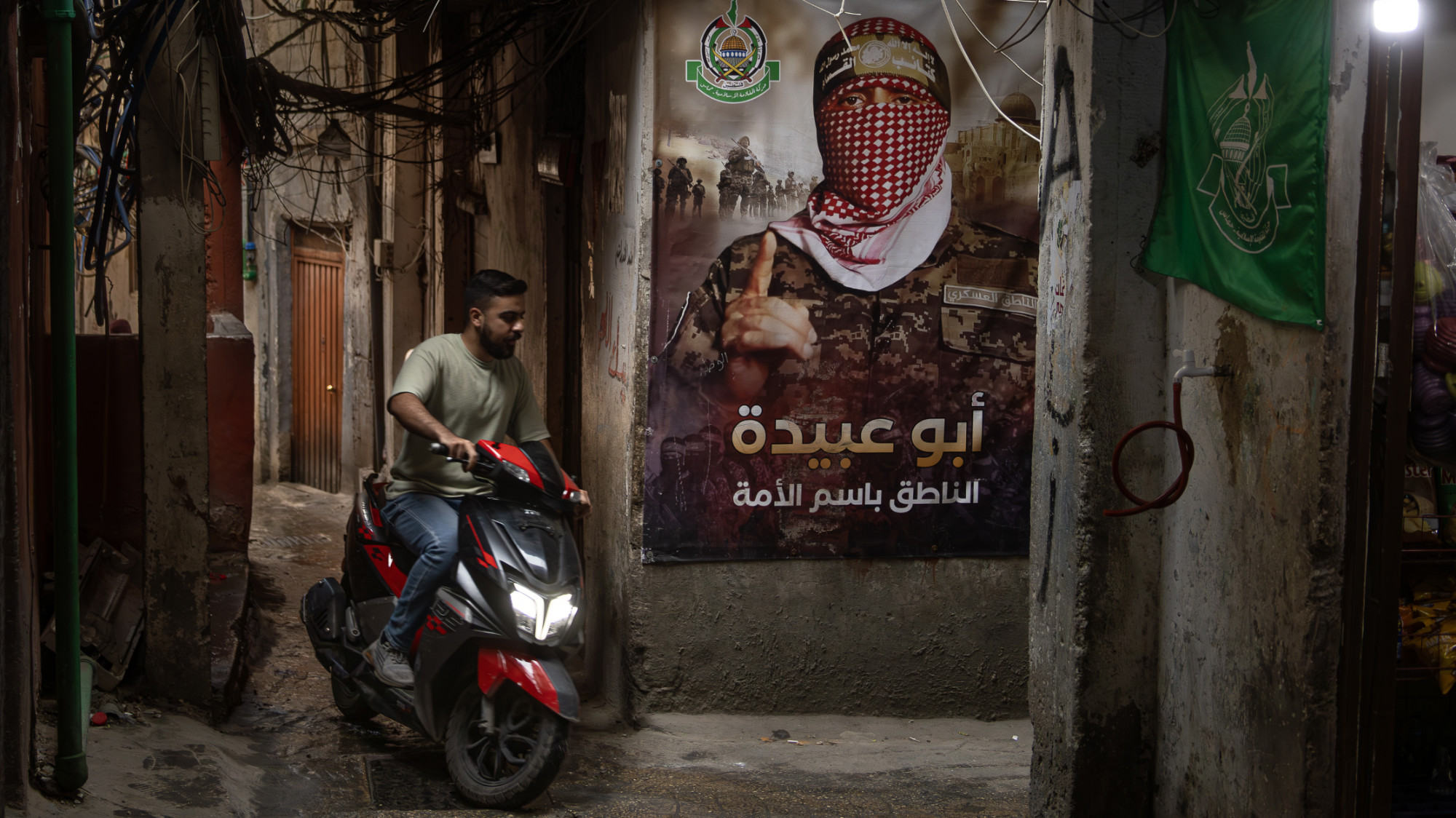
Throughout the region, his speeches were widely anticipated: weddings were interrupted so guests could listen in, while children were often glued to their screens throughout.
An Abu Obeida speech even caught the attention of Sheikh Hamad bin Khalifa Al Thani, Qatar’s former ruler, during a football match between Palestine and Iran.
Then there are the songs, which include lyrics such as "O Abu Obeida, the will is strong and your words are bullets".
How did Israel view Abu Obeida?
Abu Obeida’s speeches and statements were viewed regularly by the Israeli public, where his identity was the subject of speculation.
During the 2014 war on Gaza, the Israeli news website Ynet released the name "Hudhayfa Samir Abdallah al-Kahlut" and a photo it purported to be of Abu Obeida. At the time, Hamas denied the report.
Ynet said the attempt to expose his identity indicated a desire to "remove the aura around him" as one of Hamas's most influential figures.
The same photo and name were released again in October 2023 by Avichay Adraee, the Arabic-speaking spokesman of the Israeli military.
"It is time to stop covering up," Adraee said in a post on X. "The mask and keffiyeh will not help you and your organisation hide from the blows you are suffering and from the fate that those of you who remain will face".
Adraee attached a video, which appeared to be edited, showing the same photo that was first published in 2014.
#عاجل هذا هو المدعو حذيفة كحلوت الذي يتستر وراء كنية أبو عبيدة وهو يتستر كذلك وراء كوفيته الحمراء. تمامًا مثلما تتستر حماس وراء المنشآت المدنية لإطلاق القذائف الصاروخية باتجاه إسرائيل. هو وغيره من قادة #دواعش_حماس يحبون التستر داخل الأنفاق ووراء النساء والأطفال، وكذلك وراء… pic.twitter.com/FmtuByc7Bv
— افيخاي ادرعي (@AvichayAdraee) October 25, 2023
According to the Ynet report, Abu Obeida's home, purportedly in Jabalia, was bombed three times in 2008, 2012 and 2014. It also said he earned a master’s degree in religious studies from Gaza’s Islamic University in 2013 and was preparing for a PhD.
Why did the US sanction Abu Obeida?
The US sanctioned Abu Obeida in April 2024, naming him as Hamas's "information warfare chief".
The Department of the Treasury credited him with leading "the cyber influence department of al-Qassam Brigades," and added that he was involved in "procuring servers and domains in Iran to host the official al-Qassam Brigades website in cooperation with Iranian institutions".
Hamas did not comment on the US sanctions and the assertions made regarding Abu Obeida's alleged activities.
Middle East Eye delivers independent and unrivalled coverage and analysis of the Middle East, North Africa and beyond. To learn more about republishing this content and the associated fees, please fill out this form. More about MEE can be found here.