Labour's faith minister backs new British Muslim Network

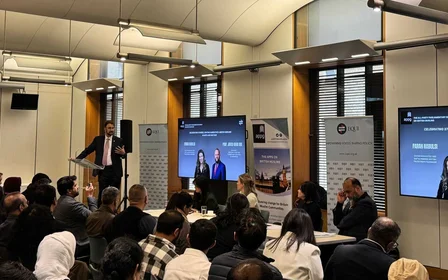
Labour's faith minister has backed the British Muslim Network (BMN), a new national body appearing to undermine the leadership credentials of the Muslim Council of Britain (MCB), ahead of its launch on Tuesday evening.
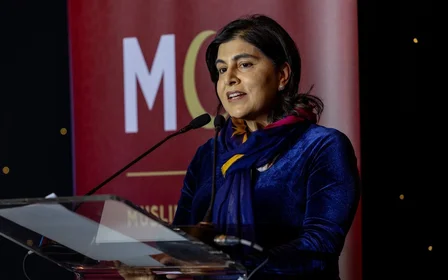
Labour's faith minister, Lord Wajid Khan, has thrown his support behind the new network, along with deputy speaker and Conservative MP Nusrat Ghani, former Conservative chair Baroness Sayeeda Warsi and ex-England cricketer Azeem Rafiq, according to the Guardian.
The launch event, set to take place in London on Tuesday evening, follows a series of controversies surrounding the network.
Critics have accused the BMN of lacking credibility within British Muslim communities and undermining the MCB's attempts to engage with the Labour government.
But the BMN's leadership has argued that the government should engage with a "whole range" of Muslim groups, including both the MCB and BMN.
New MEE newsletter: Jerusalem Dispatch
Sign up to get the latest insights and analysis on Israel-Palestine, alongside Turkey Unpacked and other MEE newsletters
'Start-up days'
Last July, Middle East Eye first reported on plans to create a new Labour-supported Muslim group designed to engage with the government.
MEE then revealed earlier this month that the initiative had lost most of its backing, including hundreds of thousands of pounds in funding, with several Muslim MPs saying privately that they would not attend the BMN's launch.
On BBC Radio Four on Tuesday morning, BMN co-chair Akeela Ahmed was asked whether "reports of withdrawals of offers of funding for your body and disquiet from some Muslim Labour MPs" were true.

Ahmed replied: "It's not true. We are in very early days, we are in start-up days at the moment. We are privately funded, and we are speaking to people within the British Muslim communities about funding for the organisation, but we haven't had any funding withdrawn."
Qari Asim, an imam and another BMN co-chair, recently joined other Muslim scholars in signing a pact called the "Reconciliation Accords" with Jewish leaders, including Chief Rabbi Sir Ephraim Mirvis.
The accords were presented as "rebuilding a meaningful trust between Muslim and Jewish communities" and the signatories, including Asim, met King Charles at Buckingham Palace on 11 February.
The BMN's advisory board, made public this week, includes Abdurahman Sayed, the CEO of London's Muslim Cultural Heritage Centre, and Zahed Amanullah, a former director of the Concordia Forum thinktank
Amanullah, currently a fellow at the Institute for Strategic Dialogue, spoke at an event hosted by the UAE-backed "countering extremism" organisation Hedayah last December on countering antisemitism and Islamophobia.
Questions of representation
Headlines have focused on the support the BMN has received from Sayeeda Warsi, who was the first Muslim woman to serve in cabinet under David Cameron's Conservative government. Warsi is now an independent peer after quitting the Conservatives last September, complaining that the party had moved too far right.
"For too long British Muslims have been made to feel their voices do not matter," Warsi told the Guardian ahead of the BMN's launch.
"The British Muslim Network is part of a much-needed effort to change that."
'For too long British Muslims have been made to feel their voices do not matter'
- Baroness Sayeeda Warsi
The BMN's website says: "British Muslim communities face many internal and external challenges - such as social and economic disadvantage, anti-Muslim prejudice and inadequate funding and professional advice.
"Yet our communities also hold immense talent, expertise and potential, which can offer solutions not just to our own challenges, but to those of wider British society."
An invitation to the launch event, seen by MEE, said the network had been created as a result of “the joining of many heads and hearts over the past few months and is linked to conversations that have been taking place in British Muslim communities for many years.”
The network has insisted it does not aim to challenge the Muslim Council of Britain's role, with Ahmed saying the BMN aims to "complement" the MCB's work.
Critics have suggested that the BMN's co-chairs and advisory board lack credibility, warning that the government could use the network to continue to avoid engaging with the MCB, Britain’s largest umbrella body claiming to represent British Muslims.
Consecutive governments have followed a policy of refusing to engage with the MCB - despite it having over 500 member organisations, including mosques, schools, local and county councils, professional networks and advocacy groups.
Starmer's government adopted this approach and even ignored communications from the MCB during the far-right riots that raged across the country for over a week in August.
The BMN does not claim to be a similarly representative body. But the faith minister's support signals that the government is likely to engage with the new body, despite its ongoing boycott of the MCB.
One well-placed Labour insider, who asked to remain anonymous, told MEE the BMN risked facilitating "attempts to divide the Muslim community into so-called good Muslims that will be allowed to engage with the government, and so-called bad Muslims that will be boycotted."
This is a characterisation that the BMN rejects. Speaking to the BBC on Tuesday, Ahmed said the government should engage with the MCB.
"The MCB is one group that is working in this space, and the government should engage with it," she said.
"But the government should also engage with a whole range of British Muslim organsiations and British Muslims around the country.
"That engagement is not taking place," Ahmed added.
Middle East Eye delivers independent and unrivalled coverage and analysis of the Middle East, North Africa and beyond. To learn more about republishing this content and the associated fees, please fill out this form. More about MEE can be found here.