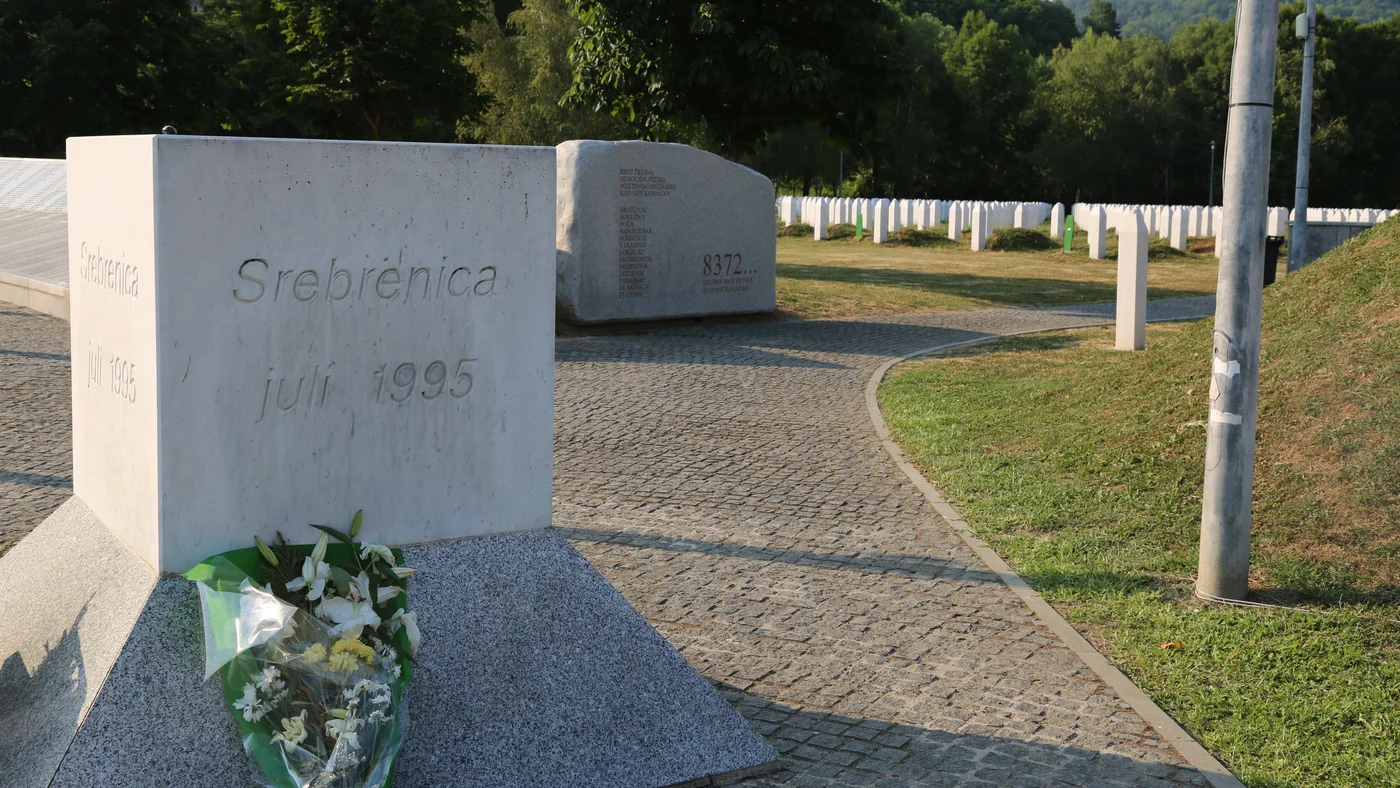
Srebrenica survivors draw parallels with Gaza 30 years after massacre

Ahmed Hrustanovic is a 39-year-old imam from Srebrenica, a town in Bosnia Herzegovina that became notorious after at least 8,000 Bosnian Muslim men and boys were summarily executed by Serb forces in July 1995.
He was nine at the time, and living in an accommodation centre for displaced people near the city of Tuzla, having been deported from Srebrenica in 1993 with his mother and sister.
But the vast majority of Ahmed's family, including his father, remained in Srebrenica.
He recalls the fear everyone felt for their loved ones upon hearing the news that Srebrenica had fallen to Serb forces.
“It was clear to us all what was about to happen to our loved ones,” he said, speaking to Middle East Eye at the mosque in the centre of the town where he works.
Thirty years on from the killings, widely branded a genocide, Hrustanovic sees parallels in Israel's attack on Gaza - also widely assessed by genocide scholars to be a genocide.
“Unfortunately, we’re witnesses that the international community does not exist the way we’re used to - that it would stand on the side of justice, democracy. Democracy no longer exists in the world; you can see that it’s only the law of the strongest that counts,” Hrustanovic said.
Read more: Srebrenica survivors draw parallels with Gaza 30 years after massacre