Francesca Albanese sanctions ‘create chilling effect’ on UN experts, warn rapporteurs

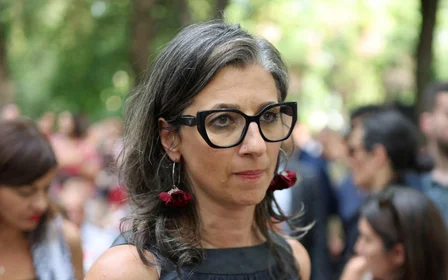
Current and former UN rapporteurs on Thursday denounced US sanctions on Francesca Albanese as an unprecedented measure targeting a critical part of the United Nations’ human rights system.
“It's a dangerous precedent because it creates a chilling effect for all special rapporteurs,” said Agnes Callamard, head of human rights giant Amnesty International and a former UN special rapporteur on extrajudicial, summary or arbitrary executions.
“It undermines their independence and their commitment to do their job without fear or pressure of any kind,” she told Middle East Eye.
“There is also the risk that other governments may engage in copycat if they are unhappy or dissatisfied with a special rapporteur's report.”
UN special rapporteurs are independent experts appointed by the Geneva-based United Nations Human Rights Council (UNHRC) to monitor, report on and advise on specific human rights issues or country situations.
New MEE newsletter: Jerusalem Dispatch
Sign up to get the latest insights and analysis on Israel-Palestine, alongside Turkey Unpacked and other MEE newsletters
Nevertheless, their effectiveness can be limited by a lack of political will or cooperation from states, particularly when access is denied or recommendations are ignored.
Special rapporteurs enjoy diplomatic immunity under international law, including protection from legal measures such as sanctions.
However, due to their criticism of human rights policies, they are often subject to retaliation by states. Some, including Callamard and Albanese, have been declared persona non grata or threatened with lawsuits.
Yet the sanctions targeting Albanese’s mandate mark a first.
“Special rapporteurs have been around since the 1980s and, frankly, I am not aware of any one of them having been sanctioned in that way,” said Callamard.
Balakrishnan Rajagopal, the UN rapporteur on the right to adequate housing, said the sanctions “send a chilling message”.
“Rapporteurs are independent experts who do their jobs pro bono and need support for their critical work,” he told MEE.
“I urge immediate reversal of such sanctions. If allowed to stand, such sanctions send a chilling message: that any attempt to uphold law and speak truthfully will be met by a crackdown.”
Ben Saul, the UN special rapporteur on human rights and counterterrorism, said the sanctions have targeted Albanese over her “legitimate work in defence of Palestinian human rights”.
“States must enable, not impede, the work of United Nations independent experts,” he told MEE.
'I've hit a nerve'
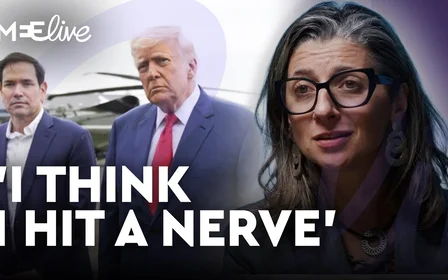
Speaking to MEE's live show on Thursday, a day after the sanctions, Albanese said she remains undeterred.
“It looks like I've hit a nerve,” she said.
“My concern is there are people dying in Gaza while you and I are speaking, and the United Nations are totally unable to intervene.”
The sanctions follow Albanese's scathing report published on 30 June, in which she named over 60 companies - including major US technology firms like Google, Amazon and Microsoft - she said were involved in "the transformation of Israel's economy of occupation to an economy of genocide".
The report called on the International Criminal Court (ICC) and national judicial systems to investigate and prosecute corporate executives and companies. It also called on UN member states to pursue sanctions and asset freezes.
Albanese is one of the most outspoken critics of Israel’s war on Gaza, which she has labelled a genocide. Over the past 20 months, she has backed international justice efforts seeking to hold Israel accountable for its actions.
She is the latest target of US sanctions linked to the work of the ICC, which in November issued arrest warrants for Israeli Prime Minister Benjamin Netanyahu and former Defence Minister Yoav Gallant.
The chief prosecutor of the ICC, Karim Khan, and four of the court's judges have also been sanctioned by the Trump administration over investigations into the US and its ally, Israel.
Middle East Eye delivers independent and unrivalled coverage and analysis of the Middle East, North Africa and beyond. To learn more about republishing this content and the associated fees, please fill out this form. More about MEE can be found here.