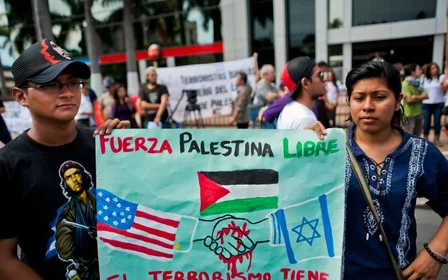
Chile elections: Far right candidate may break with historic support for Palestine


The second round of the Chilean presidential elections due to take place on 15 December may become highly significant for Palestine.
The two candidates, Jose Antonio Kast, who represents a far-right political party, and Jeanette Jara, representing a centre-left coalition - both hold opposing visions of how Chile’s foreign policy should be conducted.
Around 16 million eligible voters will decide over the two options mainly based on security, immigration and economic matters.
Home to the largest Palestinian community outside the Arab world, estimated at around 500,000 people in 2023, Chile may soon join the group of far-right leaders such as Hungary’s Prime Minister Viktor Orban, Argentina’s Israel-loving President Javier Milei, and Israel’s Prime Minister Benjamin Netanyahu, who consistently oppose Palestinian rights and undermine international agreements and the principles of the UN Charter.
On 19 November, the UN General Assembly voted on the extension of Unrwa’s mandate. Only ten states voted against the extension, including Argentina, Hungary, Paraguay, the United States, and Israel - countries governed by members of the same ideological camp as the far-right Chilean presidential candidate.
New MEE newsletter: Jerusalem Dispatch
Sign up to get the latest insights and analysis on Israel-Palestine, alongside Turkey Unpacked and other MEE newsletters
A similar pattern emerged in the vote concerning the Palestinian right to self-determination: Argentina, Paraguay, the United States, and Israel voted against the resolution, while Hungary abstained.
A multilateral approach
Under President Gabriel Boric, Chile has consistently raised its voice in international forums in support of the inalienable Palestinian right to self-determination.

The government has also taken concrete measures in response to Israel’s genocide, including withdrawing the ambassador and military attaches from Tel Aviv, joining South Africa’s genocide case against Israel at the International Court of Justice, and calling for action by the International Criminal Court.
The current government coalition’s candidate, Jeanette Jara, has publicly condemned the Israeli genocide and has demanded further accountability measures.
Her presidential programme defines Chilean foreign policy as one that "promotes peace, the peaceful resolution of controversies, the prominence and respect of international law; the promotion and defence of democracy; gender equality and human rights; commitment to multilateralism; the principle of non-intervention; and the sovereignty of states."
Accordingly, under a centre-left government, Chile would be expected to continue its current multilateral approach.
Kast's political platform does not include significant references to foreign policy. However, his previous presidential campaign included explicit proposals to withdraw from the Human Rights Council, prioritise Chilean law over international treaties, and weaken the role of multilateral institutions, particularly the United Nations.
During the Israeli genocide in Gaza, none of the three Chilean right-wing candidates condemned Israeli actions. Kast referred to the Israel–Palestine issue only to criticise President Boric’s position on the genocide.
Meanwhile, a document attributed to the "Jewish Community of Chile" openly urged voters to support Jose Kast rather than Jara.
The current Chilean government has yet to fulfil two commitments made by President Boric: passing legislation to ban products originating from Israeli settlements - similar to developments in Ireland, Slovenia, and Norway - and promoting an arms embargo on Israel.
A far-right government would be expected to take the opposite approach.
A new scenario
Since 1990, all Chilean administrations have adhered to the foundations of the country’s international relations, including full respect for international law and UN resolutions.
Under the current president, Chile became a notable reference point on several global issues, including developments in Palestine. This was achieved through a consistent stance condemning violations of international law and human rights in places such as Ukraine, Venezuela, Nicaragua, and Palestine.
The voting record of Kast’s international allies suggests that the promotion of international law - including the inalienable rights of the Palestinian people - will not be on the agenda
Yet, the voting record of Kast’s international right-wing allies from Argentina to Hungary, along with the majority of his Republican party members, suggests that the promotion of international law - including the inalienable rights of the Palestinian people - will not be on the agenda in case of him being elected.
Since 1990, no presidential candidate who is openly opposed to the multilateral rules-based international order attained the level of popularity that Kast now holds.
This is a new scenario for Chile, though part of a broader global trend previously exemplified regionally by former Brazilian President Jair Bolsonaro.
Kast’s electoral success is heavily driven by rhetoric emphasising internal security, anti-corruption measures, and the deportation of immigrants.
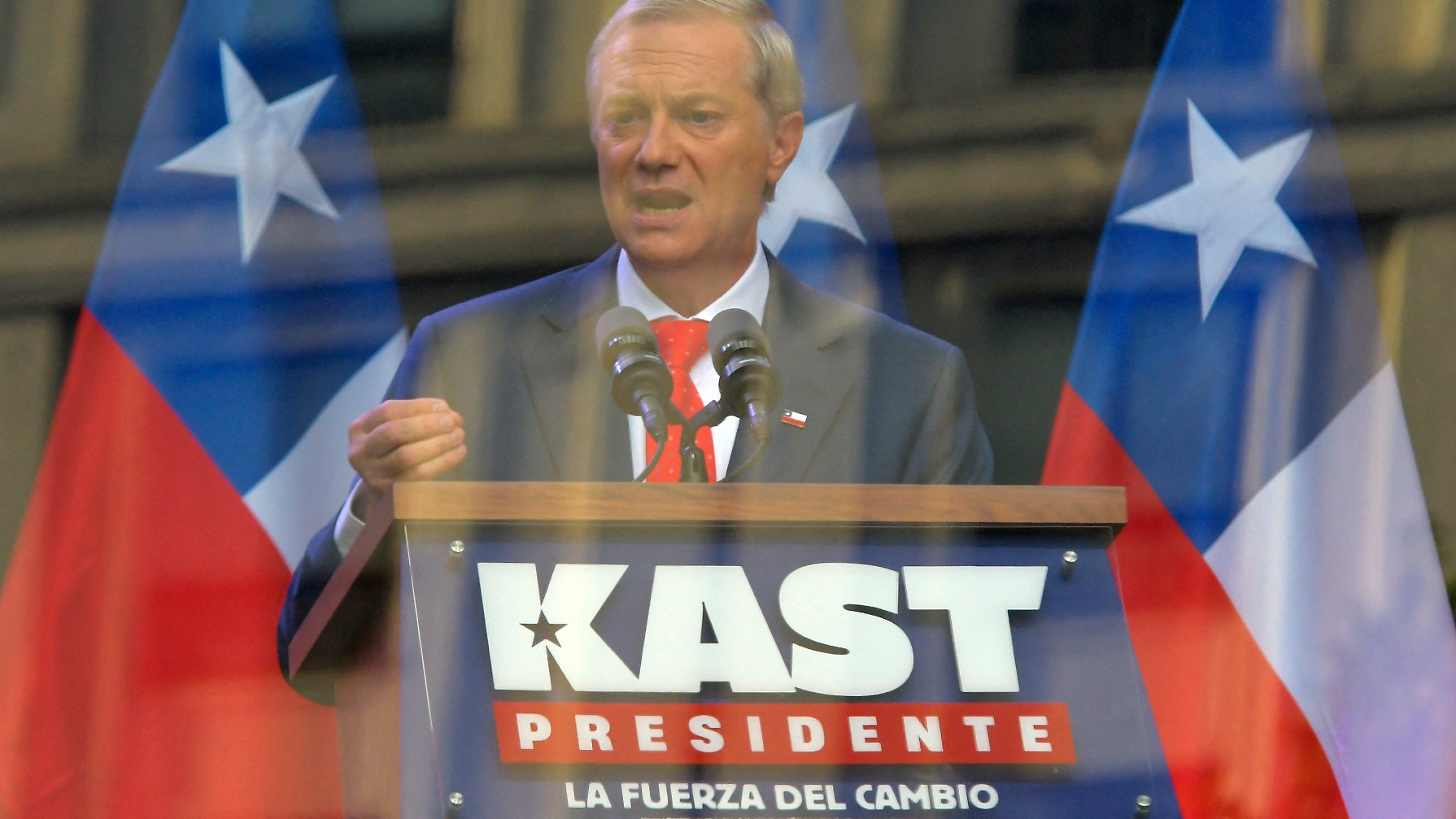

The son of a Nazi militant and an admirer of Chilean dictator Augusto Pinochet, Kast does not prioritise international humanitarian law nor does he embrace the universality of justice - just as Orban withdrew Hungary from the ICC in protest of the arrest warrant issued for Netanyahu. It’s part of his political programme not to prioritise international law over domestic legislation.
The governments of far-right states such as Hungary, Argentina and Paraguay remain among Israel’s few close international allies. Chile may join this group
Kast represents a political sector that has vocally opposed the principle of universal jurisdiction since 1998, when Pinochet was detained in London.
Chile is a country where both left-wing and right-wing political figures have historically expressed solidarity with the Palestinian people. However, Kast does not belong to this tradition.
The Chilean-Palestinian inter-Parliamentary Committee remains the largest friendship group in the Chilean parliament, yet this has not influenced the far-right candidate.
Whether Chile’s strong Palestinian community will be able to mitigate the effects of a Kast presidency remains uncertain.
Regardless of Kast’s close relationship with Argentine's Milei, Chile is not Argentina. Palestine is deeply embedded in Chilean social life, and politicians across the political spectrum generally recognise this.
Nevertheless, Kast's ideological orientation and the Republican Party may point in a different direction, particularly given their well-known reluctance to negotiate on any issue.
An Israel ally?
If elected, Kast would be expected to reverse all measures adopted by President Boric concerning Israel.
He may also revive initiatives frozen by previous governments, such as the implementation of a Free Trade Agreement with Israel.

Despite widespread popular opposition to the genocide in Gaza and the Israeli occupation of Palestine, foreign affairs have not been a central issue in the current elections, and thus Kast may not face electoral costs for his consistent support of the Israeli government.
Overall, this moment may mark the beginning of a significant setback for Palestine in South America.
At a time when global public opinion has shifted dramatically against the Israeli occupation - including within certain conservative circles in the United States - the governments of far-right states such as Hungary, Argentina and Paraguay remain among Israel’s few close international allies, particularly in efforts to block accountability for war crimes and crimes against humanity.
Chile may potentially join this group.
The views expressed in this article belong to the author and do not necessarily reflect the editorial policy of Middle East Eye.
Middle East Eye delivers independent and unrivalled coverage and analysis of the Middle East, North Africa and beyond. To learn more about republishing this content and the associated fees, please fill out this form. More about MEE can be found here.