
‘We will continue’: The Palestinian rights groups sanctioned by Trump

“Al-Haq is not an office. Al-Haq is an idea.”
With those words, Shawan Jabarin, director of Palestine’s oldest human rights group, Al-Haq, explained why the sweeping US sanctions imposed by Donald Trump earlier this year would not stop the organisation’s work.
The measures have frozen bank accounts, severed donor ties, and left dozens of families without income.
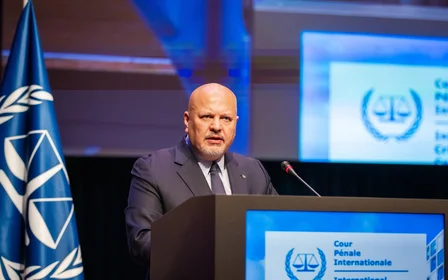
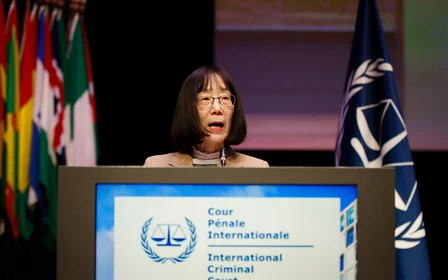
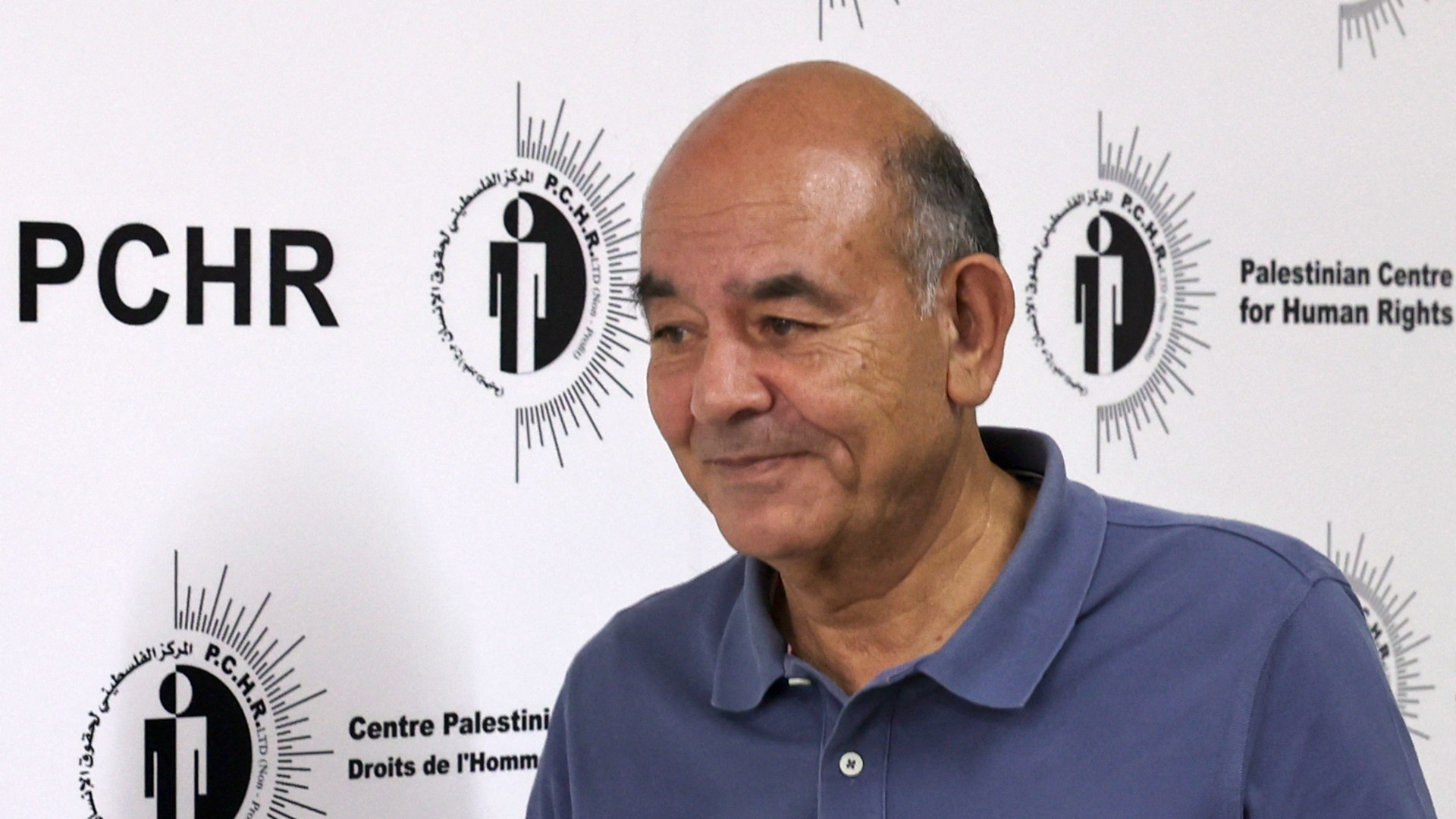
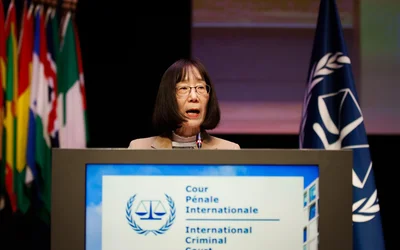
Speaking on the sidelines of the 24th Assembly of States Parties (ASP) to the International Criminal Court (ICC) in The Hague, Jabarin and fellow rights defender Raji Sourani, director of the Palestinian Centre for Human Rights, described the devastating operational and financial impact of the sanctions.
But they delivered the same message: their work documenting violations in Gaza and the West Bank, and their cooperation with the ICC, will continue.
New MEE newsletter: Jerusalem Dispatch
Sign up to get the latest insights and analysis on Israel-Palestine, alongside Turkey Unpacked and other MEE newsletters
For Jabarin, the US government’s explanation for why Al-Haq was designated left little ambiguity.
“The Americans said it themselves,” he told Middle East Eye. “They sanctioned us because we are engaging and cooperating with the ICC to go after Israeli criminals… They don’t feel shy to say that publicly.”
Al-Haq, founded in 1979 and one of the most established rights groups in the region, suddenly found itself cut off from the global financial system in September.
Banks closed its accounts, and partners abroad halted transfers for fear of secondary sanctions.
'We cannot compromise the right to defend victims'
- Raji Sourani, Palestinian Centre for Human Rights
“Forty-five staff members - that’s 45 families - without salaries,” Jabarin said. “Donations stopped. We have no accounts.”
The sanctions mean not only a financial freeze but also potential criminal exposure for organisations that continue to engage with them, including heavy fines and possible prison terms.
Despite that, many supporters and former staff, now working across academia and NGOs worldwide, continue to help.
“Al-Haq is not an office… Al-Haq is an idea. Justice is an idea,” Jabarin said. “And ideas are stronger than sanctions.”
He added that the suffering inside Gaza keeps him going: “When you hear the stories of our people… it gives me energy to wake up every day to work for justice and dignity.”
‘Big shame’
Across from him in The Hague, Sourani, who heads Gaza’s oldest human rights organisation, offered a parallel assessment.
“It’s unprecedented,” he said. “An organisation being sanctioned because of its legal work in defending victims at the ICC - it’s a big shame, totally illegal. It contradicts the ABC of justice and human dignity.”
When the designations were announced on 4 September, Sourani and his team happened to be in The Hague. They immediately met ICC officials.
“Politically, we wanted to show we do not recognise this. We will continue business as we do, whatever the consequences.”
The consequences arrived immediately.
“Our accounts were promptly frozen. No bank would cooperate… We were placed in very deep financial trouble.”
Several major US-based partners also suspended their cooperation. Sourani expressed deep disappointment, noting these were groups with whom PCHR had shared values and universal principles and who had historically fought for the rule of law in the US.
“They should have defended us within the American legal system, based on the constitution,” he said.

Both organisations continue to submit extensive documentation of alleged violations in Gaza and the West Bank to the ICC’s Office of the Prosecutor. But Sourani criticised the court’s lack of decisive action, particularly amid the ongoing genocide in Gaza.
Since the court confirmed arrest warrants in late 2024 for Israeli Prime Minister Benjamin Netanyahu and former defence minister Yoav Gallant, “the genocide is continuing, ethnic cleansing continuing… persecution… business as usual,” he said.
Despite thousands of files and ample evidence, “we didn’t see the ICC effectively moving to prevent or stop the genocidal crime," he added.
Jabarin likewise reported multiple meetings with deputy prosecutors and the investigative team during the ASP.
The officials expressed determination.
“They said they will not give up, they will not step back, they will continue defending the mission of the ICC.”
Yet neither he nor Sourani has seen tangible progress.
“Unfortunately, we don’t see any results,” Sourani said. “The genocide is still going on… We expected more decisions from the prosecutor and the court.”
While the Palestine investigation is their core concern, both men stressed that the sanctions have wider implications.
“This is an existential threat,” Sourani said, calling the sanctions “a tsunami, an earthquake” that should have dominated the ASP’s agenda.
Jabarin, who has attended many ASP sessions over the years, said the atmosphere this year felt different.
“There is fear, but there is also a will among states to defend the ICC politically and financially.”
Several European states acknowledged the pressure on civil society in their formal statements; the deputy prosecutors publicly referenced the sanctioned Palestinian groups.
But both men expressed frustration that states have not gone further.
“We haven’t heard strong public statements except from Belgium,” Jabarin said. “Others speak privately, but not publicly, and public support is what gives meaning to solidarity.”
‘We will continue’
The sanctions regime has forced the organisations to look for alternative forms of protection and operational continuity.
One key demand from both groups is the activation of the EU Blocking Statute, designed to shield European entities from the extraterritorial application of foreign sanctions.
“We are pushing European countries to activate it,” Jabarin said, “so they do not follow the American decision.”
He urged the EU to facilitate secure financial channels, technological support, and political cover.
“This is not only for us,” he added. “This is a precedent. Every organisation working for accountability should be worried.”
Despite frozen accounts and halted funding, both men insist they remain focused on the same mission they carried into The Hague years earlier.
“We cannot compromise the right to defend victims,” Sourani said.
“Whatever the consequences, we will continue.”
Middle East Eye delivers independent and unrivalled coverage and analysis of the Middle East, North Africa and beyond. To learn more about republishing this content and the associated fees, please fill out this form. More about MEE can be found here.