
Turkey seeks off-ramp to war through US-Iran negotiations

Turkey is seeking an off-ramp to the war on Iran, engaging both the US and the Islamic Republic in an effort to initiate negotiations on a potential deal, sources familiar with the matter told Middle East Eye.
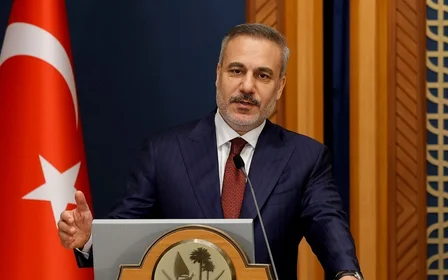
On Sunday, Turkish Foreign Minister Hakan Fidan held a series of phone calls with his Iranian, Egyptian and European counterparts to discuss steps toward ending the conflict, according to sources in the Turkish Foreign Ministry.
The same day, Fidan also spoke with senior US officials, possibly including envoys Steven Witkoff and Jared Kushner.
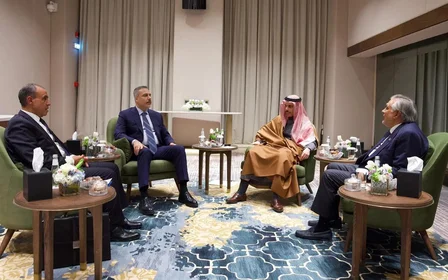
Later on Sunday, he held further discussions with his Saudi, Qatari, Iraqi and Pakistani counterparts, "evaluating initiatives" to halt the fighting, the sources added.
According to those familiar with Ankara's thinking, Turkey is pushing for a brief ceasefire to create space for negotiations.
New MEE newsletter: Jerusalem Dispatch
Sign up to get the latest insights and analysis on Israel-Palestine, alongside Turkey Unpacked and other MEE newsletters
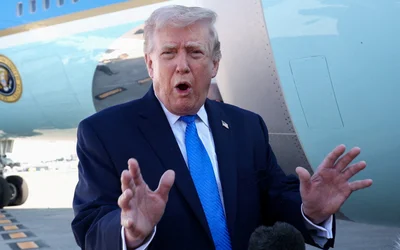
US President Donald Trump, after previously warning that he could target Iran's power plants over Tehran's continued blockade of the Strait of Hormuz, said on Monday that Washington had been engaged in "productive conversation" aimed at ending hostilities in the Middle East.
He also ordered the Pentagon to postpone any military strikes on Iranian energy infrastructure for five days, adding that talks would continue throughout the week.
Over the weekend, Fidan told journalists that Ankara was considering the possibility of a short, temporary ceasefire window to allow time for negotiation - giving all sides room to resume hostilities if talks fail.
"Israel may pursue a policy of prolonging the war and inflicting greater damage on Iran," Fidan said, pointing to Israeli Prime Minister Benjamin Netanyahu's potential role as a spoiler.
"In the face of such an approach, the stance the United States takes will become crucial. Israel gives the impression that it will not stop until it has eliminated the military and industrial targets it considers vital. The problem is that Israel does not want peace."
A Turkish source told MEE that Ankara is attempting to build a unified front in negotiations to counterbalance Israeli influence, working with European, Gulf, and other regional actors to help end the conflict.
The source added that Iranian threats against Gulf energy infrastructure and desalination plants have alarmed countries across the region, creating an opportunity to reassess the situation.
The central challenge remains finding a path forward that satisfies both sides. Some Gulf states, including the United Arab Emirates and, to a lesser extent, Saudi Arabia, insist that Iran must not be able to impose a future chokehold on the Strait of Hormuz.
"After the war ends, Gulf countries may clearly outline their expectations of Iran, and if certain conditions are met, the focus could shift to economic cooperation," Fidan said. "Iran, too, may present demands regarding US bases in the Gulf".
Is Iran open to negotiations?
Serhan Afacan, chairman of the Ankara-based Iran Research Center (IRAM), said Iran would likely accept any credible path to negotiations, as it is suffering significantly - both politically and economically - from the war. He added that Tehran's long-term stability remains uncertain, particularly if US-Israeli strikes target Iranian energy infrastructure.
According to the Turkish source, Iran has two main demands: guarantees against future attacks and compensation for its losses.
One possible solution, the source said, would be to allow Iran access to funds from its oil trade - potentially helping ensure the free flow of resources through the Strait of Hormuz. The Trump administration recently lifted sanctions on 140 million barrels of Iranian oil, freeing up an estimated $14bn in trade.
'Trump could declare victory at any time. But the Israelis appear determined to continue the attacks'
- Turkish source
Afacan noted that securing a US commitment not to carry out future attacks would be more important for Iran than financial considerations.
Despite these efforts, Ankara insiders remain pessimistic about the prospects for a lasting agreement, doubting that Israel would accept any long-term commitment not to strike Iran. Trump’s demand for zero Iranian nuclear enrichment also remains a major obstacle.
Their scepticism is partly rooted in Israel's apparent support for the strategy known as "mowing the lawn", which involves periodic strikes on Iranian military capabilities to limit Tehran's regional influence.
According to these insiders, one possible path forward could involve Trump's proposal to include Russia as a guarantor in negotiations over Iran's nuclear programme - particularly as Washington no longer views Oman as a viable venue for talks.
Russia maintains longstanding ties with Iran and Israel, as well as relations with the UAE and Saudi Arabia, potentially positioning it as a key intermediary.
"Trump could declare victory at any time," the source said. "But the Israelis appear determined to continue the attacks."
Middle East Eye delivers independent and unrivalled coverage and analysis of the Middle East, North Africa and beyond. To learn more about republishing this content and the associated fees, please fill out this form. More about MEE can be found here.