United Arab Emirates says it is leaving Opec and Opec+

The United Arab Emirates has announced its withdrawal from the Organization of the Petroleum Exporting Countries (Opec) and Opec+.
In a statement, the UAE energy ministry said the move followed a "comprehensive review" of its production policy.
"While near-term volatility, including disruptions in the Arabian Gulf and the Strait of Hormuz, continues to affect supply dynamics, underlying trends point to sustained growth in global energy demand over the medium to long term," read the statement.
"This decision follows decades of constructive cooperation. The UAE joined OPEC in 1967 through the Emirate of Abu Dhabi and continued its membership following the formation of the United Arab Emirates in 1971. Throughout this period, the UAE has played an active role in supporting global oil market stability and strengthening dialogue among producing nations."
Being outside of Opec, the UAE will be free to raise production, potentially leading to further instability in global energy prices.
New MEE newsletter: Jerusalem Dispatch
Sign up to get the latest insights and analysis on Israel-Palestine, alongside Turkey Unpacked and other MEE newsletters
The US-Israeli war on Iran since late February has had a devastating effect on a number of Gulf states, including the UAE.
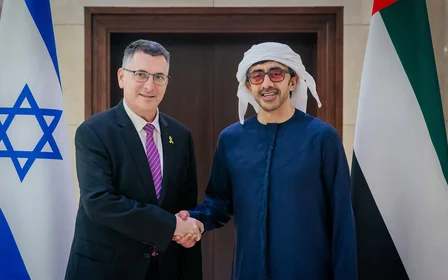
The UAE, which is the Gulf state with the closest relationship to Israel, was targeted with thousands of Iranian ballistic missiles and drones, denting the appeal of Dubai, a luxury tourism hotspot, and slowing oil exports to a trickle.
Whereas some Gulf states have urged for dialogue with Iran, the UAE has staked out a hawkish position, calling for the US to continue the war.
On Tuesday, Gulf leaders met in Jeddah, Saudi Arabia, to discuss the war on Iran. UAE Foreign Minister Sheikh Abdullah bin Zayed al-Nahyan left Jeddah after attending the summit, which was the first in-person meeting between the countries since the war began.
UAE criticises GCC
Analysts say the UAE's more hawkish position on Iran is partially due to its reliance on the Strait of Hormuz for oil exports and an unwillingness among the UAE's elite to see Iran cement itself as a regional power in the Gulf.
On Monday, the UAE criticised its Gulf allies over its response to the Israel-US war on Iran.
Presidential adviser Anwar Gargash said the six-member Gulf Cooperation Council (GCC) - half of whom are also Opec members - had failed to respond collectively after Iran launched retaliatory attacks against them.
"The GCC's stance was the weakest historically, considering the nature of the attack and the threat it posed to everyone," Gargash said.
'The current conflict has created a convenient window for the UAE to reconsider its position, at a time when any disruption to global markets would likely be limited'
- Neil Quilliam, Chatham House
Gargash said he "expected such a weak stance from the Arab League", the 22-member organisation of Middle East and North African nations based in Cairo.
"But I don't expect it from the GCC, and I am surprised by it," he told a conference in Dubai.
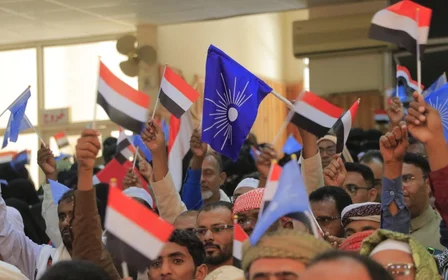
Tensions have also been high between the UAE and Saudi Arabia, the de facto head of Opec, over a range of issues including Yemen, where the two now back opposing sides in the country's conflict, and Sudan, where the Saudis have come to oppose Abu Dhabi's patronage of the Rapid Support Forces paramiliary.
The UAE energy minister, when asked by Reuters if Saudi Arabia had been consulted on its Opec decision, said Abu Dhabi did not consult directly with anyone.
Neil Quilliam, an associate fellow at Chatham House, told Middle East Eye that longstanding tensions between Riyadh and Abu Dhabi over quotas and baseline calculations within Opec mean that to some extent the move was "not unexpected."
"The current conflict has created a convenient window for the UAE to reconsider its position, at a time when any disruption to global markets would likely be limited," he said.
"By stepping outside the group, it would gain greater freedom to raise production once conditions stabilise, while the prospect of higher revenues would also support the country’s post-conflict recovery."
Middle East Eye delivers independent and unrivalled coverage and analysis of the Middle East, North Africa and beyond. To learn more about republishing this content and the associated fees, please fill out this form. More about MEE can be found here.