
Iran fires more than a dozen missiles at UAE over US 'adventurism' in Hormuz

Iran fired more than a dozen missiles and drones at the UAE in response to what it called US "military adventurism" in the Strait of Hormuz, testing a fragile ceasefire between the two sides.
The UAE said that Iran attacked it with 12 ballistic missiles, three cruise missiles and four drones on Monday.
The drone attacks sparked a fire at the UAE's port of Fujairah, a key oil export hub. Three Indian nationals suffered "moderate injuries" as a result of the attack, the Emirati government added.
"These attacks represent a dangerous escalation and an unacceptable transgression, posing a direct threat to the state's security, stability, and the safety of its territories," the UAE's foreign ministry said in a statement.
It added that the UAE "reserves its full and legitimate right to respond to these attacks".
New MEE newsletter: Jerusalem Dispatch
Sign up to get the latest insights and analysis on Israel-Palestine, alongside Turkey Unpacked and other MEE newsletters
Iranian state media cited a senior official saying the attack was in retaliation for US military manoeuvres in the Gulf and not pre-planned.
"The Islamic Republic had no plan to attack [these oil facilities]," state media reported, citing a senior official. "What happened is the product of American military adventurism aimed at creating a passage for ships to illegally cross the restricted Strait of Hormuz".
Earlier on Monday, the US announced a plan to escort vessels out of the Strait of Hormuz.
Iran’s Fars news agency reported that its forces struck a US warship with two missiles as it attempted to cross the waterway.
Trump denied the claim on Monday, adding that only a South Korean vessel had been hit. He said that the US had shot seven "fast" attack boats in the Gulf. Iran denied the claim.
UAE attacks
The exchange of fire put new pressure on a fragile ceasefire between the US and Iran.
Negotiations between the two sides have been deadlocked since the truce in the US-Israeli war on Iran took effect on 8 April. Tehran and Washington have generally refrained from attacking each other directly, instead opting to flex competing blockades of the Gulf.
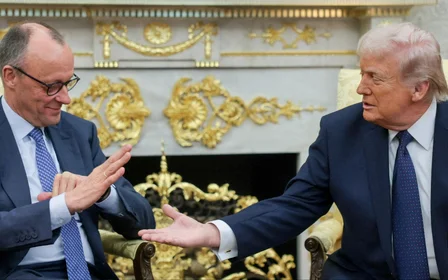
US President Donald Trump threatened Iran on Monday, but he also appeared to downplay the attack on the UAE.
He said Iran would be “blown off the face of the Earth” if it attempted to target US ships in the Strait of Hormuz. However, he added that Iran had become more "malleable" in negotiations.

The attacks underscore how Iran is singling out the UAE as it looks to enforce its terms on the US. Abu Dhabi is the Gulf state closest to Israel.
Israel deployed technicians and air defence systems to the UAE to defend against Iranian strikes.
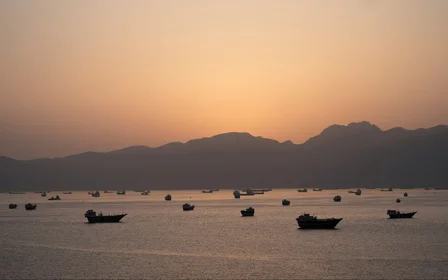
The UAE said the Iranian drone strike caused a fire at an energy installation in Fujairah, a key port for the export of Emirati oil that bypasses the Strait of Hormuz.
"Fujairah Civil Defence teams immediately responded to the incident and are continuing their efforts to control it," the Fujairah media office said in a statement.
The UAE announced it was moving school courses back to remote learning this week, following the strikes.
Meanwhile, Oman said that two people were injured when a residential building in Bukha was targeted in a strike.
Bukha is a town and the name of an Omani province, an exclave along the Gulf coast northwest of the emirate of Fujairah.
Iran’s Fars news agency reported that its forces struck a US warship with two missiles as it attempted to cross the strait. US Central Command denied the report.
Middle East Eye delivers independent and unrivalled coverage and analysis of the Middle East, North Africa and beyond. To learn more about republishing this content and the associated fees, please fill out this form. More about MEE can be found here.