
Israeli strike on Beirut kills three

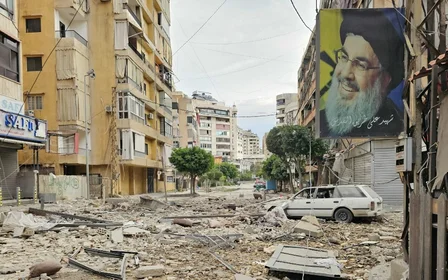
An Israeli strike on Beirut’s southern suburbs killed at least three people and wounded 15 on Sunday, drawing condemnation and threats of retaliation from senior Iranian officials.
The attack targeted an apartment building in Dahieh’s Ghobeiry neighbourhood that belongs to Beirut’s municipality, Lebanese media reported.
On Sunday morning, three drones launched from Lebanon hit northern Israel, prompting Israeli ministers to call for "aggressive" strikes on the Lebanese capital.
In a joint statement with Defence Minister Israel Katz, Prime Minister Benjamin Netanyahu said the military had targeted Hezbollah in Dahieh in response to fire on Israeli territory.
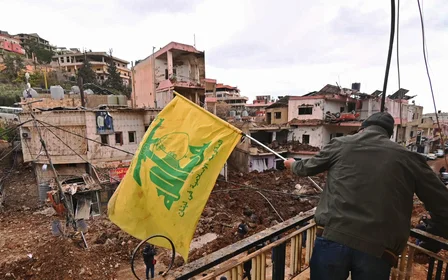
Israel has carried out daily bombardments in southern Lebanon since a ceasefire took effect on 16 April. Israeli forces have also continued to expand their occupation and demolitions of villages in the south.
New MEE newsletter: Jerusalem Dispatch
Sign up to get the latest insights and analysis on Israel-Palestine, alongside Turkey Unpacked and other MEE newsletters
The Israeli military had issued a wide-scale evacuation warning earlier on Sunday for residents of at least 30 towns and villages in the districts of Nabatieh and Sidon, north of the Litani River.
Last week, an Israeli strike on Dahieh triggered an exchange of fire between Israel and Iran that threatened to derail a US–Iran deal aimed at ending the wider war.
Sunday’s attack came as Tehran and Washington appeared to be nearing an agreement, with US and Pakistani leaders predicting it could be signed on Sunday.
Iran’s chief negotiator, Mohammad Baqer Ghalibaf, said Israel’s strike on Beirut showed either that the US lacked the will to fulfil its commitments or the ability to do so.

In a post on X, he said continuing on the current path would be impossible if commitments could not be fulfilled.
Brigadier General Mohammad Jafar Asadi, deputy commander of Iran's highest military command, said Israeli "crimes" in Lebanon would not go unanswered, according to Iranian state media.
Iran has long made the cessation of fighting in Lebanon a condition for any wider agreement with the United States.
On Friday, Iran's Foreign Minister Abbas Araghchi said that an imminent agreement with the US would include an end to hostilities in Lebanon and the withdrawal of Israeli troops from all southern Lebanese territories.
However, Israel's Defence Minister Israel Katz said there was no intention to withdraw from the areas held by the Israeli army.
Middle East Eye delivers independent and unrivalled coverage and analysis of the Middle East, North Africa and beyond. To learn more about republishing this content and the associated fees, please fill out this form. More about MEE can be found here.