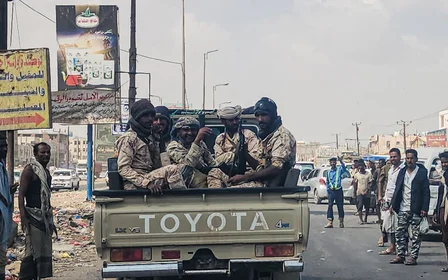

Yemeni women marry abroad for a better life, but many are left disappointed

For many young Yemeni women, the possibilities of leaving the country are tightly constrained. Unlike men, who in large numbers have left over the past 11 years in search of work and stability abroad, often heading to Gulf countries, women’s mobility is restricted by strict social norms and the requirement of a male guardian, or mahram, to travel.
For some, marriage to a wealthy foreign man has emerged as an alternative route out of the country and towards a more secure future. Yet, as many discover, the reality does not always match the dream.
Mona*, 29, was previously married to a Yemeni man, a shopkeeper in Taiz governorate. They were together for five years, a period she describes as a "journey of suffering".
"During those five whole years, I spent every single day worrying about how to get food, water, and basic services," she told Middle East Eye. "It was five years of pure hardship with my ex-husband."
After the birth of their child, their struggles deepened, to the point where even buying milk became nearly impossible.
New MEE newsletter: Jerusalem Dispatch
Sign up to get the latest insights and analysis on Israel-Palestine, alongside Turkey Unpacked and other MEE newsletters
"Enduring the lack of basic services was hard enough, so I couldn’t stay with a husband who couldn't even provide milk for his own child," Mona said.
After divorcing her husband three years ago, Mona vowed never to marry a poor man again. She decided to work and support herself until she found a wealthy husband, preferring to remain single rather than relive her past.
'I was thrilled to hear she had found a wealthy suitor for me, but I was shocked to learn he wasn't Yemeni, he was Emirati,'
- Mona, Yemeni woman
"It is better to work and provide for myself than to live with a poor husband," she said. "Marrying a wealthy man became my ultimate goal."
Mona spent a year working as a casual labourer with a Yemeni humanitarian foundation assisting vulnerable families, but she did not meet the wealthy partner she hoped for.
Then, a friend brought her unexpected news.
"I was thrilled to hear she had found a wealthy suitor for me, but I was shocked to learn he wasn't Yemeni, he was Emirati," Mona recalled.
"I hesitated for a few days, especially when I found out he already had a family in the UAE and that this would be a secret marriage based in Egypt. But ultimately, I accepted."
Mona later discovered that this friend was in fact working as a specialist marriage broker, a realisation that came only after she learned that several other young women had been married off through the same woman.
Breaking tradition for a better future
Coming from a traditional background, Mona's family believed young women should only marry within their own or neighbouring tribes, not even outside their own governorate. Naturally, marrying a foreigner was a difficult concept for them to accept.
"My brothers weren’t happy about it, but I convinced them," Mona said. "I dreamed of a better life for myself and my family."

She added firmly: "We deserve a better life. It is a dream shared by everyone, men and women alike. When we get a chance to achieve that dream, we shouldn't let it slip away. That was my belief.
"I couldn't find a wealthy husband in Yemen, so this was a way to achieve two dreams at once: a wealthy husband and a life outside the country."
After communicating with her future husband online, they agreed on all the terms of the marriage. She received a dowry of $10,000, three times what a Yemeni man would typically pay in her community, which she took as a reassuring sign that she had made the right choice.
Mona travelled to Egypt with her father, where the marriage was formally finalised. Today, she lives in Egypt while her husband travels frequently between different countries.
"I only return to Yemen occasionally to visit my family," Mona said. "I truly feel that I have achieved my dream with this marriage."
Mona also noted that her new husband is generous, providing her with enough money not only to support her own lifestyle, but also to send monthly financial support home to her family.
'I curse the moment'
Noha*, 22, was in her first year of university when she first heard about young Yemeni women marrying foreign men. After hearing success stories from her classmates and noticing the stark contrast between life in war-torn Yemen and life abroad, the idea began to take root.
Noha’s parents were divorced, and she lived with her mother. Witnessing her mother’s daily struggle to provide for the family, Noha began considering marriage to a wealthy foreigner as a way to escape hardship and build a better life.
"I brought up the idea to my mother, and we reached out to a marriage broker who later suggested a suitor holding US citizenship," Noha told MEE. "My mother liked the idea, and the two of us started speaking with him."
'These foreign husbands treat Yemeni girls like commodities, not women, and they marry them with the intention of divorcing them after a short period'
- Noha, 22
She and her mother welcomed the suitor, even though he was more than 20 years older than Noha.
The promise of financial security and the chance to leave Yemen tempted them. When the match was made, they celebrated, describing themselves as "the happiest people in the world".
Noha’s father initially opposed the arrangement. However, he was a poor man, and once financial incentives were offered, he immediately agreed. He then travelled with his daughter to Egypt, where Noha married the man.
To this day, she still does not know his country of origin, only that he holds an American passport.
"My father left me and returned to Yemen. From the very first week I spent with my husband, I felt like he treated me as a commodity rather than a wife," Noha recalled.
"He was a liar and completely immoral. I couldn't tell what was true because of his endless lies, and I eventually realised that he marries several young women a year."
Trapped in a foreign country, Noha found herself completely isolated. Her only dream was to go home.
"Can you imagine living in the same room with a terrible person in a country where you don't have a single relative or friend?" she said.
"I cursed the moment I ever thought about marrying a foreigner."
When Noha told her father about her suffering, he returned to Egypt within less than a month and took her back to Yemen. She is now living with her mother again.
"Based on my experience, I can say that these foreign husbands treat Yemeni girls like commodities, not women, and they marry them with the intention of divorcing them after a short period," she said.
"Maybe there are a few rare, genuinely good experiences out there, but I now realise that the success stories I heard at university were completely fabricated by marriage brokers."
Fleeing Yemen
Mariam*, 20, is active on social media and firmly believes Yemen is no longer a viable place in which to build a good life.
She says that women, like men, should actively seek opportunities to travel abroad, given that both genders suffer similarly harsh living conditions in the country.
'I couldn't find a wealthy husband in Yemen, so this was a way to achieve two dreams at once: a wealthy husband and a life outside the country'
- Mona, 29
"In my everyday life, all I hear are complaints about the situation from people in my community, which means Yemen isn’t the best place for us to spend our lives," Mariam told MEE.
"We only live once, and we should be able to enjoy it."
She said she closely follows life outside Yemen, particularly in countries such as Egypt. Her dream is to move there, or elsewhere abroad, although she prefers Egypt because it remains relatively accessible for Yemenis.
"I know that as a Yemeni woman, I need a mahram to travel abroad, so I hope to find a good husband who can take me outside of Yemen," she added. "Life outside this country is like heaven, and I really don't want to raise a family here."
Mariam said that she would gladly marry either a wealthy Yemeni or a foreign man, as long as he could take her abroad.
"I have already rejected several suitors because I knew my life wouldn’t get any better with them, it would just be a continuation of my current situation, if not worse."
Temporary marriage
Sociologist Naif Nouraddin said most of the young women who marry foreigners come from broken homes. Because their parents are divorced, many grew up with single mothers, lacking financial and emotional stability.
"These young women are trying to compensate by seeking a better life with foreigners, but it usually leads to another family breakdown. The majority of these men marry young Yemeni women only temporarily and then divorce them," Noureddin told MEE.
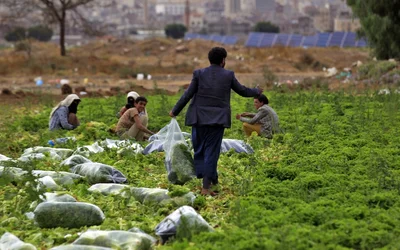
He said that while the economic crisis is a major driving factor, not all impoverished families are willing to accept a foreign suitor. It is usually limited to people who are either desperate for a life outside Yemen or seeking the social prestige associated with marrying a foreigner.
Nouraddin noted that in almost all of these cases, the women do not have children with their husbands, which he said is a strong indicator that these arrangements are temporary.
"When we see these women giving birth and starting families, we can call it a real marriage. But that rarely happens; the majority end up divorced after just a few months," he said.
Consequently, the sociologist believes there needs to be greater public awareness about international marriages. He added that he has seen numerous women return to Yemen suffering from deep emotional trauma because of these failed marriages.
Mona, who remains married to her foreign husband, echoed this sentiment: "Marrying a foreign husband isn't the best choice for a Yemeni girl; it is a last resort for those who can't find a wealthy Yemeni husband, or at least one who can provide for a family."
"Living far from your country and family with a foreign man is not easy. For me, I felt I had no other choice, but my advice to young Yemeni women is to seek a Yemeni husband first."
*Names were changed for safety and dignity reasons.
Middle East Eye delivers independent and unrivalled coverage and analysis of the Middle East, North Africa and beyond. To learn more about republishing this content and the associated fees, please fill out this form. More about MEE can be found here.