How Iran and Ukraine are strategically sinking their rivals at sea


The Iran war may be fought primarily remotely via the air, but its strategic outcome is increasingly being decided at sea.
The latest strikes and counterstrikes have clarified rather than altered that central fact. Washington may escalate through a ground intervention, wider attacks on Iran’s critical infrastructure, or a strike against the deeply buried nuclear-linked complex at Pickaxe Mountain in Isfahan province.
Each option could inflict further damage and expand the war. None, however, is likely to eliminate Iran’s distributed maritime architecture or make the Strait of Hormuz strategically irrelevant.
Last month, the Iran war’s political afterlife was being staged in Tehran. The funeral ceremonies for the country’s former supreme leader, Ali Khamenei, were not merely rituals of mourning; they became a demonstration of institutional continuity after shock, decapitation and bombardment.
That resilience was not produced by the sea alone, but the maritime domain helped to preserve it.
New MEE newsletter: Jerusalem Dispatch
Sign up to get the latest insights and analysis on Israel-Palestine, alongside Turkey Unpacked and other MEE newsletters
Iran could absorb severe punishment from its skies because it retained coercive leverage at sea: mined routes, controlled passage, slowed traffic through the Strait of Hormuz, warnings to vessels using “unauthorised” corridors, and the continuing threat that any air campaign against Iran would generate a maritime bill for Washington, Gulf capitals, insurers and global energy markets.
The administrations of US President Donald Trump and Israeli Prime Minister Benjamin Netanyahu failed to force Mojtaba Khamenei, Iran’s new supreme leader, to drink from the late Ruhollah Khomeini’s famous “chalice of poison”.
In a way, Trump drank from a smaller chalice of his own, after falsely claiming to have “destroyed 100 percent of Iran’s military capability”. The 14-point interim deal with Iran looked less like surrender than the diplomatic translation of a maritime fact: Iran only had to make Hormuz costly enough to move from a war to a table. And now from the table to the war again.
The result was not victory in the classical sense. It was strategic sabotage of Washington’s war aims, converted into bargaining power.
The campaign exposed the gap between operational dominance and strategic victory. American and Israeli airpower could punish Iran’s air forces, damage fixed infrastructure, and kill senior figures. But regime collapse, missile disarmament, and military incapacitation did not follow.
The ground forces of the Islamic Revolutionary Guard Corps (IRGC) and the regular army, known as the Artesh, remained solid. More importantly, the part of Iran’s force design least dependent on pristine airspace - its littoral naval and missile-drone complex - retained both coercive value and combat effectiveness.
Lessons of the past
Military history should have warned against overconfidence. In Hanoi in April 1975, Colonel Harry G Summers Jr told his North Vietnamese counterpart: “You know, you never defeated us on the battlefield.” Colonel Tu’s reply was: “That may be so, but it’s also irrelevant.”
That exchange should haunt any assessment of the 2026 Iran war. Its logic is simple: tactical dominance, even with air superiority, does not decide a war if it fails to break the adversary’s strategic leverage and steely will.
The same logic applies at sea. During the 1980s tanker war, Iran was already exhausted by seven years of war with Iraq when the US entered the fray more directly through a series of operations: Earnest Will, Prime Chance, Nimble Archer, and finally, Praying Mantis.
The last of these was a clear US operational victory: in a single day in April 1988, American forces destroyed or disabled key Iranian naval assets and oil-platform command posts. But that victory came against an inexperienced, attrited Iranian naval force, and with a huge US posture built for escort, punishment and mine-clearing.
The sea can decide wars fought on land or in the air - not by defeating the stronger navy outright, but by sinking its strategic objectives
These were relatively limited objectives compared to regime change, and they were backed by a large maritime footprint against an inexperienced, weakened adversary.
The present problem for US forces is different. Iran has divided its maritime labour between the Nedaja, the regular navy seeking a broader blue-water presence, and the Nedsa, the IRGC navy, which turns the Gulf into a green-water battlespace.
The Nedaja is a navy of “presence” and “prestige”. The Nedsa is a navy of denial, harassment, ambiguity, redundancy and effectiveness. The former can be found and struck; the latter is designed to be too small, dispersed, numerous and geographically embedded to be cleanly annihilated.
Geography itself, like technology and other macro-level variables, is passive. It can serve blue or red. What matters are tactics, techniques, procedures, system adaptations, munitions innovations and command culture, which can convert geography into coercive power. Iran learned that lesson better at sea than in its own skies.
An IRGC naval commander described the doctrinal logic of Iran’s asymmetric naval warfare in one line: “We are everywhere and at the same time nowhere.” In operational terms, that means small craft, mines, coastal fires, uncrewed systems, midget submarines, island facilities, and distributed sensors around islands such as Qeshm, Larak, Abu Musa, the Tunbs and Sirri.
These are not aircraft carriers. They are static maritime bastions and ambiguity engines.
Maritime coercion
Ukraine provides a comparison: the sea can decide a land war. Kyiv lost most of its blue-water naval assets during Russia’s 2014 seizure of Crimea, and by 2022 it had no conventional blue-water fleet with which to confront Russia ship for ship.
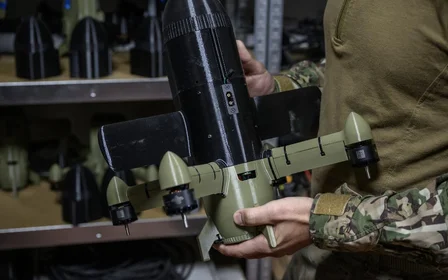
Yet Kyiv used coastal missiles, air-launched cruise missiles, special operations, partisan movements, western intelligence, and uncrewed surface vessels to turn the northwestern Black Sea into a denial zone.
The results have been strategic rather than merely tactical: Ukraine has sunk or seriously damaged roughly a third of Russia’s Black Sea Fleet’s combat assets, pushed much of the surviving fleet away from Sevastopol, reduced Russia’s freedom of maritime manoeuvre, and reopened a working export corridor from Odesa and other ports.
In effect, Ukraine did not need command of the sea to sink Russia’s larger strategic objectives: the blockade of Ukraine, coercive pressure against Odesa, the secure use of Crimea as a fleet hub, and the maritime strangulation of the Ukrainian economy.
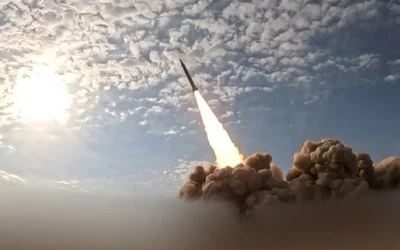
Iran’s Gulf doctrine seeks a mirror-image effect against the US. Tehran does not need to defeat the US Navy ship for ship; it has converted Hormuz, its islands, coastal missiles, mines, drones, fast craft, and small submarines into a theatre where a superior fleet can win tactically, but still lose strategically.
The lesson is that sea denial is no longer simply a poor navy’s substitute for sea control. In the Black Sea, it helped Ukraine keep a larger sea power from achieving its war aims. In the Gulf, it enabled Iran to “sink” Washington’s strategic objectives without ever winning a classical naval battle.
The comparison might be useful, but these cases are definitely not identical. Ukraine used maritime drones and coastal fires to create theatre-level sea denial, reopen trade routes, and help isolate the occupation forces and their proxies in Crimea.
Iran used the same family of ideas for chokepoint coercion: not to command the sea, but to threaten access, paralyse insurance markets, delay tankers, strain Gulf air defences, and remind Washington that every air campaign has a maritime bill. Iran’s approach was less a classical naval campaign than an innovative resistance architecture fused with maritime coercion.
The paradox is therefore simple. Iran lost many tactical exchanges and suffered a series of operational defeats, but it still preserved strategic leverage. The US dominated the skies but could not make the sea irrelevant.
Ukraine has shown the entire world that a fleet can be beaten without a fleet. Iran has shown that a navy can destroy a superpower’s strategic objectives and shape diplomacy without winning a single naval battle.
In the age of drones, missiles, mines, non-state forces and distributed targeting, the sea can decide wars fought on land or in the air - not by defeating the stronger navy outright, but by sinking its strategic objectives.
The views expressed in this article belong to the author and do not necessarily reflect the editorial policy of Middle East Eye.
Middle East Eye delivers independent and unrivalled coverage and analysis of the Middle East, North Africa and beyond. To learn more about republishing this content and the associated fees, please fill out this form. More about MEE can be found here.