
Yemen's Houthis declare blockade on Saudi Arabia, raising Red Sea tensions

Yemen’s Houthis announced a maritime embargo of Saudi Arabia on Monday, escalating tensions with Riyadh in the Red Sea at a time when it is serving as a linchpin for global energy markets.
The Houthis' armed forces said in a statement that they had imposed "a maritime embargo against the criminal Saudi enemy, based on the equation of 'an eye for an eye', effective immediately".
Saudi Arabia condemned the announcement, saying the Houthis were trying to "deflect" attention away from their economic mismanagement and public discontent.
"The Houthi militia dragged Yemen into the regional conflict and targeted commercial ships in the Red Sea, thereby exacerbating the suffering of the Yemeni people, preventing them from traveling, and worsening the economic situation," Saudi Arabia's foreign ministry said in a statement.
The Houthis did not say how they planned to impose the embargo, but it comes as tensions with Riyadh were already rising over the status of flights to Sanaa, the capital of Yemen held by the Houthis.
New MEE newsletter: Jerusalem Dispatch
Sign up to get the latest insights and analysis on Israel-Palestine, alongside Turkey Unpacked and other MEE newsletters
Saudi Arabian Defence Minister Khalid bin Salman has suggested to counterparts that Riyadh has wide latitude from the Trump administration to conduct offensive strikes on the group, but other elements of the Saudi Arabian government say the kingdom’s posture is solely defensive, Middle East Eye reported recently.
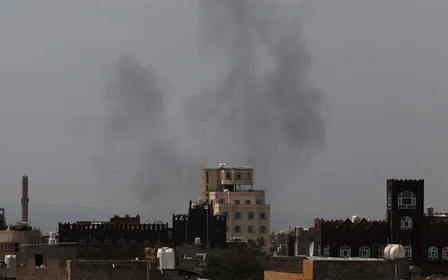
Saudi Arabia and the Houthis traded fire last week for the first time in years, threatening a 2022 truce backed by the United Nations that has held despite expiring.
The exchange of fire was set off when an Iranian plane arriving from Tehran attempted to land in Sanaa, challenging the status quo under which Yemen’s connection with the outside world has mainly been restricted to flights to Cairo and Amman.
The Ansar Allah administration of the Houthis control Sanaa and most of Yemen’s populated northwest, while Saudi Arabia backs an internationally recognised government based in the southern Yemeni port city of Aden. The two sides have failed to reach a political settlement to bridge Yemen’s divide.

The Houthi threat has a greater global impact now because the Red Sea has emerged as the main thoroughfare for Saudi Arabian oil exports, with Iran attacking shipping in the Strait of Hormuz.
The kingdom is sending roughly 4.5 million barrels per day (bpd) of oil through the Red Sea, mainly to Asia.
The Houthis have generally sat out the US-Israeli war on Iran, allowing Saudi Arabia to keep global energy markets supplied at a time when exports from Kuwait, Bahrain and Iraq have been curtailed.
Saudi Arabia’s Red Sea ports have also emerged as vital for the entry of critical imports to the Gulf.
The Houthis have demonstrated they can throttle shipping in the Red Sea.
They launched attacks on vessels following the Hamas-led 7 October 2023 attack on southern Israel. The group said its attacks were in solidarity with besieged Palestinians in Gaza, and it won support across the Arab and Muslim world.
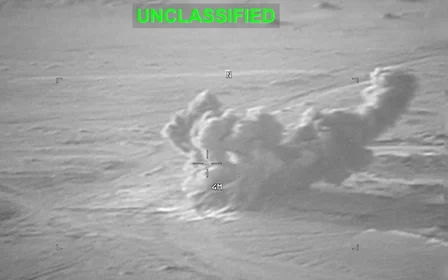
US President Donald Trump then ordered a wide-scale bombing campaign against the Houthis in 2025. He eventually stopped the attacks ahead of a visit to the Gulf in response to lobbying by Saudi Arabia, MEE revealed at the time.
Both sides have abided by the May 2025 truce at sea.
Houthis looking for a deal?
Although the Houthis officially sat out the war that erupted after the US and Israel attacked Iran in February, Gulf and US officials who spoke with MEE widely believe that the Houthis were responsible for some land strikes on Saudi Arabia.
Some Yemeni experts say that the Houthis are unlikely to resume attacking vessels in the Red Sea because they do not want to drag the Trump administration into a new round of conflict.
Mohammed al-Basha, a US-based Yemen expert, told MEE that the Houthis were looking for “a deal”.
“I don’t think the Houthis will start hitting ships yet,” he said.
The Houthis and Saudi Arabia have been negotiating a number of files, including the release of prisoners, the payment of salaries, reconstruction funds, and the ongoing embargo on Houthi-controlled ports like Hodeida.
Still, even the Houthi declaration of an embargo could make shipping and insurance companies more wary of using the Red Sea. Brent, the international oil benchmark, was trading flat on Monday at $88.12 per barrel.
Middle East Eye delivers independent and unrivalled coverage and analysis of the Middle East, North Africa and beyond. To learn more about republishing this content and the associated fees, please fill out this form. More about MEE can be found here.