ICC member states remove prosecutor Karim Khan by majority vote

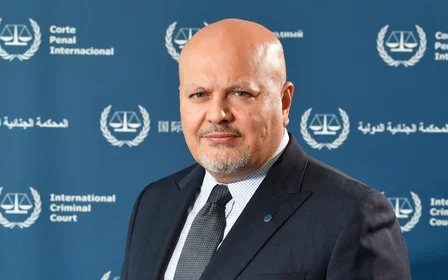
Member states of the International Criminal Court (ICC) voted by a majority on Friday to remove chief prosecutor Karim Khan over misconduct claims, during a special session at the United Nations headquarters in New York City.
According to diplomatic sources, 82 out of the court's 125 members voted by a secret ballot to dismiss the prosecutor, surpassing the absolute majority threshold (63) needed for removal.
Thirteen voted against removal, while 15 abstained.
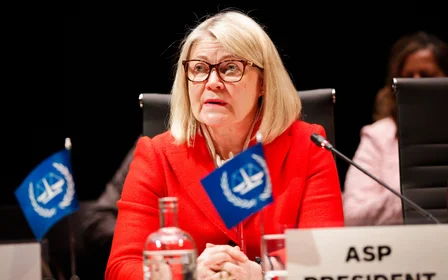
The President of the Assembly of States Parties (ASP), Paivi Kaukoranta, confirmed the vote results in a statement to assembly members broadcast live on UN Web TV.
She said the 82 states voted that "the elected official... committed serious misconduct and a serious breach of duty" by engaging in "prohibited conduct against a subordinate staff member".
New MEE newsletter: Jerusalem Dispatch
Sign up to get the latest insights and analysis on Israel-Palestine, alongside Turkey Unpacked and other MEE newsletters
It is the first time in the ICC's 24-year history that member states have voted to remove a sitting chief prosecutor from office.
The removal decision takes immediate effect, and elections for a new prosecutor will follow.
Khan’s chief lawyer, Tayab Ali, expressed “regret” that the ASP had disregarded concerns about due process raised by more than 180 rights groups and legal experts.
“The decision is unsupported by any lawful or properly reasoned finding that Mr Khan KC committed misconduct or breached his duties as Prosecutor,” he said in a statement.
'The Prosecutor of this Court has been removed by an executive vote while under sanctions and while the Court is under immense political pressure'
- Tayab Ali, Karim Khan's legal counsel
"Mr Khan's removal was determined by a process in which he was never given a fair opportunity to be heard, and in defiance of the conclusions of the independent judges who examined the full evidential record."
Friday's misconduct vote focused on allegations of a sexual relationship between Khan and a member of his office staff.
Member states were asked to vote on the findings of the Bureau of the ASP, the court's executive body, which concluded last month that "the evidence establishes beyond reasonable doubt" that Khan "engaged in a sexual relationship" with the complainant.
It argued that "in the context of that power imbalance a sexual relationship could never be appropriate".
Khan denied that any sexual relationship had taken place, while the complainant’s account - which was the focus of an investigation by the United Nations Office of Internal Oversight Services (OIOS) - centred on allegations of non-consensual conduct.
In an interview with CNN last week, which was her first public appearance in connection with the case, the complainant stood by the allegation of non-consensual sexual conduct.
Khan told MEE in May that, if dismissed, he would appeal the removal before the administrative tribunal of the International Labour Organization, the body to which ICC staff may appeal employment decisions.
Friday's vote comes shortly following extraordinary threats by US Secretary of State Marco Rubio that Washington would "dismantle the ICC - brick by brick, if necessary", while most of the court’s judges and prosecutors, including Khan, have been sanctioned by the US over their work on the Palestine and Afghanistan war crimes investigations.
The disciplinary process against Khan emerged in the wake of his decision to seek arrest warrants over two years ago for Israel’s Prime Minister Benjamin Netanyahu and former Defence Minister Yoav Gallant, along with three Hamas leaders, over alleged war crimes committed during the war in Gaza since October 2023.
Commenting before the prosecutor's dismissal had been officially confirmed, Israeli Foreign Minister Gideon Saar welcomed Khan's removal as "long-delayed".
He called on the court to drop the arrest warrants against Israeli officials, reiterating Israel's debunked claim that it was rushed to distract from sexual misconduct allegations.
"These warrants, issued against a country that is not even a member of the ICC, should never have been sought in the first place and should be revoked immediately," he wrote on X.
The vote also comes amid questions and criticism about the ASP Bureau's handling of the investigation, particularly over concerns that the process has been “politicised” after the opinion of the judges’ panel, which unanimously found that no wrongdoing had been established, was disregarded by bureau member states.
More than 180 Palestinian civil society organisations and rights groups signed a statement last week arguing that the disciplinary process "has been reduced to a political referendum following the national interests of individual States Parties".
Ali, Khan's lawyer, said Friday's decision "has grave implications" beyond the misconduct case.
"The independence of the International Criminal Court depends upon its elected officials being protected from removal through processes that are political, procedurally unfair or inconsistent with the findings of independent judicial bodies," he said in his first reaction to the removal vote.
"The Prosecutor of this Court has been removed by an executive vote while under sanctions and while the Court is under immense political pressure."
Misconduct allegations
The complaint against Khan included allegations of sexual assault on a number of occasions, including on overseas missions and at The Hague, where the court is based. According to the complaint, the alleged abuse began in March 2023 and continued for nearly a year.
The allegations were first revealed to Khan in person by members of his team on 2 May 2024.
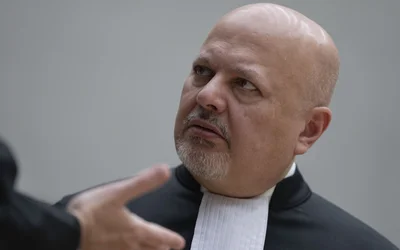
An internal investigation by the ICC’s own investigative body, the Internal Oversight Mechanism (IOM), was opened and closed the following week, as the complainant refused to cooperate.
Later in the same month, Khan officially sought arrest warrants for Netanyahu, Gallant, and three Hamas officials.
A number of media reports at the time suggested that Khan sought arrest warrants on 20 May that year to win support in the context of allegations against him.
But, according to an MEE investigation, the prosecutor’s decision to apply for warrants was made six weeks before the allegations were made, and the application for the warrants was submitted only after the first internal investigation into the harassment accusations had been opened and closed.
Allegations against Khan resurfaced on social media and in the media in October 2024.
A second IOM investigation was opened and closed in November, but the complainant again refused to cooperate, prompting the ASP to commission an outsourced investigation by the OIOS.
For more than a year, UN investigators were tasked with gathering and weighing evidence against Khan to enable the panel of judges appointed by the bureau to provide authoritative legal advice on whether the prosecutor had committed misconduct, applying the standard of proof "beyond reasonable doubt".
On 11 December, they submitted their 150-page report and 5,000 pages of evidence to the panel. The judges then spent nearly three months examining the OIOS probe before reaching their conclusion in March.
In a report seen by MEE, the panel concluded unanimously that the facts presented in the UN investigation "do not establish misconduct or breach of duty under the relevant framework".
But a few weeks after the judges' panel report, a majority of bureau members backed a motion to disregard it, suggesting that Khan may have committed misconduct. The vote prompted concerns that the process could be politicised.
After giving Khan and the complainants a final opportunity to make further submissions, the bureau then moved to formally suspend him two months later, after voting by a majority that he committed "serious misconduct", and referred the matter to the ASP.
The removal vote is based on a process that departs from the court’s own rules.
MEE reported this month that the ASP bureau has changed the voting process to lower the threshold for Khan’s removal, from a two-stage vote - in which members would vote separately on whether Khan had committed misconduct and whether he should be removed from his job - to a single vote.
Under the new process, member states were asked to cast their votes on a single motion approving both the bureau's finding of serious misconduct against Khan and the prosecutor's dismissal, according to multiple diplomatic sources.
Khan, a British barrister, was elected as chief prosecutor by the ASP in February 2021. He is the third person to hold that position since the court’s founding in 2002.
In addition to seeking warrants for Israeli leaders, his office has sought arrest warrants for Russia’s Vladimir Putin, the Philippines’ Rodrigo Duterte, Myanmar’s junta leaders, and Taliban officials in Afghanistan.
Middle East Eye delivers independent and unrivalled coverage and analysis of the Middle East, North Africa and beyond. To learn more about republishing this content and the associated fees, please fill out this form. More about MEE can be found here.