The Gaza genocide has turned the Palestinian question into the Israeli problem
The genocide in Gaza since October 2023, which has killed more than 73,000 Palestinians, has marked a historic turning point in the Palestinian struggle and in the nature of the conflict with the Zionist project.
What unfolded went far beyond another war or another episode of Israeli violence; it exposed to the world the true nature of the Zionist project as a settler-colonial enterprise built upon ethnic cleansing, apartheid and the systematic erasure of the indigenous Palestinian people.
Since its emergence in the late 19th century, the Zionist movement has sought to establish a settler-colonial state in Palestine through the mobilisation of western imperialist powers and an enduring alliance with dominant forces in the international system.
While classical colonialism sought primarily to exploit indigenous populations, Zionism belongs to the tradition of settler-colonial movements that sought to replace them. From its inception, the movement went beyond seeking political rule, aiming to transform Palestine's demographic, political and cultural character.
Zionism was never an indigenous movement of the Middle East. It was a European colonial solution to what Europeans themselves called the Jewish Question, imposed upon the Palestinian people.
New MEE newsletter: Jerusalem Dispatch
Sign up to get the latest insights and analysis on Israel-Palestine, alongside Turkey Unpacked and other MEE newsletters
For more than a century, the Zionist project has rested upon three strategic foundations: unwavering political, military and financial support from the West; the fragmentation of the surrounding Arab and Islamic environment and its preoccupation with internal conflicts; and the deliberate creation of irreversible facts on the ground until dispossession is accepted as political reality.
Despite the immense political and military advantages enjoyed by the Zionist regime, the Palestinian people have succeeded through continuous resistance and steadfastness in frustrating its central objective: eliminating the Palestinian presence or forcing its submission.
Since the Nakba of 1948, Palestinians have remained firmly attached to their land, identity and historical rights, paying an extraordinary price to preserve their existence, sustain their struggle and secure the future of coming generations.
Historically, settler-colonial projects rarely collapse from military defeat alone. They begin to unravel when the indigenous population refuses to disappear, when the regime's international legitimacy collapses, and when the domestic and geopolitical cost of maintaining occupation becomes unsustainable.
Oslo's collapse
The Oslo process, together with the illusion of a negotiated peace, represented an attempt to transform the Palestinian question from a struggle for national liberation, self-determination and independence into a project for managing occupation. More than three decades later, its failure is beyond dispute.
Israeli settlements expanded dramatically, Palestinian land steadily diminished, and the Palestinian Authority evolved into a fragmented entity with severely limited authority, operating under the domination and structural constraints imposed by the occupation.
Meanwhile, the Zionist state continued creating irreversible realities on the ground that rendered the establishment of an independent Palestinian state, even one demilitarised, territorially fragmented and deprived of genuine sovereignty, virtually impossible.
Israeli claims to the tradition of western liberal democracy and the rule of law suffered perhaps their greatest crisis of credibility since the establishment of the state
The events of 7 October 2023 fundamentally shattered the political status quo, altered the trajectory of the conflict and exposed the bankruptcy of the assumptions that had governed regional politics for more than three decades.
The genocide that followed brought the moral and political end of the Oslo paradigm and the illusion that the conflict could be resolved through endless negotiations conducted under conditions of overwhelming asymmetry.
The myth of the two-state solution finally collapsed under the weight of political reality.
Israeli claims to the tradition of western liberal democracy and the rule of law suffered perhaps their greatest crisis of credibility since the establishment of the state.
The world increasingly recognised that the issue was never simply one of borders or security arrangements, but a struggle between an indigenous people seeking freedom and a settler-colonial project founded upon exclusion, supremacy and permanent domination.
The genocide also dealt a devastating blow to Benjamin Netanyahu's vision of a "New Middle East".
Only weeks before 7 October, he stood before the United Nations displaying a map that effectively erased Palestine and presented Israel as the unquestioned centre of a new regional order built upon normalisation, economic integration and strategic hegemony. Projects such as the India-Middle East-Europe Economic Corridor (IMEC) were designed to institutionalise Israel as the indispensable commercial and security bridge linking Asia, the Gulf, Europe and Africa.
Gaza overturned that vision.
Instead of inaugurating an era of uncontested Zionist hegemony, it restored Palestine to the centre of regional and international politics, disrupted the momentum of normalisation and demonstrated that no regional order can achieve lasting legitimacy while excluding the Palestinian people and denying their inalienable rights.
Global solidarity
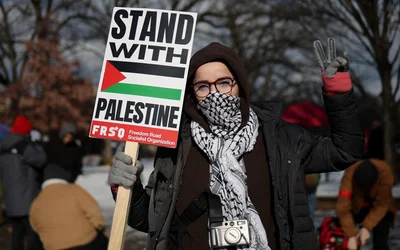
The world witnessed the emergence of the largest global solidarity movement for Palestine in modern history. Millions marched in capitals across East and West.
Universities, labour unions and grassroots civil society organisations became arenas of political and moral confrontation with the Zionist state and its global networks of support.
Palestine once again became one of the defining questions in contemporary debates over colonialism, racism, international law, human rights and national liberation.
This movement differs sharply from previous waves of solidarity. It is younger, more international, less constrained by traditional political institutions and, most significantly, willing to question the ideological and institutional foundations of Zionism itself.
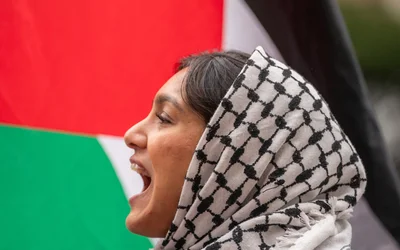
Perhaps for the first time since Israel's establishment, its official narrative no longer enjoys a near-monopoly within large segments of western public discourse.
The significance of Gaza extends well beyond Palestine. The genocide unfolded at a moment when the international system was already undergoing profound transformation.
The unipolar order that emerged after the end of the Cold War in 1991 has steadily given way to an increasingly contested and multipolar world.
Gaza exposed the deep moral crisis within the western political establishment and highlighted the declining ability of the United States and its allies to impose their preferred narratives or translate overwhelming military superiority into enduring political outcomes.
Despite unprecedented western diplomatic, military and financial backing for Israel, Washington proved unable to restore Israel's international legitimacy, isolate the Palestinian resistance or stem the tide of global solidarity.
Across Asia, Africa and Latin America, and among the youth and working class in the West, Palestine has become a point of convergence for movements resisting the unequal structures inherited from the colonial era.
A new vision
Gaza has altered the questions people ask. The debate is no longer confined to what happened in Palestine, but how an international order claiming to defend human rights could permit such destruction to unfold in full public view.
The strategic question is no longer how to revive a negotiation process that has long since exhausted itself, but how to formulate a new vision for the liberation struggle capable of responding to the historic transformations produced by Gaza.
The conflict has never been a territorial dispute. It is, at its core, a struggle against a settler-colonial and supremacist project rooted in displacement, exclusion and permanent domination.
The strategic objective, therefore, cannot be to manage the occupation or adapt to it. It must become the dismantling of the racist Zionist project itself and the political, legal, military and ideological structures upon which its dominance rests.
Dismantling the Zionist project is not an expression of hostility towards Jews, nor does it mean the denial of their rights, nor is this a religious conflict.
Zionism is not Judaism, and dismantling the Zionist project does not mean dismantling Jewish life in Palestine or elsewhere.
It means dismantling a colonial political order built upon racial privilege, exclusion and dispossession, just as the dismantling of South African apartheid required only the abolition of the structures that institutionalised racial domination.
Recent decades show that although the Palestinian people remain at the centre of this struggle, they cannot by themselves bring it to a conclusion. Yet they remain its essential spearhead.
The steadfastness of Palestinians in their homeland, the unwavering commitment of refugees to the right of return, and the continued resistance to displacement have preserved the Palestinian cause despite repeated attempts to erase it from history.
A global movement
Palestinian action on the global stage has become indispensable. Today, about half of the 15.5 million Palestinian people live outside historic Palestine.
Many of the political, economic, financial, academic and media centres that shape international opinion and policy lie beyond Palestine.
Our central task is to rebuild an effective solidarity movement across the world and transform it into an organised global force capable of driving the liberation struggle forward.
This role goes far beyond humanitarian relief or symbolic solidarity. It demands an organised global movement capable of operating simultaneously across political, legal, economic and cultural arenas.
The objective is to systematically weaken the sources of Zionist global influence while exposing the colonial foundations of the project itself
Successful liberation movements have always understood that struggles against colonialism are not won on the battlefield alone; they are equally fought in universities, courts, parliaments, labour and trade unions, professional associations and syndicates, cultural institutions, financial markets and the realm of public opinion.
The Zionist movement historically succeeded in constructing an extensive international network that sustained its project politically, financially, diplomatically, intellectually and culturally for more than a century.
The challenge for liberation today is to move beyond merely responding to these structures and build alternative networks rooted in the universal values of justice, equality, freedom and self-determination. The objective is to systematically weaken the sources of Zionist global influence while exposing the colonial foundations of the project itself.
This requires a long-term strategy. Liberation movements rarely succeed through spontaneous mobilisation alone. They prevail by patiently building institutions, educating new generations, forging broad coalitions and maintaining strategic discipline over time.
Political organisation, rather than emotional reaction, has historically distinguished successful national liberation movements from those that ultimately fractured or dissolved.
Organising for Palestinian liberation and de-Zionisation must operate on multiple levels to understand and challenge the political, financial, cultural and media structures through which Zionist influence is reproduced across many societies.
It should strengthen campaigns for boycott, divestment and sanctions; pursue accountability for war crimes before national and international courts; expand cooperation with liberation movements, religious institutions, universities and human rights organisations; and deepen engagement within political parties, media institutions, research centres, university campuses, labour and trade unions, cultural forums and civil society organisations.
International law occupies an important place within this strategy, but it should not be mistaken for the strategy itself.
Follow Middle East Eye's live coverage of Israel's genocide in Gaza
Proceedings before the International Court of Justice, particularly in the South Africa case, together with actions before the International Criminal Court and other judicial forums, have weakened Israel's longstanding claims to exceptionalism and impunity.
Yet history demonstrates that legal victories achieve lasting significance only when supported by organised political action and sustained popular mobilisation. Courts can reinforce political struggle, but they cannot substitute for it.
Economic pressure is equally critical: throughout history, colonial systems have relied as much on international financial integration and commercial privilege as on military superiority.
Campaigns targeting investments, supply chains, institutional partnerships, corporate complicity and economic normalisation represent an essential component of any long-term strategy aimed at dismantling structures of colonial domination.
Universal cause
The Palestinian liberation movement must also reclaim its Arab, Islamic and universal dimensions.
Palestine has never been merely the concern of an isolated people seeking national independence; it has been intimately connected to the future of the region, its identity, its political independence and its civilisational project.
Gaza demonstrated once again that the Zionist enterprise does not threaten Palestinians alone. It seeks to institutionalise a regional order founded upon military supremacy, political dependency, economic subordination and permanent fragmentation.
This requires a fundamental rethinking of the role of the Ummah. Palestine cannot be viewed simply as a humanitarian cause deserving sympathy.
It remains the central civilisational question confronting the Muslim world because the Zionist project has functioned as a strategic instrument for preserving regional fragmentation and preventing independent political development.
The struggle to dismantle Zionist structures cannot therefore be separated from the broader project of rebuilding the Ummah politically, intellectually, economically and spiritually. The liberation of Palestine and the renewal of the Ummah have become mutually reinforcing historical processes.
Palestine must never be reduced to a sectarian, ethnic or narrowly ideological cause. One of its greatest strengths has always been its universal moral appeal. It speaks to all those who reject colonialism, racism, apartheid and injustice.
For that reason, Palestine should continue to serve as a unifying cause for people of conscience regardless of religion, ethnicity, nationality or political affiliation.
Palestine now occupies a place similar to that held by South Africa during the last decades of the 20th century. It has become one of the defining moral and political questions of our time.
As South Africa once symbolised the global struggle against apartheid, Palestine increasingly symbolises the contemporary struggle against settler colonialism, racial domination and imperial hegemony.
The historic responsibility facing Palestinians and their allies is greater than resisting the immediate consequences of occupation: it is to participate consciously in the long historical process of dismantling the political, intellectual and institutional structures that have sustained the Zionist project for generations.
Nor does this task rest upon Palestinians alone. Palestine remains the central cause of the Ummah and has also become an increasingly important cause for humanity as a whole.
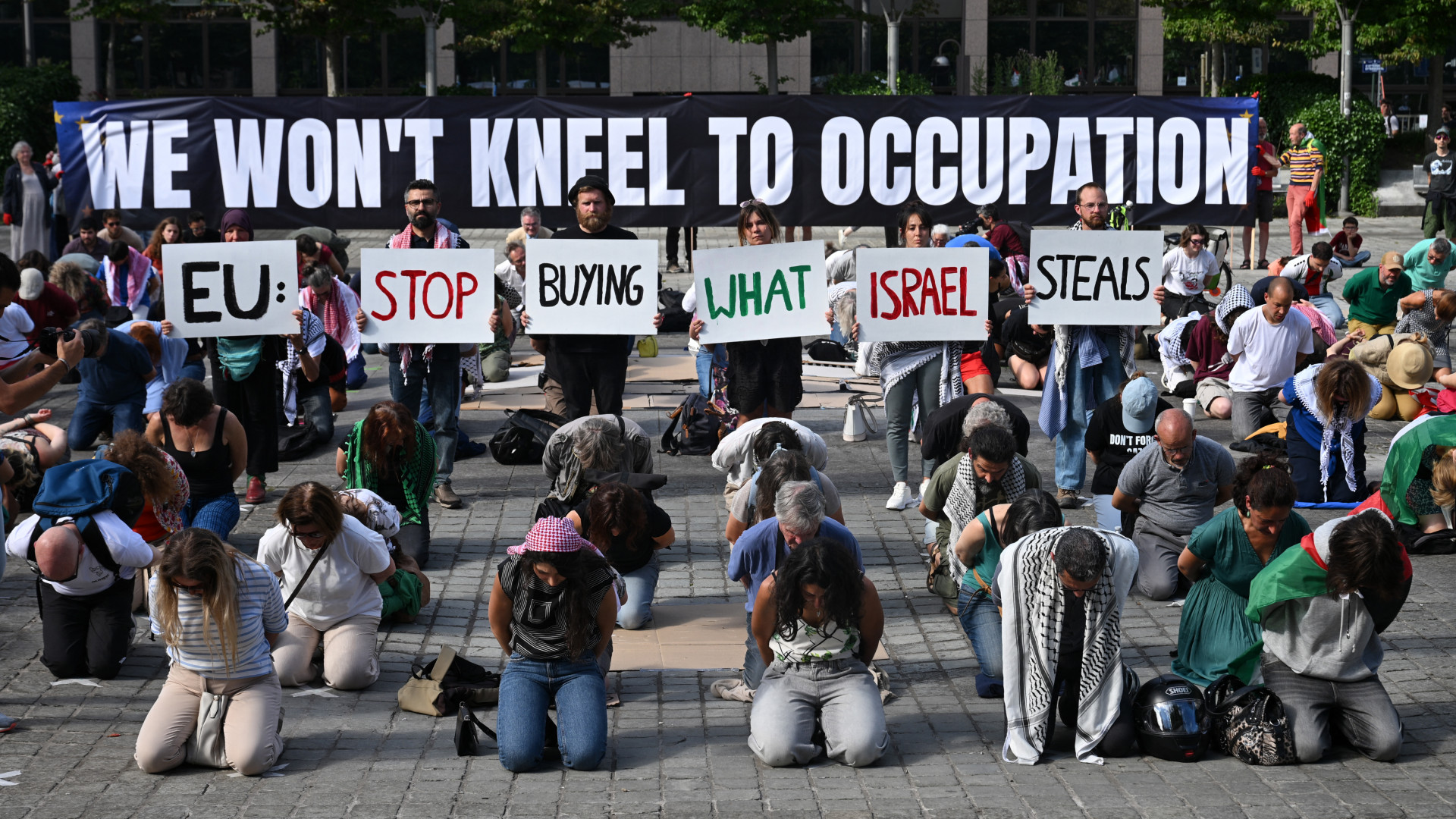

The struggle concerns the future of an international order that claims to be founded upon justice, equality and human rights. A world prepared to normalise genocide, apartheid and permanent occupation in Palestine ultimately places those principles at risk everywhere.
Gaza has redefined the conflict in ways that extend far beyond the borders of Palestine. What only a few years ago appeared politically unimaginable is now openly debated in universities, parliaments, international institutions, professional organisations, trade unions, media outlets and community centres.
Long-accepted beliefs concerning Zionism, western policy, international law and the future of Palestine are increasingly being re-examined.
The coming period demands far more than expressions of solidarity. It requires a new strategic vision, political organisation and the disciplined patience necessary for a protracted struggle.
Every successful liberation movement has combined immediate resistance with the patient construction of institutions capable of transforming moments of crisis into lasting political change.
Redefining the conflict
Any discussion of the future remains incomplete unless we first redefine the conflict.
The Palestinian cause encompasses the struggle of an oppressed people and carries profound civilisational and religious significance for its sacred places. Yet at its core lies the nature and character of the Zionist project.
Speaking exclusively of the "Palestinian Question" is no longer sufficient.
The central challenge confronting the region is the "Israeli Problem": the existence of a sovereign settler-colonial state whose political structure is built on the exclusion of the indigenous population and whose survival depends on territorial expansion, military dominance, regional fragmentation and permanent western backing.
The strategic objective cannot remain confined to resisting the consequences of Zionism. It must become the systematic dismantling of the structures upon which the Zionist project depends
History offers several examples of political systems that came to be recognised not simply as states but as structural problems threatening regional and international stability.
The "German Problem" generated by Nazism and militarism in the first half of the 20th century, and later the apartheid regime in South Africa, illustrate how particular political orders can become sources of chronic instability extending well beyond their borders.
Indeed, the Israeli Problem belongs within that historical category.
The strategic objective cannot remain confined to resisting the consequences of Zionism. It must become the systematic dismantling of the structures upon which the Zionist project depends.
To weaken the Zionist project, we must first understand precisely how it sustains itself. Every enduring system of domination rests upon identifiable sources of political, military, economic and ideological power.
Liberation movements become strategically effective only when they move beyond resisting injustice to understanding the mechanisms that reproduce it.
Twelve pillars
The Theory of the Twelve Pillars that I have developed identifies the principal sources of Zionist strength. Its purpose is to enable coherent long-term strategies for weakening them, transforming resistance from a reactive posture into a comprehensive project of historical change.
These 12 pillars fall into three main areas.
The first addresses demographic and territorial control: Jewish exclusivity as the governing principle of the state, the exclusion and displacement of Palestinians, continuous settlement expansion, and the methodical creation of irreversible facts on the ground. Together, these pillars seek to erase Palestine physically, politically and demographically.
Gaza has exposed the growing fragility of this strategy.
More than 125 years after the emergence of political Zionism, and nearly eight decades after the Nakba, Palestinians remain rooted in their homeland and steadfastly committed to their identity, their historical rights and the right of return.
Less than half of the world's Jews have resettled in Palestine. Meanwhile, demographic trends suggest that Palestinians in historic Palestine now equal or exceed the Jewish population.
Zionism's founding demographic objective of replacing the indigenous population has simply failed.
Palestinian resistance, together with Lebanese resistance over several decades, has likewise demonstrated that settlement expansion is not an irreversible historical process.
Colonial projects frequently appear invincible during periods of expansion. Yet French Algeria, Portuguese Angola, Rhodesia and apartheid South Africa all appeared permanent until political, demographic and moral realities gradually undermined the assumptions upon which they rested.
The Zionist project should not be viewed as an exception to these broader historical patterns.
The second set of pillars maintains Israel's military, intelligence and technological supremacy: the militarisation of society, sustaining military and technological superiority, monopoly over nuclear weapons, and security and intelligence dominance.
For decades these pillars constituted the psychological as well as military foundation of Zionist power. Yet recent events have exposed important limitations.
The direct military confrontation with the Islamic Republic of Iran demonstrated that overwhelming technological superiority, even when combined with American military support, cannot by itself compel political capitulation or restore unquestioned strategic deterrence.
The 20th century offers a clear warning: under intense scrutiny, brute force can become a strategic liability that accelerates diplomatic isolation, economic strain, moral delegitimisation and domestic polarisation.
True deterrence relies far less on raw military technology than on political legitimacy and the credibility of long-term strategic outcomes.
Since October 2023, the Zionist state has repeatedly demonstrated its capacity to inflict devastating destruction. It has found it considerably more difficult to restore the image of invulnerability that historically underpinned its doctrine of deterrence.
Eroding support
Finally, the third set of pillars concerns the Zionist regime's international and regional positioning: dependence upon western political support; the mobilisation of world Jewry in service of the Zionist project; preserving regional fragmentation; and cultivating alliances with minorities, separatist movements and authoritarian regimes in pursuit of regional hegemony.
These pillars have entered a period of growing strain.
Western support undoubtedly remains one of Israel's greatest strategic assets. Yet Gaza has altered international public opinion, particularly among younger generations, universities, labour unions, professional associations and social movements.
Important sectors of western societies increasingly distinguish between support for Jewish communities and unconditional support for Zionist state policies, a distinction often politically marginalised in previous decades.
Growing legal scrutiny before the International Court of Justice, the International Criminal Court and domestic courts across several jurisdictions has further eroded that support.
Legal institutions alone will not transform political realities, but they increasingly contribute to the broader erosion of the legitimacy upon which systems of colonial domination ultimately depend.

Even more significant has been the transformation of the global information environment. For decades, Zionist institutions exercised considerable influence over dominant political and media narratives throughout much of the western world.
Today, independent journalism, digital media, social networking platforms and unprecedented documentation of the Gaza genocide have weakened that informational monopoly. Control over narrative has become a far more contested arena than at any previous period in Israel's history.
Every step towards greater cooperation within the Arab and Muslim worlds, every effort towards regional integration, and every expansion of ties among anti-colonial movements across the Global South directly challenges another of Zionism's longstanding strategic assumptions: that permanent regional fragmentation is both desirable and sustainable.
These 12 pillars do not operate in isolation; they reinforce one another, and the weakening of one increases pressure upon the others. Successful liberation movements seek cumulative strategic gains across multiple arenas rather than isolated victories.
Each pillar represents a vulnerability. The question is how we press upon them simultaneously.
The struggle targets the political, military, economic, diplomatic and ideological foundations that sustain the Zionist project.
The dismantling of the Zionist project is not the destruction of a society, the denial of rights to any community or an invitation to perpetual conflict. It signifies the abolition of the legal structures of apartheid, occupation and racial privilege.
Beyond negotiations
The future of the Palestinian cause - or more accurately, the resolution of the Israeli Problem - will not be determined at the table of futile negotiations.
It will be shaped through steadfastness, organised resistance, sustained struggle, global political mobilisation, legal engagement, economic pressure and intellectual effort.
We, as Palestinians, together with the Ummah and people of conscience throughout the world, can no longer afford the luxury of symbolic activism.
Our responsibility... is to carry this struggle forward, keeping our strategic discipline and purpose clear, confident that systems built upon exclusion and domination ultimately yield to those founded upon human dignity
History seldom changes through isolated moments of heroism alone. It changes when moral conviction is joined to disciplined organisation, strategic patience and institutions capable of transforming sacrifice into enduring political achievement.
The 20th century makes clear that colonial systems do not fall because they lose battles; rather, they crumble when the world stops believing in them - when their legitimacy rots, their economy strains, their moral claims ring hollow and the alliances that propped them up collapse.
Military confrontation may accelerate that process, but political organisation, international solidarity and strategic patience ultimately determine historical outcomes.
The Zionist project is neither immutable nor exempt from the broader patterns of history. Like other settler-colonial enterprises before it, it rests upon structures that are historical constructs and can therefore be dismantled.
Our responsibility - to those who have sacrificed, to future generations of Palestinians and to all who continue to believe in justice - is to carry this struggle forward, keeping our strategic discipline and purpose clear, confident that systems built upon exclusion and domination ultimately yield to those founded upon human dignity.
Palestine has once again become the moral compass of the global struggle against colonialism, racism and domination. Whether that moment becomes a lasting historical transformation depends upon what we build from it in the years ahead.
The views expressed in this article belong to the author and do not necessarily reflect the editorial policy of Middle East Eye.
Middle East Eye delivers independent and unrivalled coverage and analysis of the Middle East, North Africa and beyond. To learn more about republishing this content and the associated fees, please fill out this form. More about MEE can be found here.