Saudi Arabia's last major oil route comes under Houthi pressure

The Houthis said on Wednesday that they had fired ballistic missiles at the NCC Wafaa, a Saudi oil tanker, off the coast of Yanbu, a major Saudi port city in the northern Red Sea.
It is the northernmost attack by the Yemeni group since it began a blockade on Saudi Arabia on 22 July, and analysts warn a shift north towards Egypt and the Suez Canal would lead to increasing economic pressure on the Gulf kingdom.
Until now, the Houthis had mostly targeted ships off Yemen's coast, in the southern Red Sea and Gulf of Aden. The group accused the Wafaa of violating the blockade and ignoring warning calls before it was struck.
Since the US-Israel war on Iran began, Saudi Arabia had kept part of its oil flowing through the alternative route of Bab al-Mandab. But the Houthi blockade on the strait is now limiting that option.
Ibrahim Jalal, a Yemen analyst, described the move as a “bid to deny the Suez Canal rerouting” – the alternative route Saudi Arabia has increasingly relied on since the closure of the Strait of Hormuz earlier this year.
New MEE newsletter: Jerusalem Dispatch
Sign up to get the latest insights and analysis on Israel-Palestine, alongside Turkey Unpacked and other MEE newsletters
Jalal argues that the Houthis are threatening to expand the conflict further north in the Red Sea for two reasons. Externally, he said, the move is intended to strengthen Iran's "bargaining position" over the Strait of Hormuz; internally, it aims to "restore coercive leverage over Riyadh".
Matthew Wright, an analyst at the ship-tracking firm Kpler, told the BBC this week: "In terms of threat to the trade of crude, we're at the worst period that we've been in since this crisis began."
The Houthis claim to have hit eight tankers since the blockade was declared, at least five of which were Saudi and one Indian-flagged, the latter sinking near Bab al-Mandab on 4 August.
Only four strikes have been independently verified by the United Kingdom Maritime Trade Operations Centre (UKMTO), the international reference for maritime security incidents.
The Saudi authorities have not confirmed any of the strikes.
Houthi strikes in the Red Sea
Yahya Saree, the Houthi military spokesperson, said on 5 August that at least 29 Saudi vessels had turned away from Bab al-Mandab during the first two weeks of the blockade. Calling the move “blockade for blockade”, Saree said the group would “respond to any escalation with escalation”.
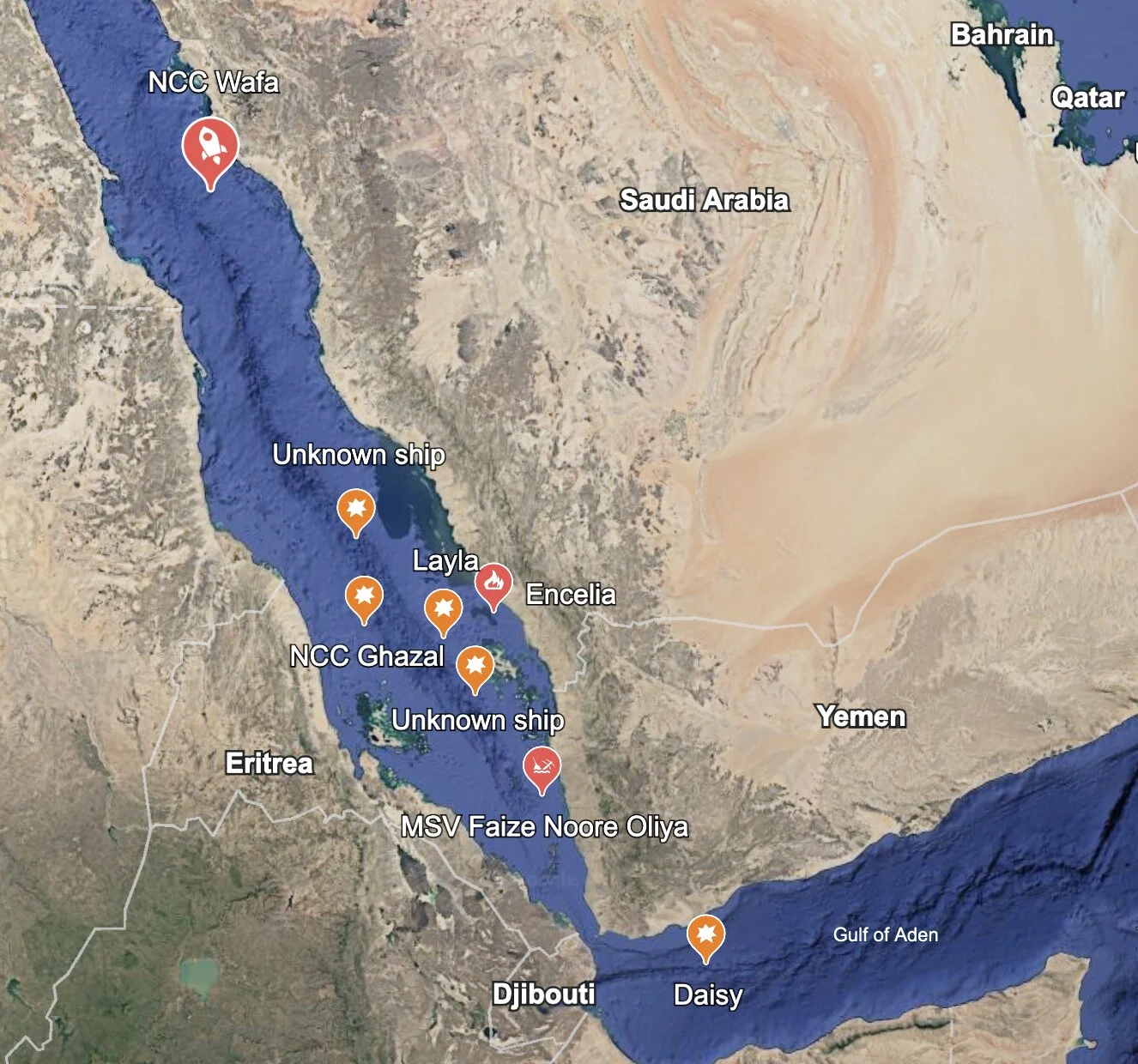
Salah Ali Salah, a security affairs researcher at the Sanaa Centre, told Middle East Eye, “the Houthis are still on an escalatory trajectory”, adding that he did not believe they had “yet deployed the full weight of their maritime capabilities against Saudi Arabia”.
While some Saudi vessels are turning away from Bab al-Mandab, such as six tankers that took a significantly longer route around Africa this week, others are switching off their transponders to cross the waterway instead, Bloomberg reported.
Saudi oil exports normally account for around 66 percent of Bab al-Mandab traffic, and the Red Sea carries 10 to 12 percent of global trade overall.
Ryan Bohl, a senior Mena analyst at RANE, a global risk intelligence company, said it was “unlikely” the Houthis could close off “all traffic” in the northern Red Sea.
Instead, they could demonstrate they are a “credible threat” by hitting Egyptian ports and the Suez Canal, forcing the Saudis to “take measures to hide their ships”.
This would include “turning off transponders” and paying crews “substantially more”, forcing Saudi shipping companies to “absorb all the war risks associated with such an outcome”.
Rerouting through the Suez Canal
Rerouting around Africa also forces Saudi tankers to pass through the Suez Canal to reach Yanbu, adding at least four weeks to the journey for Asia-bound ships, the main destination for Saudi crude.
That route is itself constrained. Saudi Arabia typically ships using Very Large Crude Carriers (VLCCs) holding around 2 million barrels. But the Suez Canal’s limited depth means it must use Suezmax carriers with a capacity of 1 million barrels, or partially loaded VLCCs.
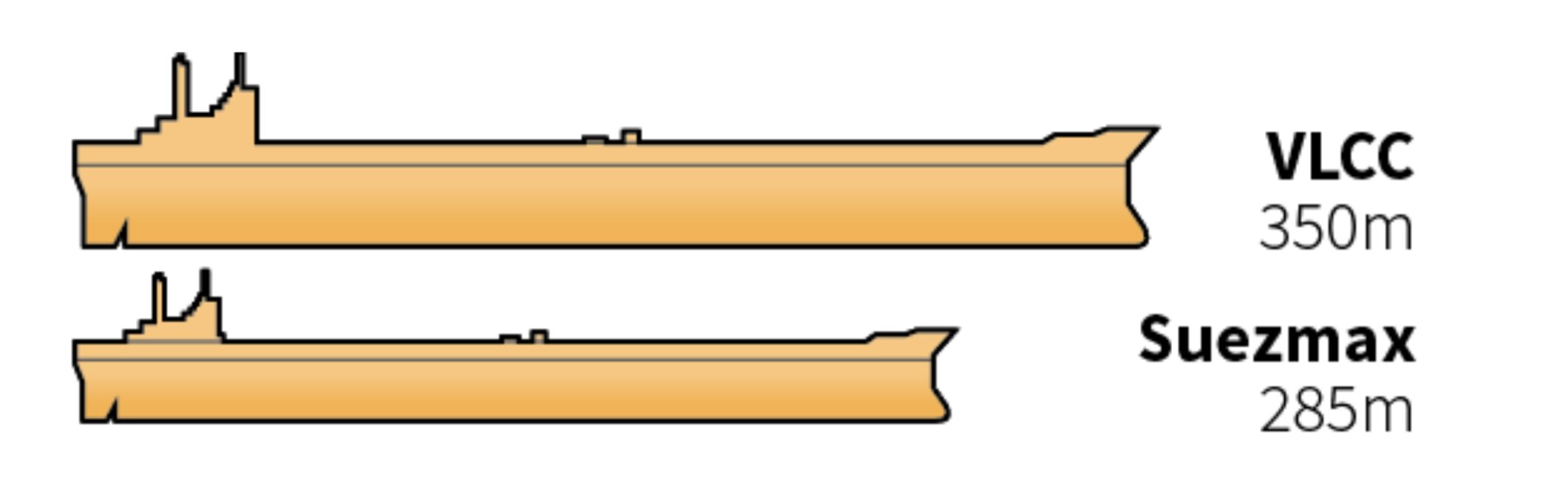
“If VLCCs have to pass through Suez partially loaded, it will impact how much Saudi is able to get through,” Bohl said.
Tankers bound for Asia will need more journeys to deliver the same volume, adding an estimated $1.6m in fuel costs plus a $1m Suez toll fee per transit.
Salah said the issue was not “simply whether Saudi Arabia can find another route, but whether it can find one that preserves the same scale, cost and efficiency of its existing export system”.
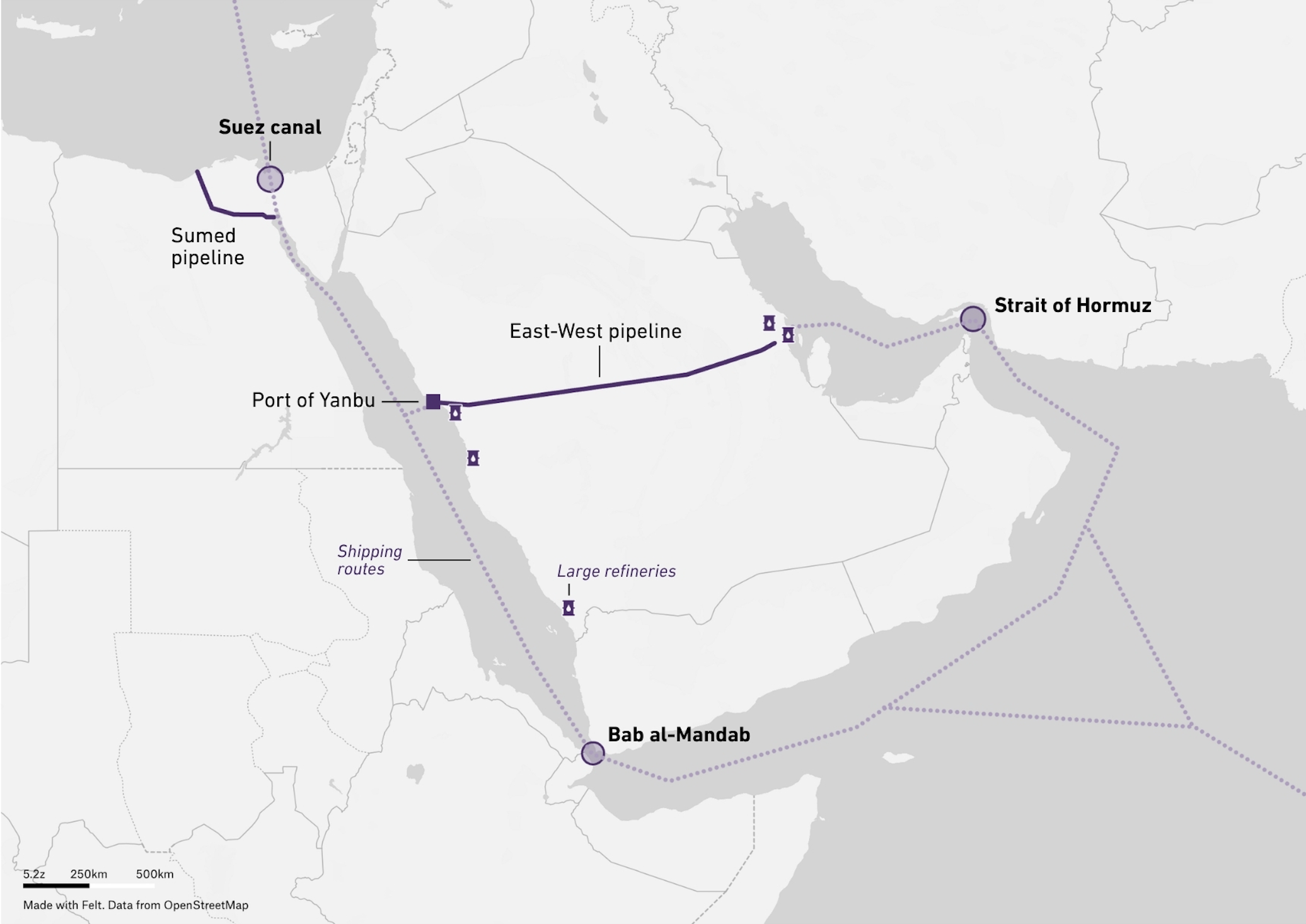
Bohl said the Suez restrictions would be “partially offset by offloading through the Sumed pipeline”, one of the pipelines that now serve as Saudi Arabia’s main contingency for consistent crude deliveries.
The Sumed pipeline in Egypt lets tankers offload part of their cargo in deep water before crossing the canal, then reload it on the other side.

Growing exports in Yanbu
The East-West pipeline, which crosses Saudi Arabia coast to coast, transfers oil from the Gulf to the Red Sea, where the kingdom’s largest refineries are concentrated.
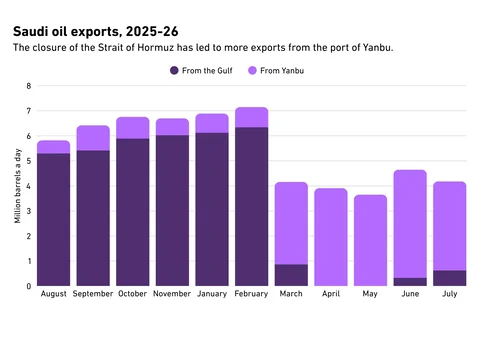
It has been especially useful for moving oil east to Yanbu, where the export volumes have more than tripled since the Strait of Hormuz closed, according to Bloomberg data.
Some analysts see the Wafaa strike as a possible step towards attacks on non-tanker vessels.
Salah said the “greater danger would be the expansion of maritime targeting to non-tanker vessels and imports”.
He added the broader danger was “the precedent this creates”.
But Bohl argues this is not in the Houthis’ best interest.
A “major new offensive” from Saudi Arabia against the Houthis in Yemen, particularly one targeting Hodeidah, their “own critical Red Sea lifeline”, would have severe consequences for the group.
If the Houthis did escalate, Bohl said, Saudi Arabia “would face the same kinds of logistical issues that the littoral Gulf Arab states” are currently dealing with under the Strait of Hormuz closure, though Riyadh would likely be better prepared, given its land routes through Jordan and air options.
Declining Saudi oil exports
The Houthi blockade on Bab al-Mandab has had less of an impact on Saudi oil exports so far than the closure of the Strait of Hormuz.
Exports through Hormuz have declined sharply since its closure on 4 March, but Saudi Arabia has shifted most departures to the Red Sea instead, making that waterway especially sensitive now.
Kpler, a maritime intelligence firm, estimates Bab al-Mandab volumes have increased eightfold, and Yanbu had one of its busiest days on record on 1 August, with five supertankers positioned for loading.
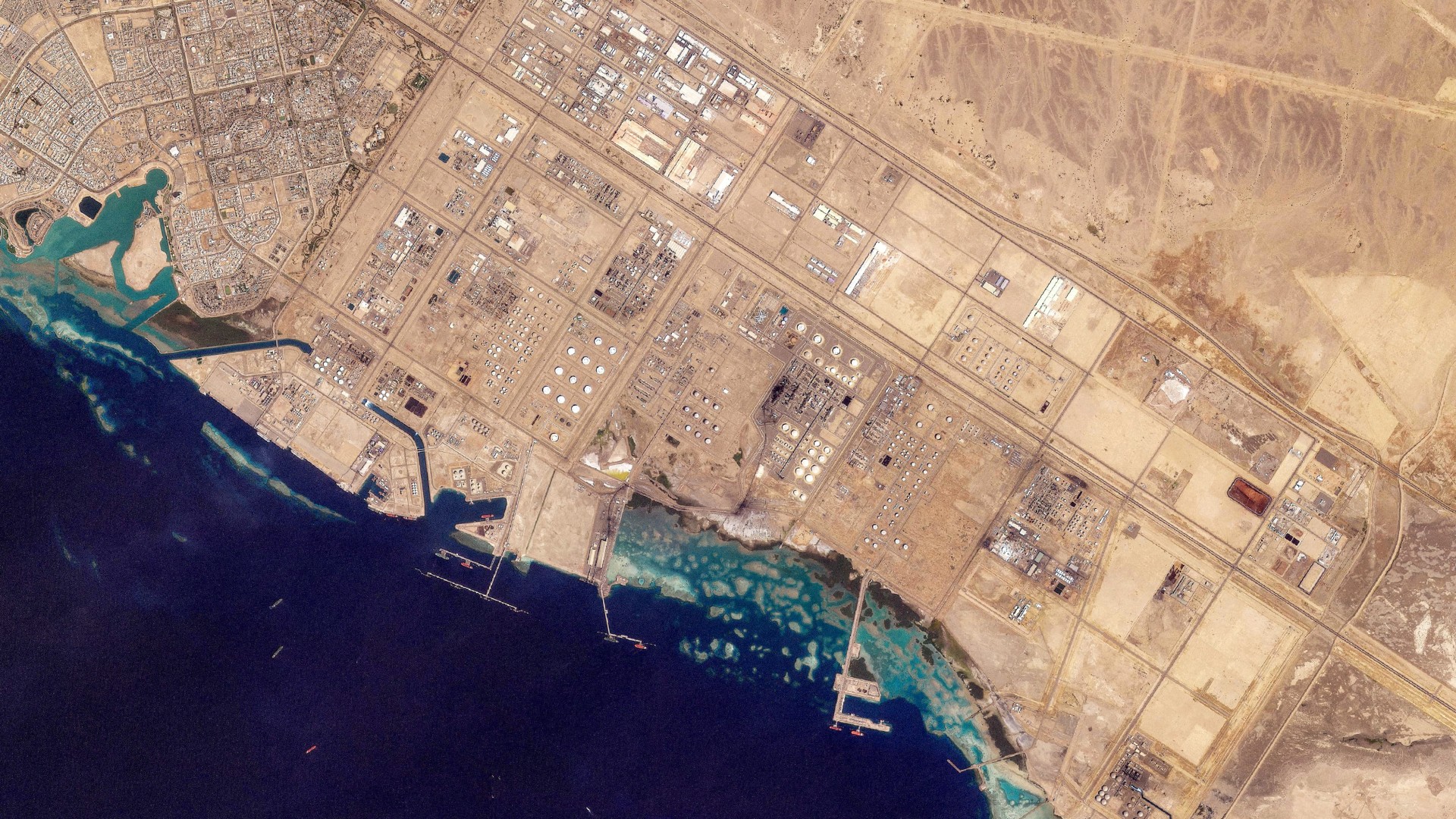
The Houthis targeted Saudi Aramco plants in July, but CEO Amin Nasser said there had been no material operational or financial impact.
Aramco reported on Tuesday that second-quarter profits surged 33 percent, driven by higher energy prices from the war on Iran and the Saudi pipelines bypassing Hormuz.
According to Bohl, “it remains to be seen whether or not Saudi exports will see a major dip or if this is just downward pressure that they can adjust to”.
This week, hopes of an Iran-Oman deal to reopen the Strait of Hormuz led Saudi Arabia to cut its main oil price for Asia by 50 cents to $2 a barrel, a sign that Riyadh does not view the Houthi blockade in the Red Sea as a grave threat.
Salah said the reopening of the Strait of Hormuz “would certainly ease pressure on global energy markets, but it would not resolve the Houthi problem in the Red Sea”.
Middle East Eye delivers independent and unrivalled coverage and analysis of the Middle East, North Africa and beyond. To learn more about republishing this content and the associated fees, please fill out this form. More about MEE can be found here.