Syria reclaims control of key coastal sites in deal with Russia

Syria and Russia have reached a memorandum of understanding to scale back Moscow's military presence on Syria's Mediterranean coast, ending 18 months of negotiations over the future of the Hmeimim airbase and Tartus naval facility.
The Syrian foreign ministry announced the deal on Sunday, describing it as the outcome of "a year and a half of negotiations and intensive discussions led by the ministry".
Under the terms of the agreement, the Syrian state will take over management of civilian facilities at both sites, including Hmeimim airport and Tartus's fourth commercial pier, gradually folding them into civil administration, according to key points of the memorandum shared by the state news agency Sana.
The military facilities will be converted into "joint training and qualification centres", under arrangements intended to preserve the interests of both countries. The transition is expected to be completed within three months, according to the ministry.
The new arrangements represent a "reorganisation of the Russian presence" along Syria's coast, the ministry added.
New MEE newsletter: Jerusalem Dispatch
Sign up to get the latest insights and analysis on Israel-Palestine, alongside Turkey Unpacked and other MEE newsletters
"This move marks the most significant development since negotiations began approximately a year and a half ago, paving the way for a new phase in Syrian-Russian relations."
Foreign Minister Asaad al-Shaibani and an accompanying delegation visited Latakia International Airport and Tartus port on Sunday to inspect the facilities covered by what officials described as a "historic" memorandum.
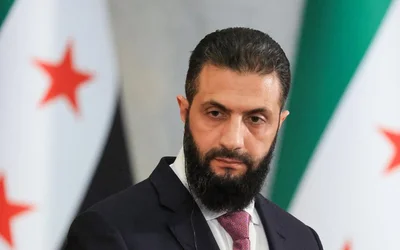
The agreement is the latest sign of how Syria's relationship with Russia has changed since the toppling of Bashar al-Assad in December 2024.
Russia had been one of Assad's most important international backers. Its military intervention in Syria in 2015 helped turn the war decisively in his government's favour, while Tartus and Hmeimim became the centre of Moscow's military presence in the country.
Russia had not issued a public response to Sunday's agreement.
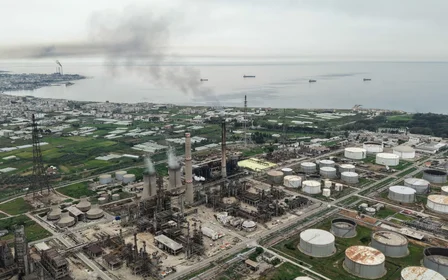
Tartus has been Russia's central naval facility in the Mediterranean and its only overseas naval base outside the former Soviet Union. The facility has allowed Moscow to resupply naval forces and project military power across the region.
Hmeimim, meanwhile, became the main hub for Russian air operations in Syria following Moscow's 2015 intervention.
Together, the two facilities provided Russia with a strategic military foothold on the Mediterranean and supported its broader operations in the Middle East.
The new arrangement means Moscow will no longer operate the sites in the same way as it did under Assad, but it will not be completely removed from them either.
Damascus is using the deal to affirm control over all assets on Syrian territory, framing it as a message that "its national sovereignty is not up for negotiation", Al Jazeera's Damascus correspondent, Obaida Hitto, reported.

President Ahmed al-Sharaa has travelled to Moscow twice since taking power to discuss the bases' fate directly with Russian President Vladimir Putin.
These diplomatic efforts come as his government pursues sanctions relief from Washington and closer ties with Paris.
The agreement also comes as Damascus seeks to reshape the wider role of Syria's Mediterranean coastline.
In July 2025, Damascus signed an $800m, 30-year concession handing Tartus's main commercial port to Dubai's DP World. The company's chief executive, Sultan Ahmed bin Sulayem, described Tartus as "an essential hub for trade and exports".
Tartus is one of Syria's main gateways to international markets and has become a focus of foreign investment since Assad's fall.
Before that, in May 2025, Damascus also renegotiated its contract with French shipping company CMA CGM to run Latakia's container terminal, agreeing a fresh 30-year concession that includes a $265m investment and a new deep-water berth.
Middle East Eye delivers independent and unrivalled coverage and analysis of the Middle East, North Africa and beyond. To learn more about republishing this content and the associated fees, please fill out this form. More about MEE can be found here.