
Syrian court sentences Bashar al-Assad to death in absentia in landmark trial

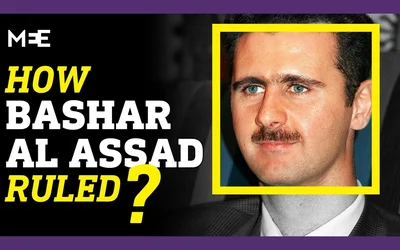
A Damascus court sentenced Syria's former president Bashar al-Assad, his brother Maher and former security official Atef Najib to death on Tuesday on charges of murder, torture and incitement to murder.
The court convicted Bashar of premeditated murder of multiple people, including children, as well as torture, arbitrary detention and crimes against humanity.
Najib was tried in person, while Bashar and Maher were tried in absentia.
Former security official Najib, a cousin of Assad, was arrested in January last year and was convicted of crimes including murder, "the intentional killing of children under 15", and "torture leading to death".
The ruling against Assad, who fled with his family to Moscow as armed opposition forces closed in on Damascus in December 2024, is the first issued under the transitional authorities.
New MEE newsletter: Jerusalem Dispatch
Sign up to get the latest insights and analysis on Israel-Palestine, alongside Turkey Unpacked and other MEE newsletters
The interim government began prosecuting figures from the former government this year, both in person and in absentia.
Assad, born in 1965, became president in 2000 after the death of his father, Hafez al-Assad.
He maintained the family's rule and the dominance of the Alawite sect in the predominantly Sunni Muslim country, while keeping Syria aligned with Iran and hostile towards Israel and the United States.
War in Syria
In March 2011, government forces led by Assad violently suppressed protests that emerged during the Arab Spring, prompting an armed uprising.
While Russia and Iran backed Assad, the US, Turkey and other countries supported different factions at various stages.
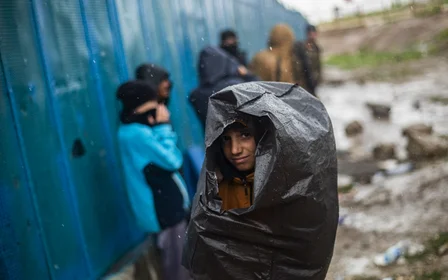
Hundreds of thousands of people were killed in the subsequent years as the conflict devastated civilian infrastructure and displaced millions.
The 14-year civil war left Syria facing a profound political, economic and humanitarian crisis.
Human rights abuses were reported throughout the conflict, with the Assad government accused of widespread arbitrary detention, torture, enforced disappearances, extrajudicial killings and attacks on civilians.
A UN investigative mechanism said evidence showed a systematic pattern of torture, sexual violence and enforced disappearances across more than 100 government detention facilities.
Rights concerns have continued during Syria’s political transition.
UN experts have reported allegations of summary executions, forced displacement and other abuses against civilians.
US withdrawal
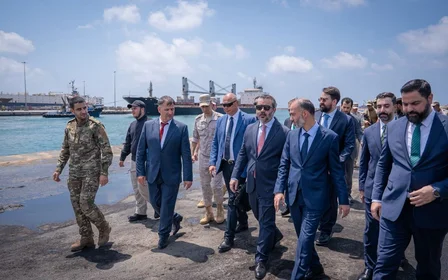
In April, the last remaining US troops in Syria left their base in Hasakah, ending a 10-year presence in the country, after which the Syrian military entered the last base previously under American control, known as Qasrak, which included an airstrip.
The Syrian foreign ministry said it welcomed “the completed handover of military sites where United States forces were previously present in Syria to the Syrian government”.
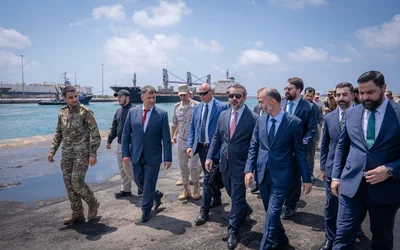
Earlier this year, the US helped facilitate an agreement between the longtime US partner Syrian Democratic Forces (SDF) and Damascus, under which the Syrian government agreed to take the lead in combating militant groups such as the Islamic State group.
The SDF also agreed to hand over control of large swathes of territory, including Raqqa and Deir Ezzor, to Damascus.
On Monday, Syria also reached a memorandum of understanding with Russia to scale back Moscow's military presence on Syria's Mediterranean coast, ending 18 months of negotiations over the future of the Hmeimim airbase and Tartus naval facility.
US forces also withdrew from two major American bases in Syria: southern al-Tanf and al-Shaddadi in the northeast. American troops had been in Syria since 2015.
Washington, which backs President Ahmed al-Sharaa's new government, previously had around 1,000 US troops in Syria.
Syria after Assad
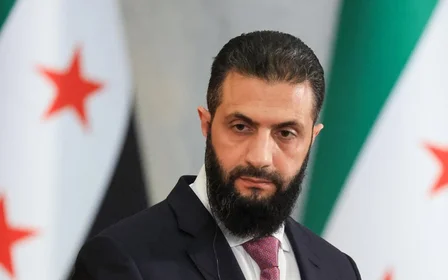
After Sharaa’s militant group, Hayat Tahrir al-Sham, seized Damascus on 8 December 2024, ousting Assad, Sharaa became Syria's interim president.
Shortly after celebrating his victory, Sharaa began embracing world leaders and appeared in western media outlets, where he spoke of Syria's "diversity as a strength" and of "unifying the country".
He also promised to pursue former government personnel and loyalists implicated in war crimes, trimmed his beard and replaced his turban and thobe with a suit and tie.
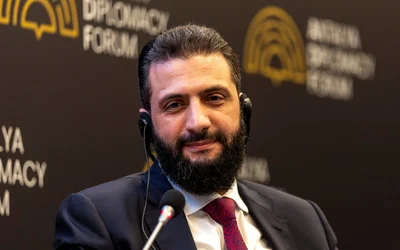
In April, during a visit to London, Sharaa said Damascus would stay out of the Israeli-US war on Iran unless his country comes under attack.
While Syria's transitional administration has initiated economic reforms, including public-sector employee reductions, tax system reforms, and the reopening of border crossings, some have questioned the sustainability of Sharaa's transformation and pointed out that he has, to date, not publicly apologised for past actions.
Meanwhile, tensions between the new government and the Alawite community have been high.
Last year, armed attacks on security forces by suspected Assad loyalists in the coastal Alawite heartland of Latakia spiralled into brutal sectarian bloodshed.
At least 1,500 Alawites were killed in the subsequent violence, with a Reuters investigation tracing much of the violence back to security officials in Damascus.
Middle East Eye delivers independent and unrivalled coverage and analysis of the Middle East, North Africa and beyond. To learn more about republishing this content and the associated fees, please fill out this form. More about MEE can be found here.