Balochistan’s dangerous fuel trade is a lifeline. The Iran war is choking it

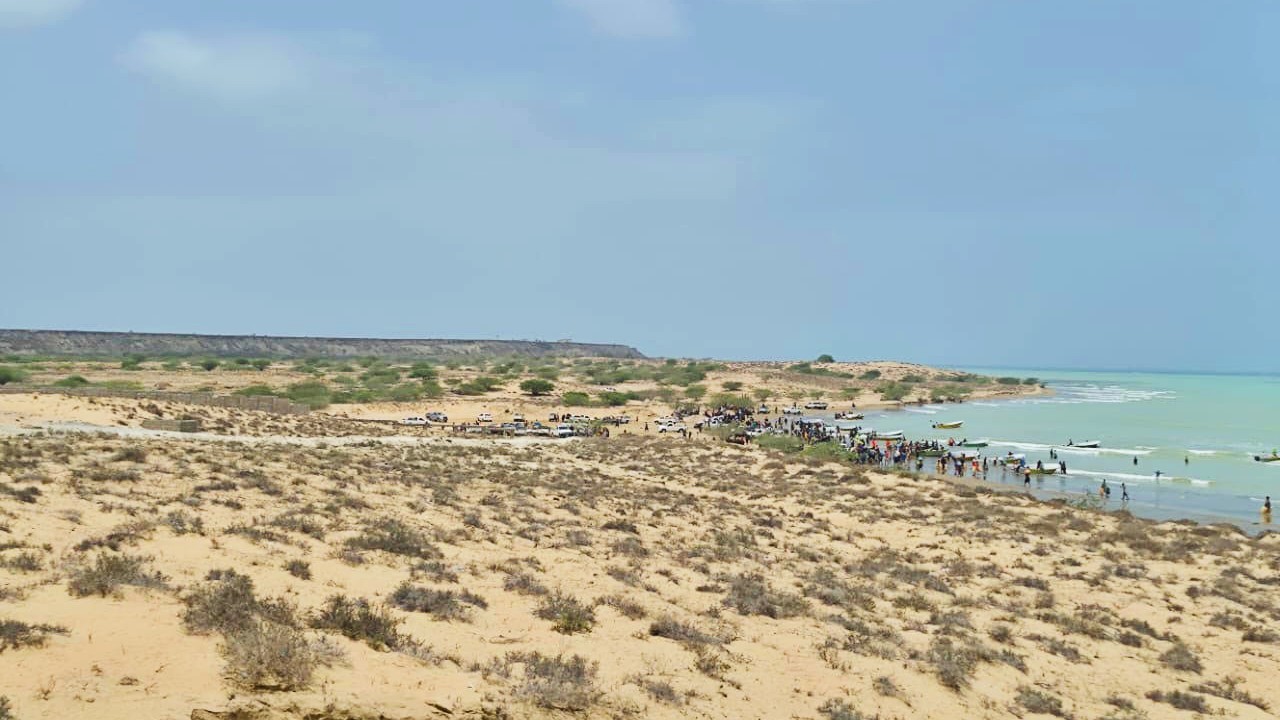
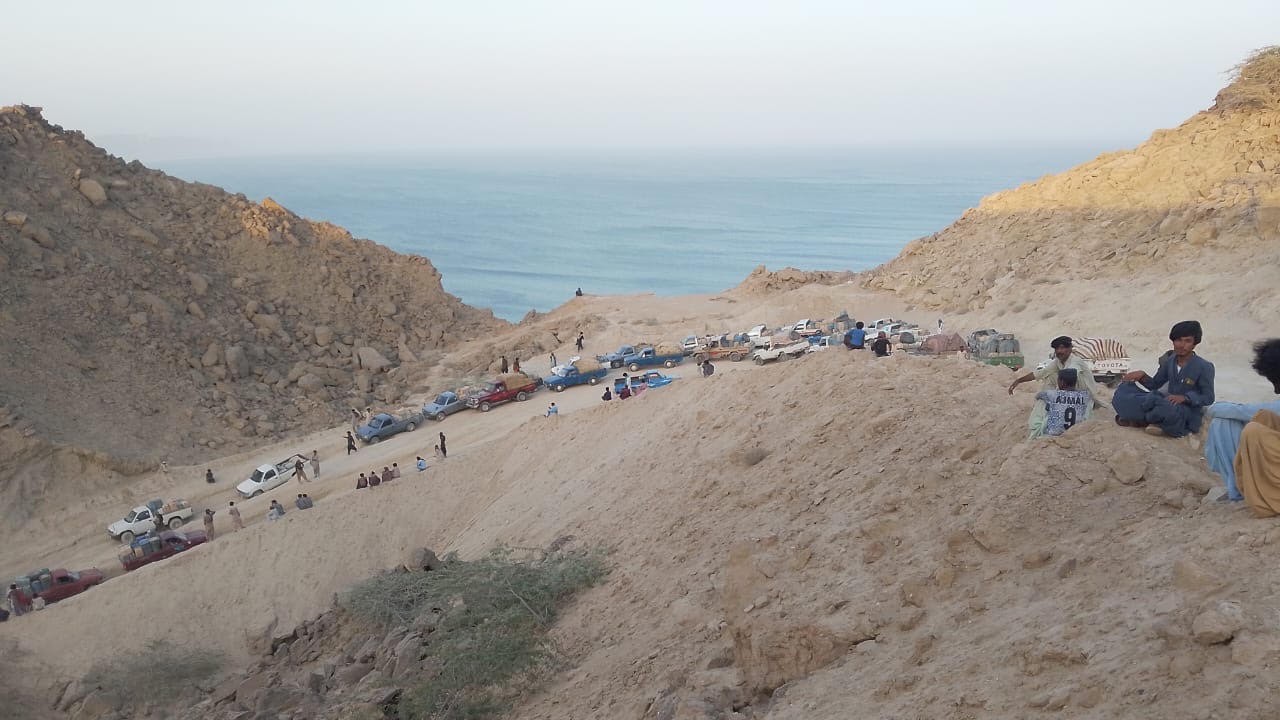
About 150 kilometres west of Gwadar, the port city often described as the heart of the China-Pakistan Economic Corridor (CPEC), lies Kuntani Hor, a small creek near the Iranian border on Balochistan’s remote and picturesque Makran coast.
The creek is one of the spots along the border where "informal" trade between Iran and Pakistan takes place, with boats bringing Iranian petrol, diesel and other goods into Pakistan.
The trade is, for all intents and purposes, smuggling. But it has become so foundational to the local economy that, in April of this year, Balochistan’s provincial government even set the price per litre at which fuel from this trade could be sold. The policy set a price below that of government-imported fuel and outlawed it from being sold outside the province.
When the trade is active, thousands of labourers, drivers, boat crews, and depot workers from Balochistan and other parts of Pakistan depend on Kuntani for their livelihoods.

New MEE newsletter: Jerusalem Dispatch
Sign up to get the latest insights and analysis on Israel-Palestine, alongside Turkey Unpacked and other MEE newsletters
It was into this economy that Siraj, a 26-year-old anthropology graduate from Panjgur, came looking for stable income that his university degree failed to provide.
Siraj had twice returned to his hometown of Paroom with less than he had hoped for. The first time, arriving with a degree in anthropology from Quaid-i-Azam University in Islamabad.
Reaching one of Pakistan’s leading universities meant travelling hundreds of kilometres from his remote hometown in Panjgur district, near the Iranian border. He believed the degree would lead to stable work.
But that turned out to be false hope.
Then, after his father died, he could no longer afford to wait for government vacancies that attract thousands of applicants per position. So he decided to travel south to Kuntani Hor, near Jiwani on Pakistan’s southwestern coast.
The second time Siraj returned to Paroom, he carried neither the promise of a degree nor the wages on which his family had come to depend. The US-Israeli war on Iran had sharply disrupted the movement of fuel, bringing much of the work at Kuntani Hor to a standstill.
'Every day was another chance to earn, but also another chance to die'
- Mohammad Asif, worker in the informal fuel trade
The war began on 28 February, when Israel and the US launched strikes on Iran, opening another full-scale confrontation after the 12-day Israel-Iran war of June 2025.
Iran retaliated with strikes on Israel and US military installations across the region, most prominently in the Gulf states. The fighting subsequently reached Iranian ports, coastal defences and shipping routes around the Strait of Hormuz. By July, thousands of people had been killed and millions displaced, mainly in Iran and Lebanon.
Along Pakistan’s not-so-distant coast, the war arrived not through an air strike but through the disappearance of this informal coastal economy.
Although formal trade continued through some Pakistan-Iran crossings during the early weeks of the conflict, supplies of Iranian petrol and diesel fell.
In May, fuel dealers said the border closure at Kuntani Hor had pushed the price of Iranian petrol in Gwadar up by 30 to 40 Pakistani rupees (11-14 cents) a litre.
For Siraj and thousands of others, the consequences were immediate and dire.
An economy built around fuel
Bakshi Baloch, from the coastal town of Pasni, runs a fuel depot at Kuntani Hor. Under normal circumstances, he said, around 50 people depend directly on his operation. These include an accountant, labourers who unload the fuel, boat crews, and others who move the barrels between the shore and the depot.
Bakshi estimated that more than 5,000 depots had operated around Kuntani Hor, each supporting dozens of people. The figure could not be independently verified by Middle East Eye, but the rows of depots and the variety of workers involved reveal an economy that extends far beyond a few boat owners or fuel dealers.
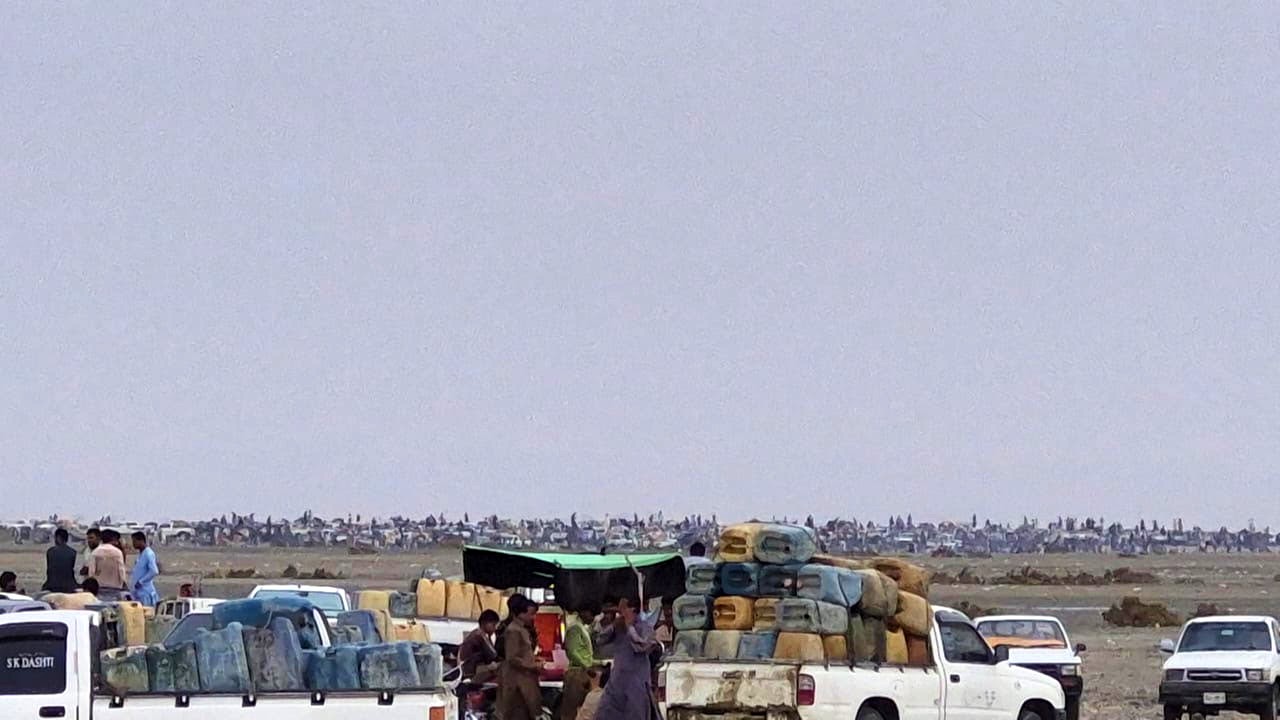
Bakshi, too, has now returned home.
Almost every day, he said he gets voice notes from former workers asking the same question. "When will the depot reopen?"
He has no answer.
“They ask me about the work, but what can I tell them?” he told MEE.
His workers came from different corners of Pakistan. Some boat crews came from neighbouring Sindh province. Among the labourers unloading petrol and diesel were men who came from much further north, like Dera Ghazi Khan in southwestern Punjab, and even as far as Kashmir.
They arrived speaking different languages and unfamiliar with the culture of the Makran coast. What brought them together was the absence of viable work closer to home. Now they have scattered again, carrying the effects of a Middle Eastern war back to their families and communities across Pakistan.
Mohammad Asif from Punjab was one of them.
Speaking by phone after returning to Dera Ghazi Khan, Asif described the work at Kuntani Hor as both his means of survival and a daily encounter with death.
The labourers handled large amounts of highly flammable fuel in extreme heat, without protective equipment, fire services or emergency medical facilities.
“Every day was another chance to earn, but also another chance to die,” Asif said.
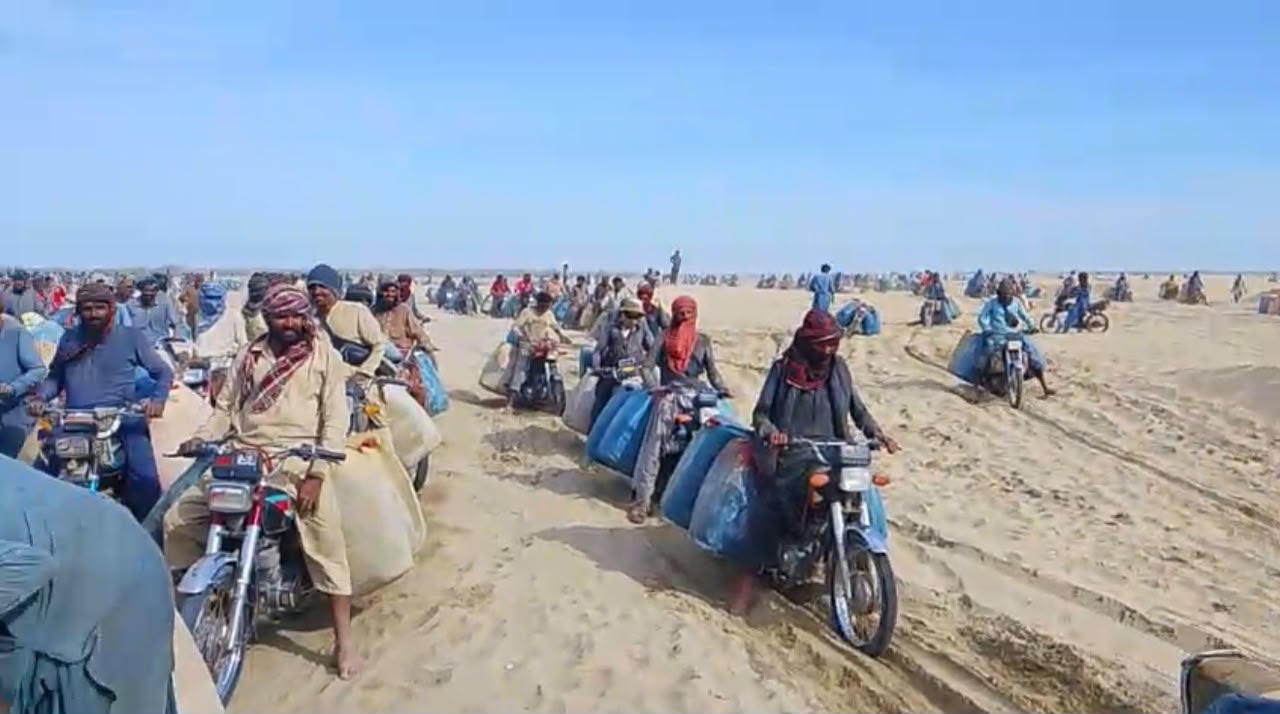
On a busy day, he said he could make as much as 10,000 rupees ($36) - income difficult to find in his hometown and high enough to take the risks involved.
On average, unskilled labour in Pakistan will net a worker anywhere from 1,400-1,500 rupees per day ($5).
Since returning home, Asif has called former colleagues and searched for news of the conflict, trying to learn whether the fuel boats might begin moving again.
A dangerous livelihood, and the only one
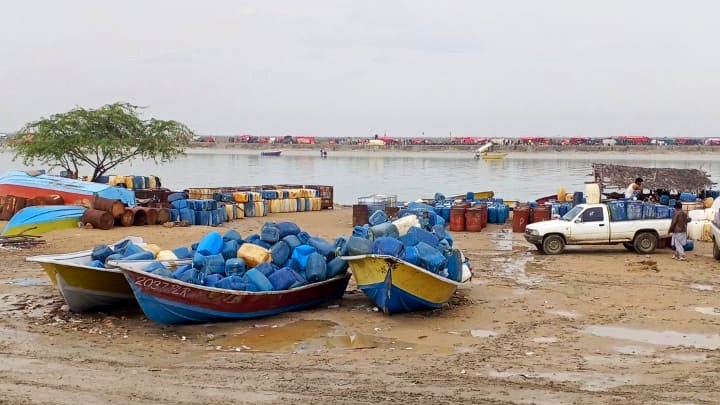
At first sight, Kuntani Hor appears to be little more than a muddy creek surrounded by barren land. But when the trade is functioning, its shoreline is bustling with labourers, boat crews, motorcycle riders, drivers, and depot workers.
“When your family’s bread depends on this work, you have to do it, no matter the risk,” said Sakhi Baksh, a labourer known locally as an "ammaal".
'People lose their lives, but we still have to earn. For us, it is better to risk death here than to die of hunger'
- Noroz, worker in the informal fuel trade
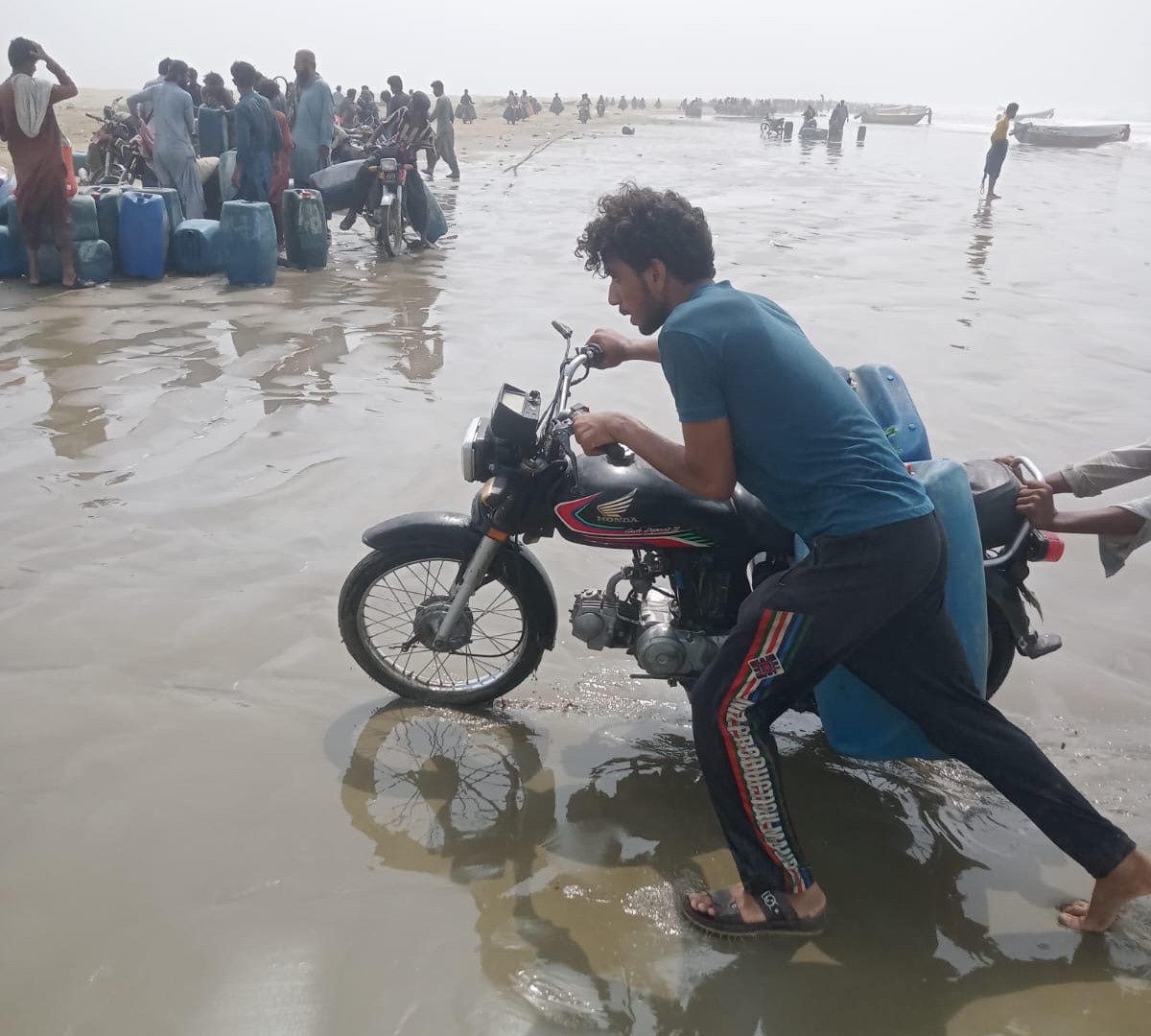
Sakhi and other ammaal wait at the shoreline for vessels carrying fuel from Iran. When a boat arrives, they lift barrels holding around 70 litres and carry them 20 to 30 metres through thick mud to the nearby depots.
Their feet can sink almost a foot beneath the surface. With a heavy barrel balanced on their shoulder, a labourer must pull each leg free before taking another step.
Sometimes a worker's feet sink deeper, tripping them and causing them to drop the load. The drum may rupture, spilling petrol or diesel over the mud and exposing everyone nearby to a fire risk. Yet Sakhi said the labourer can still be blamed for the loss and have the cost deducted from his wages.
Once the barrels leave the shore, motorcycle riders known locally as "cycali" carry the fuel towards depots further inland. Workers said thousands of such riders once operated around Kuntani Hor.
Their motorcycles are fitted with four to five drums, creating a load that is both unstable and highly combustible. Part of the journey passes through deep sand, where riders must use their feet to push and steady the motorcycles beneath the desert sun.
Noroz, one of the cycali, said the exhaust pipe can become dangerously hot. A small leak from one of the containers can ignite the entire load.
He recalled several fires in which riders were injured or killed.
“When I load the fuel, I don’t know whether I will make it to the end of the journey,” Noroz said.
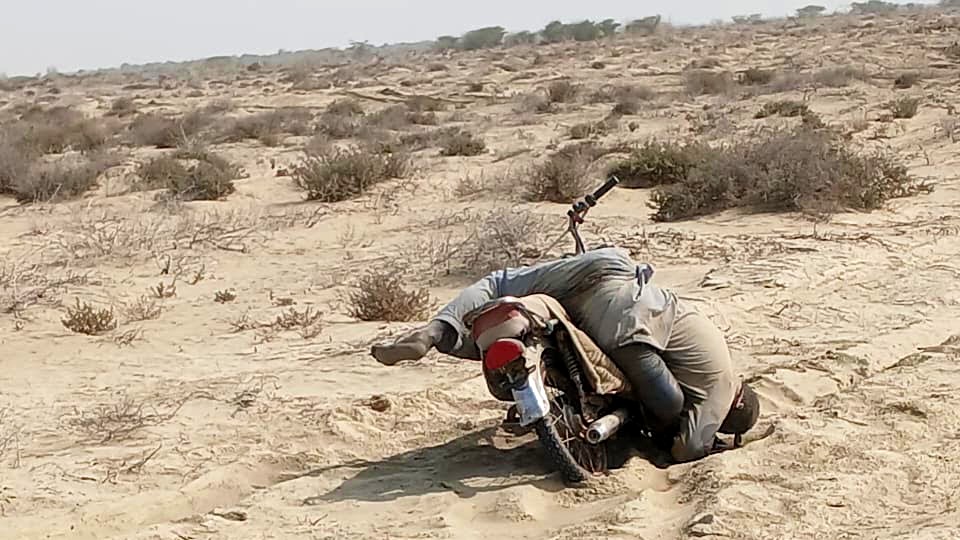
A successful journey could earn him as much as 15,000 rupees ($54), he said. Noroz himself suffered burns in an accident but returned to work after recovering because he had no reliable alternative.
“Death is normal at Kuntani,” he said. “Sometimes a boat catches fire; sometimes it is one of us on a motorcycle. In summer, the waves become rough, and boats can sink.
“People lose their lives, but we still have to earn. For us, it is better to risk death here than to die of hunger.”
A war reaches the coast
The danger does not end with fire, rough seas or overloaded motorcycles.
'It felt as though the war on Iran had also become a war on our economy'
- Rahim Baksh, worker in the informal fuel trade
Several workers, speaking on condition of anonymity, accused Pakistan’s Coast Guard personnel of periodically entering restricted areas around the creek, dispersing the cycali and clearing the site by force.
Kuntani Hor has also been repeatedly closed because of militant attacks and security concerns in Balochistan, where the Pakistani state has fought a decades-long separatist insurgency.
Gwadar-based journalist and author Javed MB said the Iranian fuel trade had operated along the Makuran Coast for decades. Once spread across several coastal points, much of it has become concentrated at Kuntani Hor during the past decade.
Previous closures generally lasted days or weeks. Workers waited, borrowed money or returned home temporarily, knowing the trade would eventually resume.
The latest disruption has been different.
The war in Iran has made fuel supplies less reliable, increased purchasing and transportation costs, and reduced the number of profitable journeys. Traders say business has not disappeared completely, but it is operating at only a fraction of its former scale.
“All the profit that depot owners and workers expected to earn has disappeared,” said Nawab Shah, a Karachi resident who works as an accountant. “No one knows when the work will begin again.”
Rahim Baksh once used his boat for fishing off Gwadar. He later moved it to Kuntani Hor because carrying fuel offered better earnings than the increasingly uncertain fishing industry.
When the US and Israeli attacks began, he said, confusion spread quickly through the border economy.
Communities in Balochistan depend on Iran for more than petrol and diesel. Food and other everyday goods pass through formal and informal cross-border routes. When supplies slowed, Rahim said, prices rose throughout the region.
“It felt as though the war on Iran had also become a war on our economy,” he said.
Only a small number of boats now continue to transport fuel, according to Rahim. Fuel has become harder and more expensive to obtain, the journeys are less predictable, and profit margins have narrowed.
Beyond the shoreline, the disruption moves through every stage of the supply chain. Trucks and pickups normally transport the drums from Kuntani Hor to Gwadar, Turbat, Panjgur, Mastung, Quetta, and other parts of Balochistan. Traders say some fuel travels further inland towards Punjab.
When boats stop arriving, labourers lose their wages. The cycali have nothing to carry. Drivers have no loads, depots stand empty and small fuel sellers lose their supplies.
A 2021 study of the Jiwani-Iran border found that the local economy depended heavily on informal trade in diesel, petrol, gas, food, and other Iranian goods. Rather than existing outside the economy, the trade had effectively become one of its foundations.
The contradiction is central to Kuntani Hor: the authorities treat the activity as smuggling, but it is also one of the few viable forms of employment.
Sahar Baloch, a Berlin-based journalist who has reported extensively on Balochistan, said the immediate shock of the US-Israeli war on Iran was felt not merely in disrupted trade, but in the sudden loss of livelihoods across the region.
“Thousands of people in Gwadar, Kech, Panjgur and Washuk depend directly or indirectly on cross-border trade,” she said. “While fuel receives the most attention, the border economy also revolves around food, household goods, construction materials, spare parts, and transport services.”
When movement across the border was disrupted by the conflict, she said, daily-wage labourers, loaders, drivers, shopkeepers, and small traders all lost income at the same time.
“The issue is not only that the trade stopped,” Sahar said. “It is also that the state has failed to create alternative employment opportunities in Makuran.”
Fishing, traditionally one of the region’s principal livelihoods, is already under pressure and increasingly controlled by powerful commercial interests, she said, while agriculture is constrained by chronic water scarcity. In the absence of viable alternatives, cross-border trade has become one of the few ways thousands of families can generate an income.
Sahar said the impact also extended far beyond communities immediately bordering Iran. Fuel and other goods are moved from the border into cities across Balochistan and onwards to other parts of Pakistan.
When supplies were interrupted, transport costs increased, businesses faced uncertainty, and people working throughout the distribution chain temporarily lost their livelihoods.
“For many families, the informal cross-border economy functions as a form of social protection in the absence of state support,” she said. “The war has made that vulnerability even more visible.”
She added that repeated interruptions also carry political consequences in a province already grappling with unemployment, inflation and declining purchasing power.
“Every closure increases frustration among people who already feel economically marginalised,” Sahar said. “When the government neither provides employment alternatives nor sufficient support, it deepens distrust between communities and the state.”
An ocean, but no water
“There is an ocean in front of me, but not a drop of water I can use,” said Gwahram, a boat operator from Pishukan.
At Kuntani Hor, there is no reliable supply of drinking water, no sanitation or toilets, and little shelter from the sun. Workers spend their days and nights beneath the open sky.
The sea surrounding them offers no relief. Along parts of the shoreline, it is contaminated by spilt petrol and diesel. Gwahram said workers cannot use it even to wash their hands and feet.
Every container of fresh water must be transported to the site and purchased. Gwahram estimated that water and other basic necessities can consume nearly half of some workers’ earnings.
Even that precarious income has now diminished.
Gwahram claimed that only about 100 of the thousands of depots that once operated at Kuntani Hor were still active. Most of the workers had returned to their hometowns.
“Life here is lived in the name of Allah,” he said. “We work under the open sky. We rest under the open sky and we sleep under the open sky. There is nothing else.”
Back in Paroom, Siraj is waiting again - not for employment suited to his anthropology degree, but for word that the boats have returned.
The war did not create the economic fragility surrounding Kuntani Hor; it merely exposed it.
In a region beset by poverty, underinvestment and a shortage of formal employment, an illegal and potentially fatal trade has been left to perform the function of a labour market. Thousands of people across Pakistan accept the risk because neither the state nor the formal economy offers them a dependable alternative.
For these workers, war is not measured only through missile strikes, military statements or negotiations over distant waterways. It is measured through empty depots, unanswered voice notes, rising fuel prices, and wages that disappear without warning.
Even if the boats return, Siraj, Asif, Sakhi, and Noroz will not be returning to safety. They will return to mud, leaking petrol, overloaded motorcycles, contaminated water and nights spent beneath the open sky.
At Kuntani Hor, the only thing more dangerous than the work is being left without it.
Middle East Eye delivers independent and unrivalled coverage and analysis of the Middle East, North Africa and beyond. To learn more about republishing this content and the associated fees, please fill out this form. More about MEE can be found here.