
Exclusive: UK to announce raft of new policies on Israel including settlement goods ban

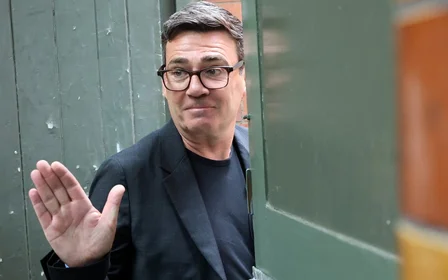
Since Andy Burnham became prime minister, there has been a serious shift in approach to British foreign policy.
But so far none of it has been made public, beyond a change in the rhetoric of government ministers.
This is set to change after parliament's summer recess.
The government is poised to announce a raft of new policies in September, multiple Whitehall and civil society sources told Middle East Eye.
These policies are still under discussion, but are set to include a ban on goods from illegal Israeli settlements.
New MEE newsletter: Jerusalem Dispatch
Sign up to get the latest insights and analysis on Israel-Palestine, alongside Turkey Unpacked and other MEE newsletters
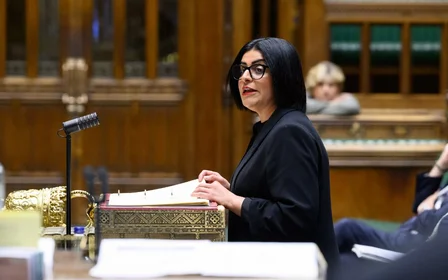
Foreign Secretary Ed Miliband in particular is pushing for stronger measures and has been consulting a range of civil society organisations, MEE understands.
Sources said discussions are underway in the Foreign Office over whether the measures will involve legal sanctions for companies and organisations that have business or other links with settlements in occupied Palestinian territories.
This comes as the Charity Commission, the UK's charity regulator, is investigating several British charities accused of sending money to settlements.
The former prime minister, Keir Starmer, said in June that "no UK charity should be supporting [settlements]" but declined to say the government would ban charitable donations to them.
By contrast, Burnham's government is exploring doing so.
The Foreign Office is looking at imposing new sanctions on individuals and organisations involved in the settler movement in the occupied West Bank, sources with knowledge of the matter said.
There have also been internal discussions on potential sanctions on more Israeli ministers, after far-right ministers Itamar Ben Gvir and Bezalel Smotrich were sanctioned last year.
Arms sales under consideration
Another key issue under consideration is arms sales. In September 2024, the newly elected Starmer government suspended around 30 export licences for UK-made arms after assessing there was a "clear risk" the items could be used in Gaza in serious violations of international humanitarian law.
The licensing of UK-made F-35 components exported directly to Israel was suspended. Significantly, however, parts sent to a global F-35 programme spare parts pool that could end up in Israel were exempted.
UK-made F-35 components make up 15 percent of every F-35, one of the world's most sophisticated fighter jets, which Israel used extensively in its campaign in Gaza, as well as in Lebanon and Iran.
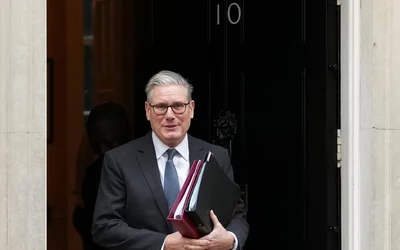
The Starmer government argued that there was no way the UK could unilaterally halt the export of UK-made parts without impacting the worldwide fleet of F-35s and threatening global peace and security.
Starmer also green-lit $169m in military goods to Israel. These included 8,630 separate munitions exports in the category of “bombs, grenades, torpedoes, mines, missiles and other similar munitions”.
Banning the export of these military goods is now under discussion, although no concrete decisions have been made.
A Foreign Office spokesperson told MEE on Wednesday: "Settlements are illegal under international law, undermine the viability of a two-state solution and fuel insecurity for both Palestinians and Israelis.
"We have given clear advice to UK businesses that they should not engage in economic activity in illegal settlements and warn them of the reputational and potentially legal consequences of any such activities."
The UK's slow journey towards a ban
Shortly before he became prime minister in July, Burnham set the tone by apologising for the Starmer leadership's early support for Israel's war on Gaza and refusal to back a ceasefire in 2023 and early 2024.
Since then he has come under significant pressure from Labour backbenchers to ban trade with illegal Israeli settlements and take other strong positions on issues in the Middle East.
MEE reported in November last year that Foreign Office ministers privately accepted that a ban on settlement goods was desirable.
Discussions on how to implement a ban began in the final months of Starmer's premiership.

Then-Middle East minister Hamish Falconer confirmed in early July that the UK was considering the "technical difficulties" of implementing a ban and discussing the issue with allies in the European Union.
The Netherlands and Spain have already imposed a ban, and Ireland is currently implementing one.
Sources said Burnham has been keen to have the early weeks of his premiership defined by his domestic policies.
But he confirmed last month he is considering "further measures to deter unacceptable violence" in the occupied West Bank.
Labour Friends of Israel (LFI), a lobby group within the Labour Party, published a report earlier this month apparently justifying some illegal Israeli settlements in occupied Palestine and urging the British government not to ban goods produced by them.
LFI is a group within the Labour Party believed to count more than 70 MPs as affiliates, although it no longer keeps a public list.
The report argued that "a boycott of all trade with settlements is practically and politically impossible".
It said a full boycott would "impact all Israeli businesses operating in the settlement blocs, as well as East Jerusalem and the Old City".
In opposition, Labour called for a ban on the import of settlement goods, with the then shadow foreign secretary, Lisa Nandy, saying in June 2020 that the move would require "courage that so far ministers have not been willing to show".
Polling of Labour members earlier this year showed that a staggering 87 percent support a ban on trade with Israeli settlements, with only six percent opposing it.
Middle East Eye delivers independent and unrivalled coverage and analysis of the Middle East, North Africa and beyond. To learn more about republishing this content and the associated fees, please fill out this form. More about MEE can be found here.