In Christian village of Taybeh, Israeli military order fails to stop settler violence

The residents of Taybeh, a village east of Ramallah in the occupied West Bank, continue to face settler attacks despite an Israeli military order declaring the surrounding area a closed military zone.
Local residents documented fresh settler attacks on several families east of Taybeh on Tuesday 11 August, including the Naif al-Kaabneh family, who have been subjected to violent assaults in recent days, despite the decision to close off the area under the pretext of protecting Palestinians.
Taybeh is a predominantly Christian Palestinian village in the West Bank, and its residents rely on agriculture, olive groves and olive oil production, among other sources of income.
In recent weeks, residents and solidarity activists say settler attacks have continued and escalated. These include settlers approaching homes and agricultural land, damaging property, and disrupting water and electricity supplies, while residents face increasing difficulty accessing their land.
On Monday the Israeli army declared Taybeh, along with the southern village of Rammun, a closed military zone, saying the move was intended to prevent Israelis and settlers from entering the area.
New MEE newsletter: Jerusalem Dispatch
Sign up to get the latest insights and analysis on Israel-Palestine, alongside Turkey Unpacked and other MEE newsletters
But residents say the order has so far done little to change the reality on the ground. While the army says the closure is meant to keep settlers out, residents and activists continue to report attacks and harassment.
The measure has also raised concerns that the restrictions could make it harder for journalists, international activists and human rights observers to reach the area and document what is happening.
'We are subjected to the harshest attacks and cannot even raise our hands against them'
– Naif al-Kaabneh, Bedouin resident
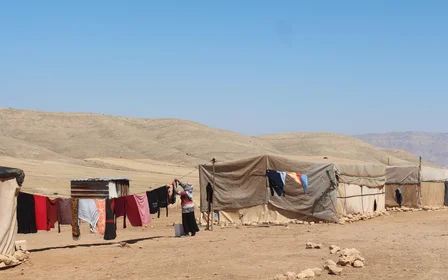
Naif al-Kaabneh, a resident of the Bedouin community east of Taybeh, told Middle East Eye that settler attacks are relentless and almost daily.
He explained that a new settlement outpost had been established on land where a Bedouin community, including his relatives, had previously lived. Settlers had since expelled them, he said, forcing them to flee under sustained attack.
"They remove the fence we put up around our homes, steal our sheep, and bring in their own cattle. If we try to defend ourselves, we are arrested by the Israeli army," he said.
Twenty people live in the community, including Naif's family and his brother's family. They say they endure daily hardship under the constant threat of settlers seeking to displace them and seize their land.
"We hope someone will help us. We are subjected to the harshest attacks and cannot even raise our hands against them. We want anyone to amplify our voice to the world; our lives have become miserable," he added.
'We want to live in peace'
With the escalation of attacks, residents of Taybeh say the threat is no longer limited to assaults on homes and property, but now extends to their access to agricultural land.
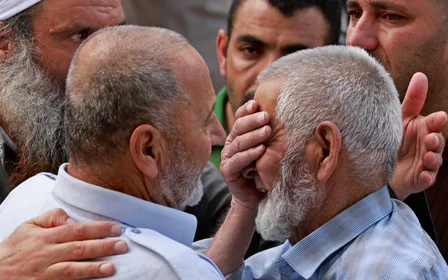
Father Jack Abed, parish priest of Taybeh's Melkite church, said the village has been suffering attacks by settlers, particularly young people.
"They attack our village, and we haven't been allowed to reach our olive trees in peace for three years," he said.
'They attack our village, and we haven't been allowed to reach our olive trees in peace for three years'
– Father Jack Abed, parish priest
Abed said olive trees and olive oil are an important source of income for the village, and called for an end to settler attacks.
"We want to live in peace. Leave us living in peace. Throw out the illegal settlers who are attacking us, putting their hands on our land and forbidding us to reach our land to cultivate the olive trees."
He also expressed concern over the order declaring Taybeh and Rammun a closed military area.
"We ask ourselves, and we ask the Israeli army: this closure, what does it mean? Because if it's forbidden for Israelis to get into this area, why are the settlers still there?"
He said the closure had, in effect, given settlers free rein while making it harder for human rights activists to reach the area and defend residents' rights.
'Protective presence'
The testimonies are not limited to residents of Taybeh. International solidarity activists accompany families in the village as part of what is known as a "protective presence".
Avital, an activist who visits Taybeh weekly, told Middle East Eye that in recent weeks she has witnessed an escalation in settler attacks on one family and their property.
She said settlers come to the family's home every day, breaking down the fence and bringing their herds – sheep and goats – into the compound.

On the morning she spoke to Middle East Eye, she said, settlers had damaged several things at the family's home.
"They broke a camera, they tore a cable for the electricity, they broke the hose for the water, so they spilled all the water. They're very, very intimidating and very violent," she said.
She added that activists had also been beaten in previous incidents, and that while Israeli police were called after the latest incident, they did not always respond.
The continued reports from Taybeh come amid a wider escalation in settler violence across the West Bank.
The UN Office for the Coordination of Humanitarian Affairs (Ocha) recorded more than 1,000 settler attacks causing injury or property damage in the first half of 2026, affecting more than 230 Palestinian communities.
By early July, Ocha reported that more than 2,200 Palestinians had been displaced in the West Bank since the start of the year – an average of around 10 people a day – as a result of settler attacks and home demolitions carried out under the pretext of a lack of Israeli-issued building permits.
It said settler attacks and related restrictions had become the primary driver of displacement in the West Bank during 2026.
Middle East Eye delivers independent and unrivalled coverage and analysis of the Middle East, North Africa and beyond. To learn more about republishing this content and the associated fees, please fill out this form. More about MEE can be found here.