'Agility vs depth': How the Mecca pact stacks up against the UAE-Israel alliance

This summer, a senior UAE diplomat, Lanna Nusseibeh, held consultations with a US ally in Europe. The meeting was unremarkable but informative because of the impression the European country's officials walked away with.
“The UAE is totally aligned with Israel. It’s crystal clear that the partnership has no limits,” a European official who was in the meeting told Middle East Eye.
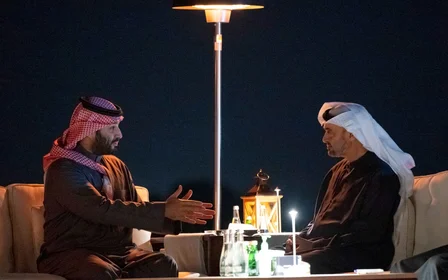
That clarity contrasts with the questions swirling in corridors of power - from the US to Asia - about the Mecca Agreement, which unites Saudi Arabia, Turkey, and Pakistan under a mutual defence pact that many see as rivalling the UAE-Israel partnership.
Western and Arab officials are still trying to decipher just how aligned Saudi Arabia, Pakistan and Turkey are, let alone whether they can back each other up in a hot conflict.
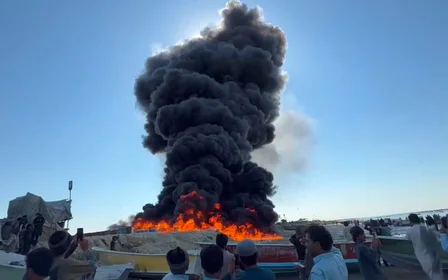
For example, no sooner had the ink on the Mecca pact dried than the Houthis in Yemen attacked Saudi Arabia’s Jazan refinery. Pakistan and Turkey did not come to Riyadh’s defence against the Iran-aligned group.
New MEE newsletter: Jerusalem Dispatch
Sign up to get the latest insights and analysis on Israel-Palestine, alongside Turkey Unpacked and other MEE newsletters
In contrast, when the UAE came under attack from Iranian drones and missiles earlier this year, Israel dispatched Iron Dome air defence batteries to the Gulf state. Abu Dhabi also joined Israel in launching hundreds of strikes on Iran.
“Israel did the UAE a big solid during the war. Abu Dhabi is not going to forget that,” a US official told MEE, speaking on condition of anonymity.
But there are key differences between the two blocs. Despite the UAE and Israel’s military cooperation, their relations are still kept behind closed doors.
"At first glance, the UAE-Israel bloc delivers more tangible gains for both parties, but the Mecca pact may ultimately resonate more broadly and less transactionally,” Theodore Singer, a former US intelligence officer, told Middle East Eye.
'The Mecca club can be expanded'
When Israeli Prime Minister Benjamin Netanyahu announced that he visited the UAE at the height of the war on Iran, Abu Dhabi moved to deny the official statement. To many, that awkward diplomacy underscored just how unpopular the alliance remains outside Israeli and American circles.
'The UAE-Israel alliance is a political pact, but in reality, it’s the military and intelligence elements that define it”
- Ayham Kamel, geopolitical analyst
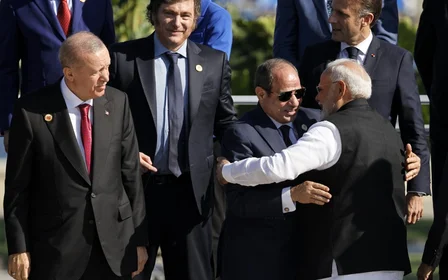
In contrast, the Mecca pact was celebrated in public. It was announced that Saudi Arabian Crown Prince Mohammed bin Salman, Pakistani Prime Minister Shehbaz Sharif, and Turkish leader Recep Tayyip Erdogan joined together for Friday prayer in the holiest city in Islam.
The UAE and Israel have cooperated for decades. Their ties were given a public cloak in 2020 when Abu Dhabi officially recognised Israel under the Abraham Accords brokered by the US.
They are united by their animosity towards Iran on one side and the Muslim Brotherhood on the other. Abu Dhabi’s escalating rivalry with Saudi Arabia, which has refused to recognise Israel, could give the two another point of agreement.
The Abraham Accords have also solidified support in Washington for the UAE’s ruling Al-Nahyan family, even as the Emirates has hedged against the US with countries like China.
But some analysts say the alliance between the UAE and Israel lacks depth. In some ways, the Mecca pact is its foil.
“The UAE-Israel alliance is a political pact, but in reality, it’s the military and intelligence elements that define it,” Ayham Kamel, a geopolitical advisor on the Middle East, told MEE, referring to the Abraham Accords.
“The Mecca pact’s foundation is military, but it carries a lot of political meaning,” Kamel added, noting the agreement’s supposed foundation on a Nato-like Article 5 defence commitment.
A lack of strategic depth is actually a physical reality for Israel and the UAE.
The latter is expanding a military base in Somaliland that some officials in the Horn of Africa tell MEE could be used by Israel, but Somaliland is recognised only by Israel.
Israel enjoys especially close ties with Greece. Both Israel and the UAE have growing military and economic ties with India and Ethiopia.
But there are only one million Emirati nationals and 10.2 million Israelis. Few of their neighbours want to partner with Israel. Distrust of Israel has only grown in the wider Muslim world as a result of Israel's war on Gaza, which the United Nations and dozens of human rights groups have deemed a genocide.
“The UAE-Israeli cooperation is more agile and gets things done. The Mecca pact is going to move slowly and take time, but it has a public support base,” Kamel told MEE. “And the club can be expanded”.
On paper, at least, the Mecca pact is formidable.
'Different threat perceptions'
Turkey boasts the second-largest army in Nato, Saudi Arabia is the Arab world’s only G-20 economy, and Pakistan is the only nuclear-armed Muslim country.
Saudi Arabia and Pakistan have effectively been allies for decades. The kingdom provided financial support to Islamabad as it was acquiring a nuclear weapon. Pakistani pilots and officers have long filled the ranks of the kingdom’s military. In return, the Gulf state has provided a financial lifeline to Islamabad.
But the two face different threats.
Saudi Arabia generally sees Iran as a more serious threat. In 2015, Saudi Arabia allied with the UAE to fight against the Houthis in Yemen. Pakistan decided against military involvement. Its more cordial ties to Tehran have positioned it as a mediator.
Meanwhile, until a few years ago, Turkey and Saudi Arabia were at loggerheads over the Muslim Brotherhood. In Egypt, Saudi Arabia backed Abdel Fattah el-Sisi, who came to power in a coup that overthrew Egypt’s late president, Mohamed Morsi, who was democratically elected, and an ally of Erdogan
Ties between Riyadh and Ankara hit rock bottom in 2019 when Turkey leaked audio tapes exposing the murder of journalist Jamal Khashoggi at Saudi Arabia's embassy in Ankara. It is only recently that Turkey and Saudi Arabia have converged in hotspots like Syria and Sudan.
“The Saudi-Pakistan-Turkey alignment is more complex, given that each operates in different regional environments and their perceptions of threat also differ considerably. It will take a lot of energy, effort and political will for the three states to find a way of working together and finding interoperability,” Neil Quilliam, an associate fellow and Gulf expert at Chatham House, told MEE.
The war on Iran has only deepened ties between Israel and the UAE. MEE revealed in May that the two countries established a joint fund for defence acquisitions.
Quilliam called the Israeli-UAE bloc “more actionable”.
“The relationship has had time to bed in and has passed through many tests since the Abraham Accords were signed, and we have seen the two countries draw closer since the Israel-US war against Iran started,” he added.
Which alliance has better interoperability?
Turkey said on Thursday that its new allies will hold joint exercises and deepen defence industry cooperation. The latter is a key goal for Ankara, which is pitching its drones and other weapons systems across the Middle East.
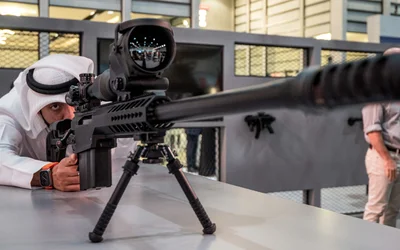
The US and Turkey are Nato allies, while Saudi Arabia has long relied on the US as its main weapons supplier. Pakistan and Turkey have co-produced small warships, known as corvettes, as well as the Kaan fighter jet. They are working to produce Turkish anti-tank missiles. Saudi Arabia wants a local defence industry.
'The UAE has primarily US-systems that are interoperable with Israeli systems'
- Elizabeth Dent, Washington Institute for Near East Studies
But deep integration could pose a challenge.
Pakistan’s main military supplier is China. Turkey wants to sell the Kaan fighter jet it is developing to Saudi Arabia, but the kingdom is eyeing the F-35.
US officials tell MEE that Riyadh is unlikely to buy both.
Pakistan, Turkey and Saudi Arabia cannot match the intensity of Israel's defence cooperation with the US. The former’s military advantage is written into US law. Israel is openly lobbying against Saudi Arabia acquiring F-35s.
“The Israelis have a broad defence industrial base, vast intelligence apparatus and battle-proven air and missile defence that is integrated via the US-led regional security order," Elizabeth Dent, a fellow at the Washington Institute for Near East Policy and a former Pentagon official focused on the Gulf, told MEE.
“The UAE has primarily US systems that are interoperable with Israeli systems, and have the money and regional prowess,” she added.
Still, some analysts say that the very fact that Turkey, Saudi Arabia and Pakistan have publicly codified their agreement gives it room to grow, potentially in ways the UAE-Israel alliance is unable to.
The Mecca pact "contains a lot more strategic depth and binding commitment on mutual defence which could ultimately provide a more credible deterrent,” Dent said. “But the countries aren’t already integrated, so they have a long way to go”.
Middle East Eye delivers independent and unrivalled coverage and analysis of the Middle East, North Africa and beyond. To learn more about republishing this content and the associated fees, please fill out this form. More about MEE can be found here.