Gaza 'ceasefire' has merely slowed the pace of societal destruction


Every fourth Palestinian injured in Gaza since October 2023 lives with spinal cord or brain injuries, among other potentially life-changing conditions, the World Health Organization (WHO) recently estimated. Despite this, the entry of rehabilitation supplies remains restricted.
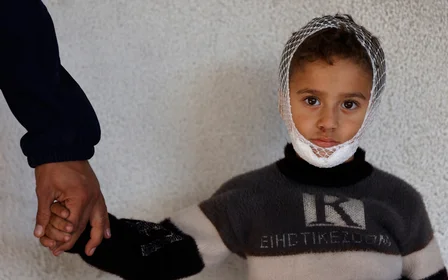
Of the more than 172,000 people wounded in Gaza, 43,000 - around two percent of Gaza’s prewar population, including approximately 10,000 children - are estimated to have sustained life-changing injuries, such as limb trauma, amputations, spinal cord damage, major burns and traumatic brain injuries. More than aid agencies report that no rehabilitation equipment entered Gaza between May 2024 and 14 April 2026, while shipments containing assistive products faced an average waiting time of 136 days.
Gaza is increasingly home to a mass population of survivors whose bodies have been permanently altered by Israeli violence, while the infrastructure necessary for them to recover and live with dignity has simultaneously been destroyed.
Even after the so-called ceasefire took effect in October, Israel has continued to deny them critical aid.
Since then, little has fundamentally changed. Palestinians continue to be killed while sleeping, shopping, or spending time at the beach. Aid deliveries and medical supplies continue to be blocked or severely restricted.
New MEE newsletter: Jerusalem Dispatch
Sign up to get the latest insights and analysis on Israel-Palestine, alongside Turkey Unpacked and other MEE newsletters
As of August, Kerem Shalom remained the only operational crossing for cargo into Gaza, while the volume of supplies entering remained insufficient to meet needs. Of 878 commercial truckloads entering Gaza between 3 and 9 August, only two reportedly carried medical equipment.
The form and pace of the violence have changed, but the conditions producing premature and preventable Palestinian death remain
Tents sheltering displaced people and some of the last standing buildings continue to be bombed daily. In less than a year since the ceasefire was announced, more than 1,300 Palestinians have been killed.
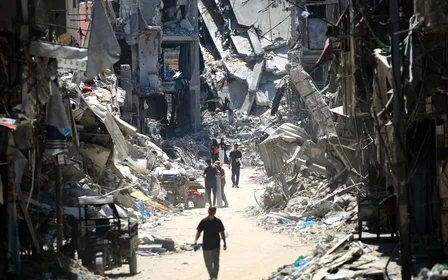
Most Palestinians remain internally displaced. Around 82 percent of all structures in the Gaza Strip, roughly 200,000 buildings, have been damaged or destroyed, while Israeli attacks continue, and reconstruction remains far from reach. More than 1.2 million Palestinians in Gaza, around 60 percent of the population, have lost their homes.
For the tens of thousands of people living with life-changing injuries, these conditions are particularly devastating.
Systematic destruction
Major limb injuries account for the largest share, with more than 22,000 recorded, followed by more than 5,000 limb amputations. Yet of the 2,300 amputees evaluated between September 2024 and May 2026, only 500 - less than a quarter - had been fitted with permanent prosthetics, amid severe shortages in Gaza.
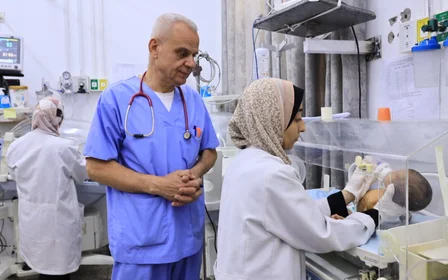
One in five amputees is a child, but no rehabilitation facility in Gaza is fully functional; all are operating under severe constraints in staffing, equipment or supplies.
This means that surviving the initial injury - whether inflicted by bombardment, gunfire or a quadcopter - does not guarantee staying alive, when the conditions necessary for treatment and recovery have themselves been systematically destroyed or denied.
What follows is life with injury and disability amid displacement, destroyed homes, inaccessible streets and buildings, shortages of assistive devices, and a healthcare system that Israel has systematically debilitated.
People with amputations, spinal cord injuries and traumatic brain injuries are forced to recover in tents, damaged buildings and overcrowded shelters
The question, then, is no longer only who survives Israeli bombardment, but under what conditions survivors must now live. What kind of society is being produced through mass injury, disability, and the denial of recovery?
When we speak of the hundreds of thousands of Palestinians injured in Gaza, and the unprecedented scale of life-changing injuries among them, we must also account for the mass destruction and continued denial of the material conditions that could have treated these injuries, prevented their deterioration, and alleviated some of their long-term consequences.
The scale of injury in Gaza is therefore also a story of what has been systematically denied to the survivors: treatment, rehabilitation, adequate shelter, and the conditions necessary for recovery and life with dignity.
Israel’s practice of maiming Palestinian bodies, while simultaneously attacking the infrastructure necessary to rehabilitate and sustain them, did not begin with the current genocide. During the 2018 Great March of Return, Israeli soldiers systematically shot protesters in the limbs, injuring thousands. At least 1,200 required specialised limb reconstruction treatment, according to the WHO.
Since October 2023, this logic has expanded to an unprecedented scale: hundreds of thousands of tonnes of explosives have produced mass traumatic injuries, while hospitals, rehabilitation facilities and medical workers have been attacked, and the entry of medicines and medical equipment severely restricted or blocked.
A particularly destructive dimension of Israel’s violence lies in this simultaneity. A serious injury does not necessarily have to become a permanent disability or debilitating condition.
What happens afterwards - whether surgery is available, infection can be prevented, physiotherapy and prosthetics can be accessed, or people have adequate nutrition, shelter and a safe environment for recovery - shapes the trajectory of that injury. In Gaza, these conditions have systematically been dismantled or denied.
Interconnected violence
This is why the maiming of Palestinian bodies and the destruction of healthcare infrastructure must be understood as interconnected forms of Israeli violence. They operate together, with the destruction of healthcare deepening and prolonging the effects of bodily injury.
When thousands of Palestinians are left with amputations, spinal injuries, major burns, traumatic brain injuries and other long-term conditions, while the facilities necessary for their recovery are incapacitated, injury is extended across time.
Mass injury also has consequences beyond individual bodies. When tens of thousands of people require long-term care while families themselves are displaced, impoverished and struggling to secure food and shelter, the effects extend across households and communities.
People who might otherwise work, care for others, organise, rebuild or sustain communal life are instead forced to devote enormous resources simply to surviving.
Yet this devastating reality - of bombardment, killing, injury and severe restriction of aid - is increasingly being accepted as compatible with “postwar” Gaza. The declaration of a “ceasefire” in October 2025 produced a widespread sense that the war has ended, thus reducing the political urgency, media coverage and international attention that accompanied the preceding two years.
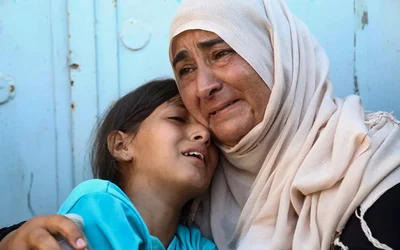
The scale of bombardment and killing has indeed decreased compared with the period before the ceasefire. But a reduction in the intensity of violence is not the same as its end.
The world is normalising this situation: the declaration of a ceasefire as bombardment, killing, displacement and deprivation continue, albeit at a reduced scale. This follows a decades-long pattern in which Gaza has been subjected to repeated Israeli assaults, followed by ceasefire declarations that have failed to end the violence.
Since the October 2025 ceasefire alone, more than 1,900 Palestinians have been injured, according to UN data - and the conditions that transform injury into permanent disability remain largely intact. People with amputations, spinal cord injuries and traumatic brain injuries are forced to recover in tents, damaged buildings and overcrowded shelters, often without the long-term care they require.
A ceasefire cannot be measured only by whether the daily number of Palestinians killed has fallen. It must also be measured by whether the conditions that produce and prolong Palestinian suffering have ended.
Yet Israel continues to occupy roughly half of the Gaza Strip behind the so-called Yellow Line, while most Palestinians remain displaced and confined to an increasingly uninhabitable and devastated territory.
Restrictions on medicines, medical equipment, rehabilitation supplies and other essential goods continue, while the healthcare, water, sanitation and housing infrastructures necessary to sustain life remain severely destroyed.
These conditions amount to a slower form of destruction. For many Palestinians, death may no longer come immediately through bombardment, but rather through an untreated injury, the absence of medication or rehabilitation, contaminated water, deteriorating public health conditions, malnutrition, or diseases that a functioning healthcare system could have treated.
The form and pace of the violence have changed, but the conditions producing premature and preventable Palestinian death remain in place.
The views expressed in this article belong to the authors and do not necessarily reflect the editorial policy of Middle East Eye.
Middle East Eye delivers independent and unrivalled coverage and analysis of the Middle East, North Africa and beyond. To learn more about republishing this content and the associated fees, please fill out this form. More about MEE can be found here.