Elyanna faces backlash over prison visuals in ‘BOSA’ music video

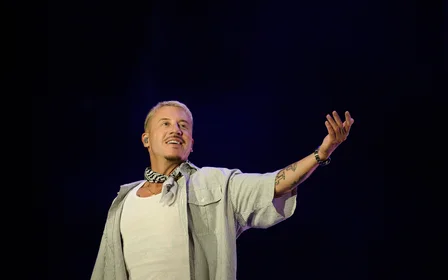
Palestinian singer Elyanna has drawn criticism over her latest music video, with viewers questioning the decision to set the lively and playful clip in a jail while Palestinian women face widespread abuse in Israeli prisons.
Released on 4 September, BOSA opens with Elyanna behind metal bars. The video then moves through a stone prison-like compound, where she and a group of female dancers perform in courtyards and around barred windows. Throughout the song Elyanna is inviting the listener to “give [her] a kiss, kiss".
The women eventually walk out of the compound. Speaking to Complex MENA, Elyanna said: “With BOSA, I invite women to be loud about their femininity, desire, confidence, and freedom.”
But for some viewers, the prison setting was difficult to separate from the reality of Palestinians in Israeli detention.
“Wtf why is this set in a prison?” one commenter wrote under a promotional clip of the video.
New MEE newsletter: Jerusalem Dispatch
Sign up to get the latest insights and analysis on Israel-Palestine, alongside Turkey Unpacked and other MEE newsletters
Another asked whether “no one on the team” had considered that the concept might be “distasteful”.
Some also critcised the dancing and accused Elyanna of “self-orientalism”, arguing that Palestinian, Arab and South Asian motifs and dancing were purposefully transformed into “exotic” visual aesthetics that cater to the western gaze.
Can someone help explain to the “it’s just a music video crowd” that prison is not an abstract symbol for Palestinians. The prison is an actual institution of colonial violence. Palestinian prisoners have been subjected to torture, sexual abuse, humiliation and other forms of… https://t.co/N3UMmYZekA
— Nerdeen Kiswani (@NerdeenKiswani) September 7, 2026
“Honestly as a Palestinian. this isn’t it,” another viewer wrote.
The reaction has also played out on X, where users have questioned the decision to turn a jail into the backdrop for a stylised music video.
Edward Said rolling in his grave lmfao https://t.co/l3Fz4f9Q8F
— Charbel (@7elo3anepls) September 5, 2026
“This so beyond tone deaf *especially* in this climate,” posted one user. “Our women are burying their kids, getting kidnapped, jailed and sexually abused by the iof [Israeli Occupation Forces, Israeli army] every single day. and "عطيني بوسة" [give me a kiss] at the men who locked her up… the orientalist gaze… yeah this is NOT it.”
The response comes as Palestinian women and girls continue to face abuse in Israeli prisons.
Harsh prison conditions
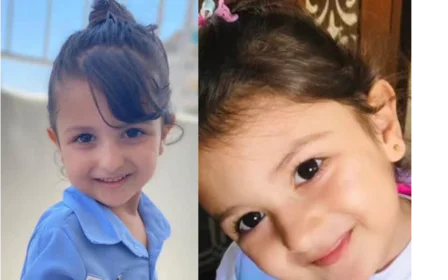
Nearly 100 female Palestinian prisoners are currently held in Israeli detention, according to Palestinian organisations, including pregnant women and teenage girls.
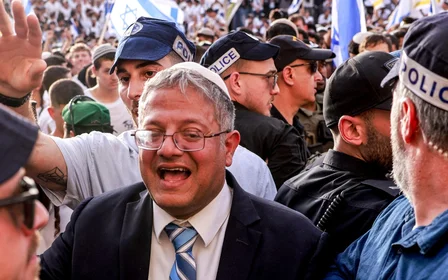
Israel's far-right National Security Minister Itamar Ben Gvir boasts of worsening conditions for Palestinian prisoners during a visit to female inmates, after one prisoner tells him they lack basic necessities. pic.twitter.com/OC6WytNUxv
— Middle East Eye (@MiddleEastEye) August 30, 2026
Former detainees and rights groups have described conditions including inadequate food, restrictions on hygiene and medical care, strip searches and other forms of abuse.
And the issue was particularly visible in the days before BOSA was released.
Israel’s far-right National Security Minister Itamar Ben Gvir filmed himself on 30 August at Damon Prison, where dozens of female Palestinian prisoners are held.
After a prisoner complains about the harsh conditions, including a lack of proper showers, Ben Gvir says: “I am pleased with these conditions.”
On social media, he described the issues raised by the Palestinian woman as “whining”, saying the days of “summer camp” in Israeli prisons were over, and boasted that he was responsible for reducing conditions to what he called the “bare minimum”.
i cannot get over how awful this is. what are you, as a palestinian woman, doing singing "give me a kiss", while playing the role of a woman in captivity flirting with her jailors? what message is this sending? what are you trying to romanticise ya allah https://t.co/lxPsvKiH8v
— lo ☆ (@sayidalazarus) September 6, 2026
For critics of BOSA, the timing of the music video made that contrast particularly stark: as Palestinian women were being filmed inside Damon, describing the conditions of their detention, BOSA presented a group of women dancing inside a prison before walking free.
But not everyone agreed with the backlash against the music video, with some viewers accusing critics of reading too much into it.
“Y'all are weird for getting mad at her clothes, lyrics, dancing and literally everything,” one person wrote on TikTok, arguing that Elyanna should be allowed to make “a fun song about love”.
Others rejected the label altogether. “Orientalist? she is oriental,” another user commented.
Elyanna herself appeared to dismiss accusations of orientalism, replying “give me 💋💋💋” in Arabic under a video critiquing her clip.
@yannafanclub and i don't even understand how an arabic-latin song is "westernized" for you are we deadass?? 😭😭 #elyanna #popculture #arabicpop ♬ original sound - yanna fan club
Others pointed to Elyanna’s history of publicly supporting Palestine.
“No, never forget it was elyanna the FIRST palestinian artist to take the coachella stage with a full set in arabic shouting ‘free palestine’ and waving her keffiyeh!” one supporter wrote.
Another stated that her background should be taken into account: “Elyanna was born and raised in Palestine to a Palestinian mother and Palestinian Chilean father just say you hate the song and move on no need to write a think piece invalidating her whole identity and roots.”
Middle East Eye reached out to Elyanna and her management, SALXCO, for comment, but did not receive a response by the time of publication.
Middle East Eye delivers independent and unrivalled coverage and analysis of the Middle East, North Africa and beyond. To learn more about republishing this content and the associated fees, please fill out this form. More about MEE can be found here.