Miliband has decisively broken with decades of UK inaction on Palestine


In a meeting with the British Foreign Secretary Ed Miliband on 7 September, I heard him proclaiming that the UK was genuinely serious about taking action against Israeli violations of international law.
Britain’s diplomat-in-chief did not spell out what these actions would be, but he was insistent this would be part of a reset on Israel-Palestine. Miliband was also clear this was an issue he would take the lead on.
This was not a man about to duck his moment.
Yet, even at the end of the meeting, I was left wondering about all the strident comments against what Israel was doing - how far would the government actually go when addressing Parliament?
Miliband talked of a reset in relations with Israel. What would that mean?
New MEE newsletter: Jerusalem Dispatch
Sign up to get the latest insights and analysis on Israel-Palestine, alongside Turkey Unpacked and other MEE newsletters
Expectations had been raised before.
For over 30 years I have worked on trying to procure a UK ban on trade and services with illegal Israeli settlements. I have pressed foreign secretaries before, some of whom would agree in private but hide behind excuses such as American pressure or a prime minister who was not in agreement.
It was never the right time. Waiting for a different Israeli government or US president always seemed the lazy option.
Would this be different? The answer was a stunning yes.
A genuine moral courage
For the first time ever in the House of Commons, a British foreign secretary showed genuine moral courage and a robust willingness to act against Israel.
All the hesitancy, evasiveness and cowardice of previous governments vanished. It was a courageous exercise in truth-telling. He rightly referred to ethnic cleansing going on in the Occupied West Bank, a phrase none of his predecessors had dared use.

He outlined a host of examples of where Palestinian communities had been attacked and terrorised by Jewish settlers. He gave voice to their daily suffering in a way that so much of the mainstream media coverage had failed to do.
On Gaza, his language was also far more forthright than his predecessors describing what the government of the Israeli Prime Minister Benjamin Netanyahu was doing as "a stain on the conscience of the world."
At no point in the Starmer or Sunak administrations did the UK ever state that Israel had violated international law except on one occasion when the then Foreign Secretary David Lammy misspoke, and was forced by Downing Street to correct the record.
Miliband went further. He backed the international legal processes to determine whether Israel had violated international law, and made reference to the UN Commission of Inquiry report that accused Israel of genocide.
He said: "It is right that this issue has been brought before ICJ and I want to make it clear that we support the Court in coming to its determination."
This is an official statement of respect for both the International Court of Justice (ICJ) on the issue of genocide and the Commission of Inquiry. Should the ICJ determine Israel has perpetrated genocide, Britain has formally positioned itself to accept any such determination.
In short as Miliband stated: "accountability for what has happened in Gaza matters."
Significant measures
What was in the package of these concrete measures that Miliband had promised back on 18 August?
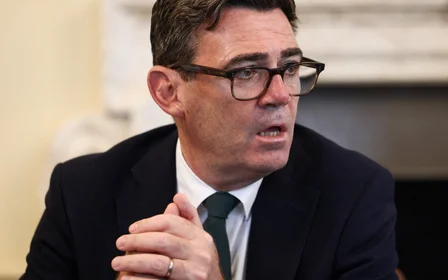
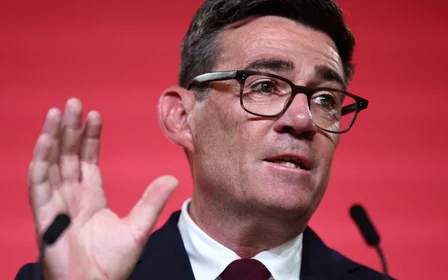
Miliband, with Prime Minister Andy Burnham sitting next to him, announced not just a ban on trade in goods with settlements but a sanctions regime on financial services.
The serious question is whether this policy shift will matter and change things on the ground?
He admitted that the amount of goods exported from settlements to the UK was limited, hence why the sanctions on financial services mattered.
Banks and insurance companies should not be able to help sustain these illegal entities.
Miliband spoke of taking action "against specific companies and individuals who provide services such as construction, infrastructure, financing, or real estate for settlement expansion."
The downside was that Miliband said this would take six to nine months to implement. This, he argued, was to ensure the ban was watertight and could not be challenged.
An advertising ban will also be introduced. Only in June, a property trade fair in London had included Israeli settlement properties.
This would now be illegal.
Holiday lettings companies, that had been renting and therefore profiting from illegal settlements, would now be prohibited from doing so, mirroring a similar ban already in place in Spain.
Some of the above was predicted in the media. But Miliband added two significant measures that perhaps were not.
The foreign secretary announced that the British government now endorsed the definitive legal opinion of the ICJ that Israel’s presence in the occupied Palestinian territory was unlawful.
It also means that the UK accepts the court’s determination that it must not render aid or assistance in maintaining the situation created by Israel’s illegal presence in the Occupied Palestinian Territory.
The Starmer government spent two years promising an official response but never delivered. Miliband fixed that six weeks into his role.
Narrowing a huge gap
Secondly, he tightened the UK policy on arms export to Israel.
In the future, the UK would "refuse all licence applications for arms and other exports that materially contribute to the occupation, in effect a double lock against arms sales.”
The postscript was telling. This ban on such exports will now remain "as long as the occupation persists."
The totality of these measures is not just symbolic as some anti-Palestinian critics claim. It narrows the huge gap between the reality on the ground and the feeble nature of the British and collective European response.
It resets the British position to be perched on the side of those who still consider international law to be vital, and in doing so sets itself against the likes of the Israeli government, the Trump administration and the Putin regime in Russia.
Crucially, this was done in conjunction with 11 other states including France and Canada. The move means three G7 states will be sanctioning settlements. Other states may yet join and they should be encouraged to do so.
The serious question is whether any of this will matter and change things on the ground?
It will not alter the current trajectory of this Israeli government. It has already announced retaliatory measures such as closing the British Consulate in Jerusalem.
Expect further settlement announcements, and the settler violence to continue on steroids. This will not faze Messrs Burnham and Miliband.
Wider Israeli political forces who might determine the make-up of the next Israeli government might pause for a rethink. Pursuing this path will only bring more pain and certainly not peace and security.
Palestinians will be more sanguine, and many believe only full-blown sanctions will trigger a genuine change on the ground.
But for those who have witnessed Britain being so passive over the last decade, it is a welcome shock to find a government prepared to be bold and take the lead, its moral compass steering the direction of travel.
For this to continue, those in favour of peace and justice in the Middle East will have to work hard to keep it on course.
The views expressed in this article belong to the author and do not necessarily reflect the editorial policy of Middle East Eye.
Middle East Eye delivers independent and unrivalled coverage and analysis of the Middle East, North Africa and beyond. To learn more about republishing this content and the associated fees, please fill out this form. More about MEE can be found here.