Exclusive: Mali’s Tuareg separatists seek Turkey talks, reveal Russian contact

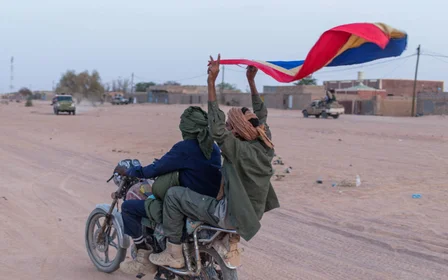
The Azawad Liberation Front (FLA) in Mali has disclosed direct contacts with Russia’s Africa Corps and called for dialogue with Turkey to help find a political solution to the country’s crisis.
In an exclusive interview with Middle East Eye, FLA spokesperson Mohamed Elmaouloud Ramadane said the Tuareg separatist group hopes for engagement with Ankara, whose growing influence has made it an important player in the country.
Currently, the FLA is fighting the Malian government alongside Jama’at Nusrat al-Islam wal-Muslimin (JNIM), an alliance of armed groups aligned with al-Qaeda.
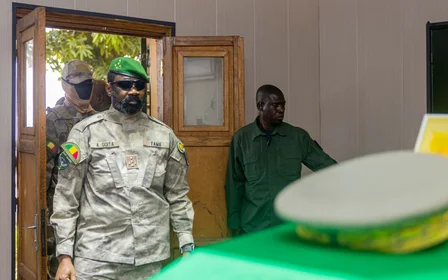
While the two factions are coordinating their offensives, seizing towns and army bases, blockading Bamako and killing the Defence Minister Sadio Camara, they have different objectives: the FLA seeks an autonomous Tuareg state in Mali’s northeast while JNIM wants to topple the government.
Previously, French and other western troops propped up the Malian state against JNIM and its precursors.
New MEE newsletter: Jerusalem Dispatch
Sign up to get the latest insights and analysis on Israel-Palestine, alongside Turkey Unpacked and other MEE newsletters
But today, the government partners with Moscow, which deployed Wagner Group mercenaries in 2022, later reorganising them into Africa Corps units after Wagner’s mutiny against Vladimir Putin.
An FLA/JNIM offensive in April exposed the vulnerabilities of that Russian deployment in the north. Africa Corps personnel withdrew from the strategic city of Kidal before the FLA seized it.
And in July, reports emerged of possible arrangements between the FLA and Africa Corps amid fighting around Anefis, 100km southeast of Kidal.
Ramadane said that the FLA have been in direct contact with the Africa Corps, but stressed that those exchanges did not amount to political negotiations or a strategic rapprochement.
“I can confirm that there were direct contacts in certain contexts, notably around questions related to movements, withdrawals and the situation in certain areas,” he said.
“In a conflict, there are sometimes channels of communication with the adversary to avoid incidents, manage certain situations or facilitate occasional arrangements,” he added.
“This does not mean that the political objectives of the parties have become compatible.”
A message to Erdogan
Ramadane insisted that northeastern Mali, the region the separatists want for an independent state they call Azawad, should not become an arena for a proxy war between foreign powers.
Yet, he added, that should not prevent the FLA from seeking engagement with Turkey, which has deepened its diplomatic, economic and military ties with Bamako over the past decade.
Ankara has sold armed drones and other equipment to Mali’s military government since 2023, while bilateral trade has tripled over the past decade.
Defence has become an increasingly important part of that relationship: since 2024, arms and ammunition have accounted for 20 percent of Turkey’s exports to Mali, ahead of electronic equipment, industrial machinery and cereals, according to a report by Le Monde.
Ramadane said those ties meant the FLA could not regard Ankara as standing entirely outside Mali’s conflict.
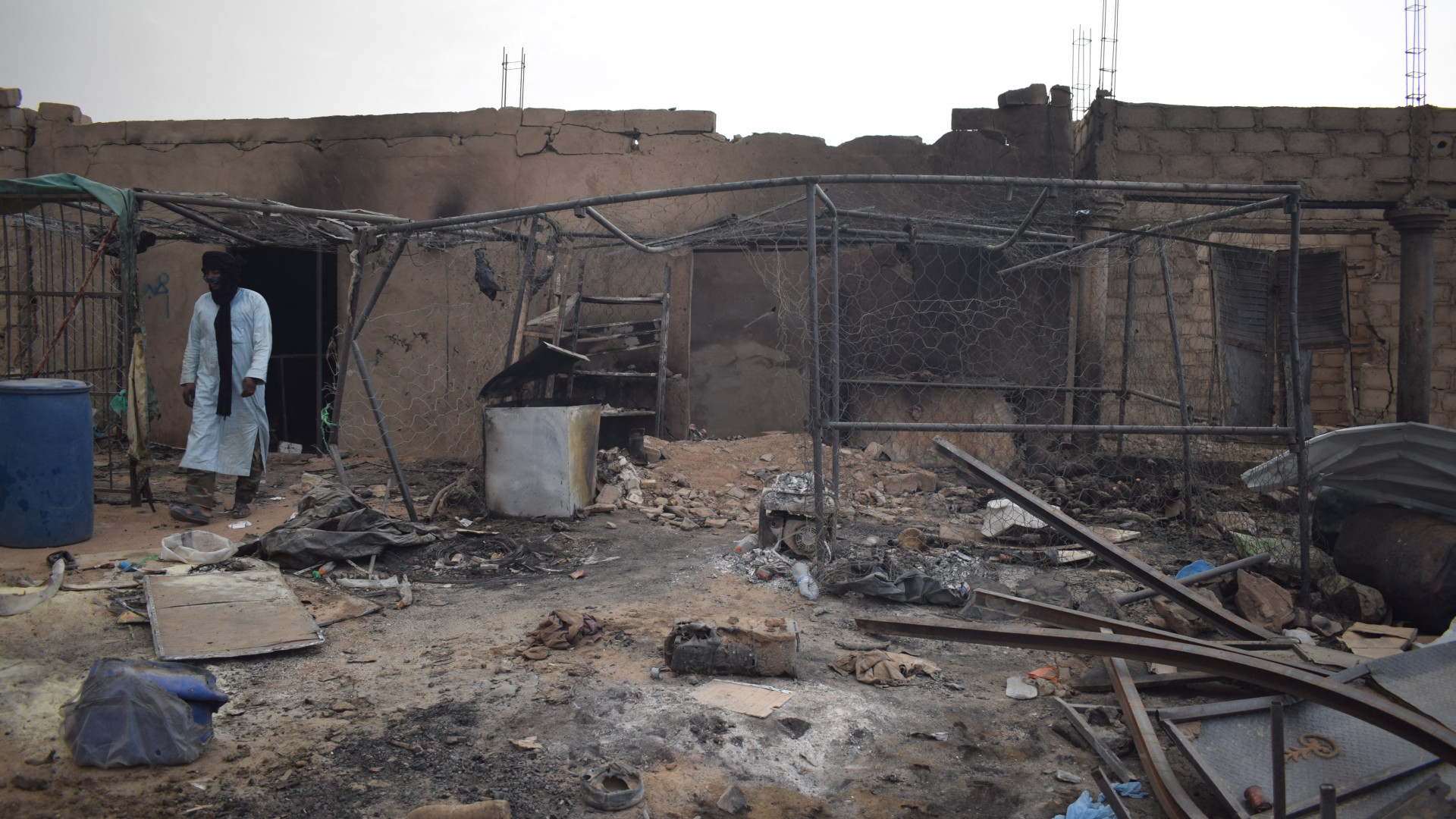
“We note that Turkey has considerably developed its relations with the criminal junta in Bamako, particularly in the sale of drones,” he said, alleging that the aircraft were causing civilian deaths in Azawad.
Nevertheless, he distinguished between Turkey’s relationship with Bamako and the role it could play in a political settlement.
“We do not ask Turkey to break its relations with the military junta. We ask it to look at the Malian reality in all its complexity and not to consider the question of Azawad solely through the prism of the authorities in Bamako,” he said.

The FLA wanted channels of dialogue through which it could explain its position directly to Ankara and President Recep Tayyip Erdogan, he added, rather than via the Turkish military alone.
Ramadane said the FLA’s appeals to Erdogan were not an attempt to recruit another foreign patron.
“We do not ask Turkey to take a military side with the FLA. We ask it first to listen and understand,” he said.
He argued that Turkey’s influence in Africa and the Muslim world, combined with its close relationship with Bamako, gave it a particular responsibility.
“We do not ask Turkey to choose between Mali and Azawad. We ask it to contribute to ensuring that peace is not imposed on Azawad but negotiated with it,” Ramadane said.
“Our essential message is this: we are not seeking foreign patrons for our cause, we are seeking partners capable of contributing to a just, lasting political solution consistent with the aspirations of the populations concerned.”
A Turkish official familiar with African affairs told MEE that Ankara was open to dialogue with a range of actors and that channels could be found if the FLA wanted to engage with the Turkish government.
“However, it doesn’t mean that we will take their side and be part of the internal conflict of a foreign state,” the official said. “But we would listen to them.”
Battlefield cooperation with JNIM
Alongside its appeal for dialogue with Turkey, the FLA defended its battlefield coordination with al-Qaeda-linked JNIM, saying it did not amount to a political alliance.
Ramadane acknowledged that the groups had moved closer at an operational level against common enemies, but stressed that their political agendas remained fundamentally different.
“It is first necessary to distinguish two things that are often deliberately confused: operational convergence on the ground and political alliance,” he said.

FLA and JNIM forces carried out coordinated attacks across northern and central Mali in April. A second coordinated offensive followed in July, including fighting around Anefis and attacks on military positions in Gao and Aguelhok.
Ramadane said the cooperation reflected battlefield realities rather than a shared political programme, insisting that any lasting settlement must address Azawad’s political status.
“The FLA remains an Azawadian political and military organisation whose project responds to the aspirations of the people of Azawad,” he said.
“That being said, lasting peace in Mali and Azawad will necessarily have to take into account the realities on the ground.”
He argued that JNIM, which he described as now composed largely of Malian nationals, could not simply be excluded from a future settlement.
“It is impossible to make peace in Mali or speak of stability without including JNIM,” he said, adding that the group was beginning to develop “a political language and an agenda of local demands”.
Middle East Eye delivers independent and unrivalled coverage and analysis of the Middle East, North Africa and beyond. To learn more about republishing this content and the associated fees, please fill out this form. More about MEE can be found here.