
French legal complaint says Israeli army uprooted and stole ancient olive trees from Lebanon

A war crimes complaint has been filed in France against the Israeli army over its uprooting of a historic olive grove in Lebanon.
An unnamed French businessman, aged 37, filed the complaint, claiming that soldiers uprooted trees that were 600-years-old on his family's land in the village of Zawtar el-Charqiye, his lawyers told the AFP News agency.
The civil suit accuses the Israeli army of theft and destruction of property, which constitute war crimes.
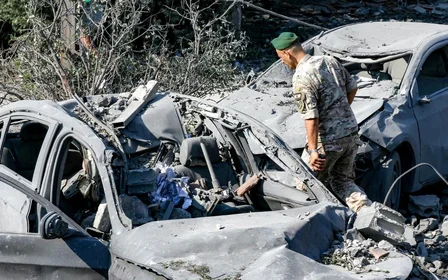
According to the businessman, the Israeli army also destroyed his family's home in an air strike in April.
He said that no one in his family had any ties to Hezbollah, which has been at war with Israel since October 2023, and that his family had cultivated the land where the grove sat for more than 250 years.
New MEE newsletter: Jerusalem Dispatch
Sign up to get the latest insights and analysis on Israel-Palestine, alongside Turkey Unpacked and other MEE newsletters
"There is no evidence to suggest that Hezbollah was using the house or the agricultural fields as military equipment," the court filing says.
"These acts are part of the broader context of ethnic cleansing and the destruction of numerous villages by Israel in southern Lebanon," lawyers Vincent Brengarth, William Bourdon, and Nicolas Busin told AFP.
"Our client expects the French justice system to do everything possible to identify and prosecute those responsible."
Israeli Prime Minister Benjamin Netanyahu said in an i24 interview that his intention from October 7 was ultimately to wage war with Iran and expand its operations into Gaza, Syria and Lebanon.
— Middle East Eye (@MiddleEastEye) September 6, 2026
Netanyahu said he believed on October 8 that Israel would “change the face of the… pic.twitter.com/rCqTpUmGiY
According to Lebanon's health ministry, Israeli attacks have killed 8,920 people and injured 30,595 others since October 2023.
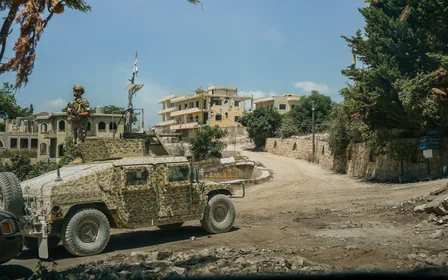
Israeli forces remain deployed in a self-declared buffer zone extending about 10km into southern Lebanon. Amnesty International said in June that the zone covered approximately six percent of the country.
Middle East Eye delivers independent and unrivalled coverage and analysis of the Middle East, North Africa and beyond. To learn more about republishing this content and the associated fees, please fill out this form. More about MEE can be found here.