
Morocco appoints its first woman prime minister

Morocco’s King Mohammed VI has appointed Fatima Ezzahra El Mansouri as head of the government, one week after her party won the legislative elections.
For the first time in its history, the North African kingdom will be led by a woman.
“This is truly a historic moment,” El Mansouri told public media after her audience at the royal palace.
“For the first time in our country’s history, a woman is taking on the responsibility of leading the government. This is not only a source of pride for me, but for all Moroccan women,” she added.
At 50, the lawyer becomes the thrid woman in the Arab world to reach this position, after Najla Bouden and Sarra Zaafarani in Tunisia.
New MEE newsletter: Jerusalem Dispatch
Sign up to get the latest insights and analysis on Israel-Palestine, alongside Turkey Unpacked and other MEE newsletters
El Mansouri had already made history by becoming, at just 33, the first woman to serve as mayor of the tourist city of Marrakesh in 2009 - a position she currently holds for a second term since 2021.
She had also made her mark during the 2023 earthquake, visiting affected communities repeatedly.
Currently the national coordinator of the Authenticity and Modernity Party (PAM), outgoing minister of housing and spatial planning, and a newly re-elected MP, El Mansouri had been widely tipped for the role in recent weeks.
However, without an absolute majority, the new prime minister will now need to form a coalition government for the next five years ahead of the 9 October parliamentary session.
A centre-right party, the PAM - part of the outgoing governing coalition - secured 97 of the 395 seats in the House of Representatives in an election marked by a turnout of just 38 percent, the lowest in nearly two decades.
El Mansouri will have to negotiate with the National Rally of Independents (RNI), the party of outgoing Prime Minister Aziz Akhannouch, which came second with 66 seats, and with the Istiqlal Party, also part of the outgoing coalition, which finished third with 65 seats.
In opposition, the Justice and Development Party (PJD), an Islamist‑leaning party that quadrupled its seats to 54 from 13 in the previous election, has ruled out joining the majority.
In Morocco, strategic policy directions remain under the king’s prerogative.
A delicate political climate
Born in Marrakesh in 1976, within a well-off family close to the country’s power circles, El Mansouri holds law degrees from Montpellier and New York.
She worked at the law firm of Hicham Naciri, an influential adviser to the palace, before joining the PAM in 2008 and rising through its ranks.
Founded in 2008 by Fouad Ali El Himma, a close adviser of the king, the party was designed as a political counterweight to the rising influence of the PJD.
Because of its founder’s proximity to the monarchy, the PAM has often been labelled by critics and media as “the king’s party” or “the palace’s party”.
El Mansouri now has to navigate a delicate political climate marked by deep social discontent.
The elections took place less than two months after the Ceuta migration crisis, when tens of thousands of migrants - mostly Moroccans - crossed illegally into the Spanish enclave of Ceuta from the nearby town of Fnideq, highlighting the deep frustration among Moroccan youth.
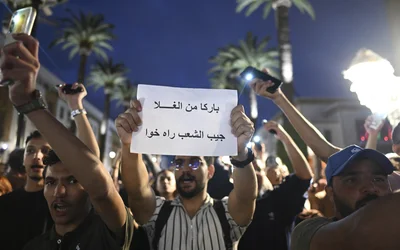
They also coincided with the first anniversary of protests by the anonymous collective GenZ 212, which organised near-daily demonstrations demanding better public education and healthcare services last year.
Perhaps a symptom of these tensions, El Mansouri’s appointment followed an unusually long delay: six days passed between the vote and the royal announcement, compared with two to three days after previous legislative elections, fuelling questions and speculation.
Fouzi Lekjaa, the current budget minister and widely known as president of the Royal Moroccan Football Federation, had also been considered a frontrunner for the post.
The party’s victory was also overshadowed by controversy, with Tangier’s mayor, Mounir Laymouri, arrested over suspicions of electoral fraud. Investigators are looking into the alleged falsification of hundreds of ballots in two polling stations.
El Mansouri has also faced allegations of illicit enrichment reported by some media outlets, accusations she has firmly rejected as “baseless” and politically motivated.
In addition to restoring Moroccans’ trust in the political class, the new prime minister will have to oversee several major dossiers, including preparations for the 2030 Fifa World Cup and efforts to curb the rising cost of living and unemployment.
Middle East Eye delivers independent and unrivalled coverage and analysis of the Middle East, North Africa and beyond. To learn more about republishing this content and the associated fees, please fill out this form. More about MEE can be found here.