‘They want to displace us’: Israel launches new demolition of West Bank olive groves

Standing in his backyard, Saleh Tamimi looked in agony at the remains of olive trees he had tended for years.
Around his home in Deir Nizam, northwest of Ramallah in the occupied West Bank, the uprooted trees lay in a tangled heap of branches, stones and soil.
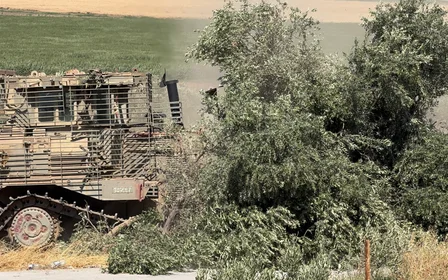
Days earlier, Israeli bulldozers had arrived to raze land his family has owned since the 1960s.
“What has this lemon tree done to them and their security?” Tamimi asked Middle East Eye, pointing to the broken branches.
“I used to water this olive tree every day,” he added, pointing to another.
New MEE newsletter: Jerusalem Dispatch
Sign up to get the latest insights and analysis on Israel-Palestine, alongside Turkey Unpacked and other MEE newsletters
He said his house has also been issued a demolition order.
“They want to displace us. I have nowhere else to go. Even if they destroy this house, I’m not leaving.”
Tamimi’s case is part of a wider campaign targeting Palestinian agricultural land and olive groves across the occupied West Bank.
In September, a series of military orders demanded the removal of vegetation and uprooting of trees across hundreds of dunams, just weeks before the olive harvest began.
According to data from the Wall and Settlement Resistance Commission, 55 military orders targeting trees and vegetation were issued between the start of the year and September.
They affected about 2,373 dunams, compared with 47 orders covering 1,613 dunams throughout the whole of 2025.
On 20 September, following the killing of a settler in a shooting near Deir Nizam, the commission said a military order was issued targeting about 99.79 dunams of village land. The order required vegetation to be removed and olive and other trees to be uprooted.
Four days later, another order targeted a further 94.79 dunams, giving landowners 12 hours to remove the trees themselves, according to the commission.
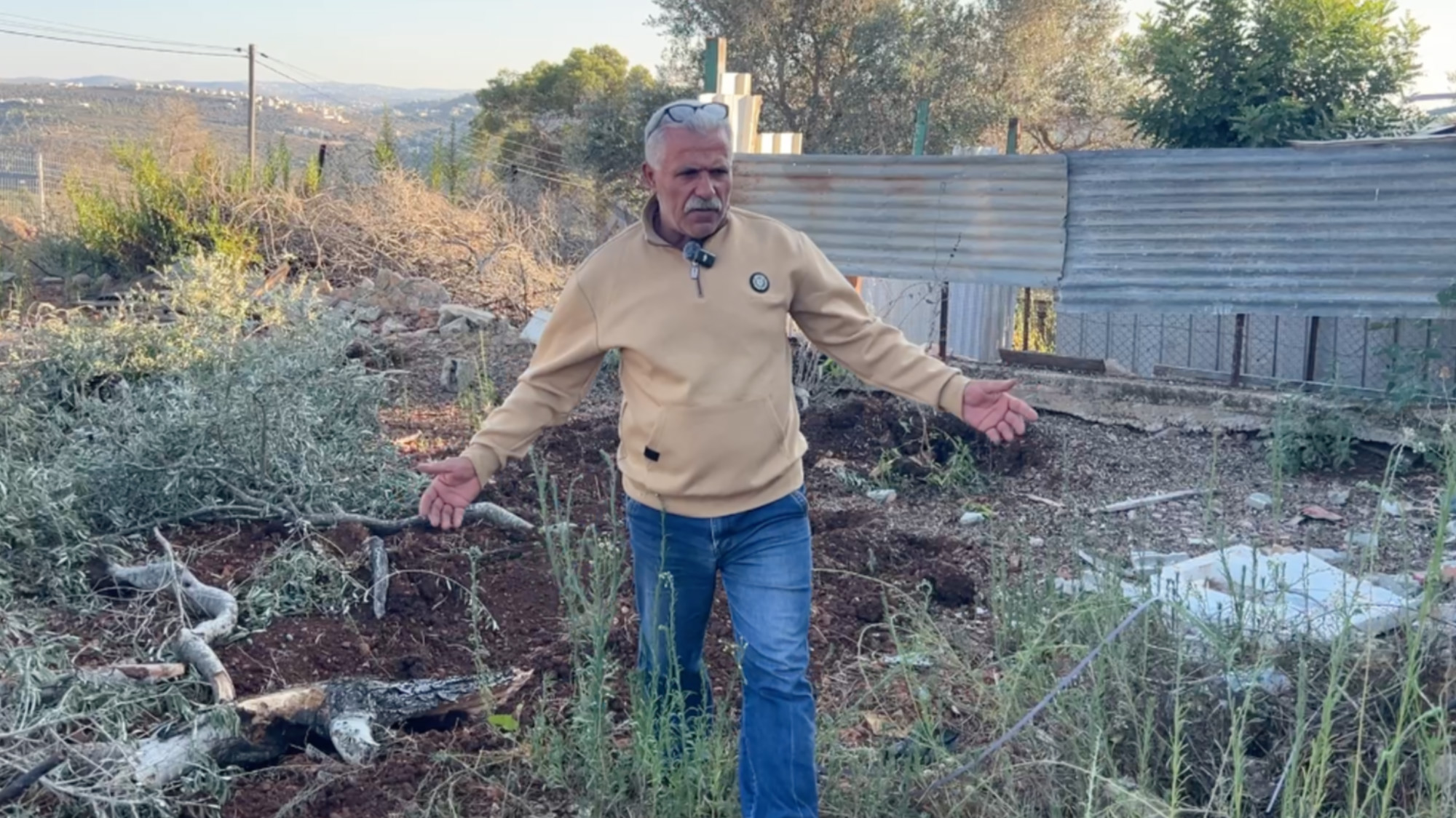

Nathir Tamimi, another landowner in Deir Nizam, said his family owns about 24 dunams planted with olive trees. The trees, he said, had been inherited from previous generations. In recent days, Israeli forces had bulldozed about eight dunams of his land, along with neighbouring plots.
He said about 140 dunams in the area had been cleared so far.
Harvest under threat
The escalation in tree-uprooting orders has affected more than Deir Nizam.
On 24 September, Israeli forces bulldozed about 31 dunams of private land in Beit Rima, northwest of Ramallah, uprooting more than 400 olive trees.
The operation came two days after a military order was issued requiring the removal of the trees.
'We refused to uproot trees we had planted with our own hands'
– Afrah Sanaf, Beit Rima resident
Hazem Rimawi, 61, said the trees uprooted from his three-dunam plot were heavy with fruit.
“What happened in a few hours wiped out decades of work,” he told MEE.
“I have no other source of livelihood besides this land and these olive trees. What use is the land now that the trees have been uprooted?”
Afrah Sanaf, another resident affected by the bulldozing, said residents were informed on 22 September of a decision to remove trees in the area.
They went to the municipality to examine the map, only to discover that their land was included in the order.
Sanaf said his land was home to about 138 olive trees, many of them generations old and familiar to his family since childhood.
He said he was 63 and could not remember a time when the trees did not exist.
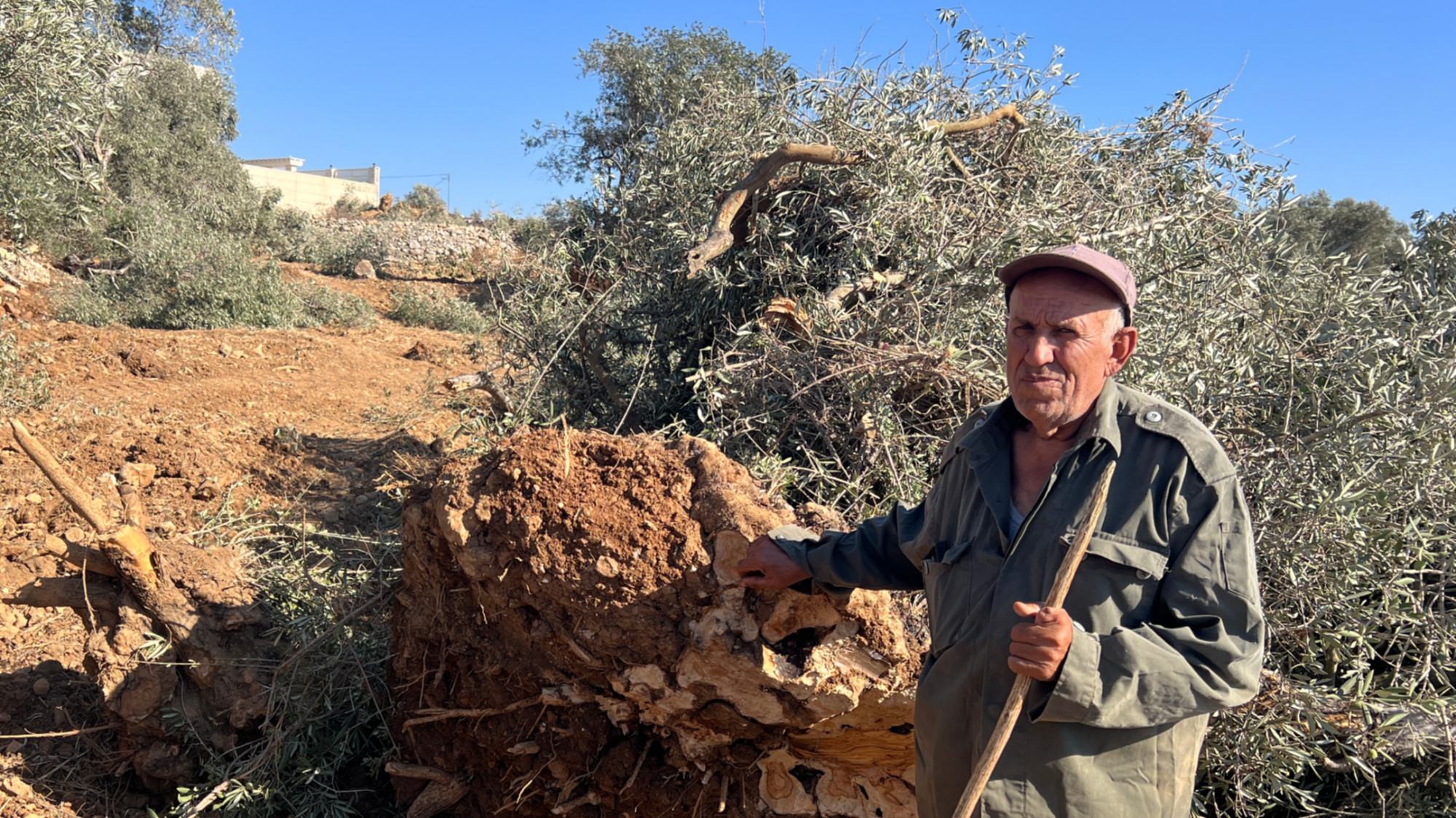
The notice they received gave landowners 12 hours to remove the trees themselves.
“Naturally, we refused to uproot trees we had planted with our own hands,” he said.
According to Sanaf, the bulldozed land lies about three or four kilometres from the nearest Israeli settlement.
‘Rooted in this land’
On 25 September, Israeli bulldozers began uprooting olive and forest trees in Beit Ur al-Fuqa, southwest of Ramallah.
The operation followed a notice targeting 29 dunams of Palestinian land planted with trees. The order was issued two days after a Palestinian carried out a car-ramming attack at an Israeli checkpoint near the village, injuring an Israeli soldier.
Ali Samara, head of the village council, said the bulldozing had extended to about 60 dunams.
He warned that continued operations could uproot at least 1,500 olive trees, some of them more than 200 years old.
'We are just like the olive trees we inherited: rooted in this land'
– Nathir Tamimi, Deir Nizam resident
In Kafr Malik, northeast of Ramallah, Israeli authorities issued a military order targeting more than 56 dunams, also calling for the removal of vegetation and olive trees.
The escalation has come as farmers prepare for the olive harvest, which typically begins in October.
For those whose fruit-bearing trees have been uprooted, the loss goes beyond this year’s harvest. The trees themselves can take years to become productive again.
“What happened left us in a state of shock. It was an act of injustice,” said Sanaf.
“The trees and land we lost were the source of livelihood we had relied on all our lives.”
The destruction of terraces and topsoil, along with restrictions on access to farmland, threatens the land’s ability to be cultivated in the future.
“The damage is not limited to the owners of the bulldozed land; it affects the entire town,” said Nathir.
“The landscape has shifted from green olive groves to expanses stripped of their trees.”
Nathir said he believed the uprooting was aimed at pushing landowners off their land. But he added that they remained determined to stay.
“We are just like the olive trees we inherited: rooted in this land.”
Middle East Eye delivers independent and unrivalled coverage and analysis of the Middle East, North Africa and beyond. To learn more about republishing this content and the associated fees, please fill out this form. More about MEE can be found here.