Can Baghdad gain control over paramilitary groups amid US war on Iran?

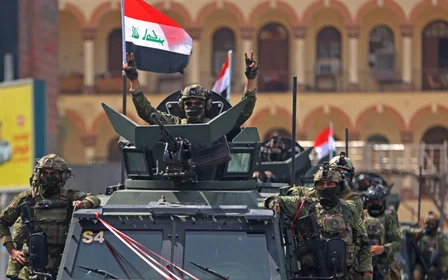
With the US withdrawing its forces from its territories, Iraq is moving towards bringing the country’s powerful paramilitary groups under greater state control, a process that will require navigating competing interests among the groups, Baghdad and Washington.
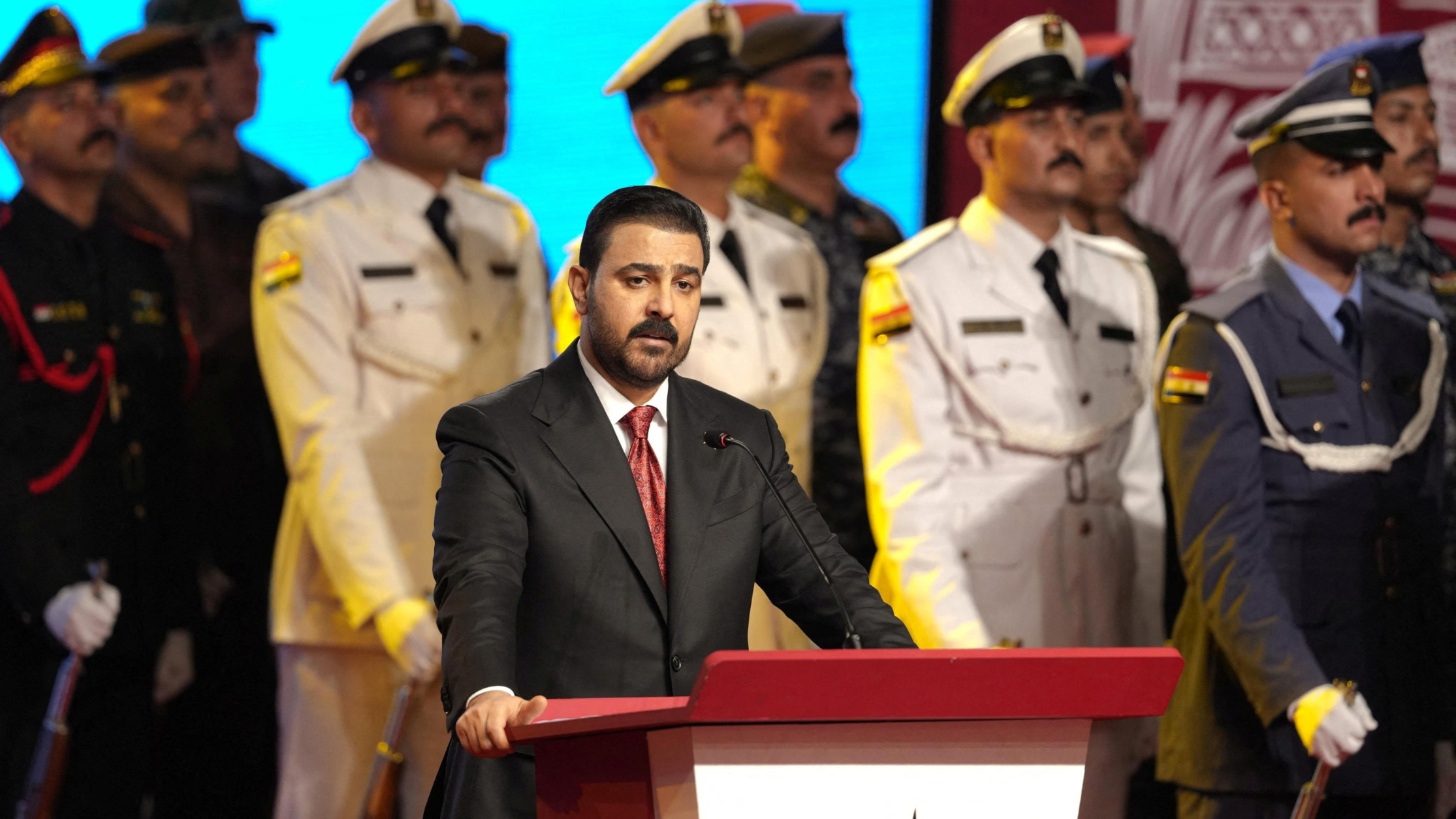
It is unlikely to amount to straightforward disarmament, instead seeking to limit these groups’ ability to act autonomously by bringing their weapons more closely under state control and, in some cases, integrating fighters into formal state structures. Iraq’s Prime Minister Ali al-Zaidi has now set a deadline of 30 June 2027 to complete this process.
Whether the process succeeds will depend on Baghdad’s ability to manage the demands of armed groups, their willingness to accept limits on their autonomy and, crucially, whether external actors avoid actions that could undermine it.
In recent weeks, a framework for enforcing state control over Iraq’s paramilitary groups has emerged.
According to Zaidi, Baghdad plans to implement the process in phases, starting with a 90-day cessation of military activity. This period began on 30 September, on the same day the US-led coalition, which has for years come under attacks by these groups, officially withdrew from Iraq.
New MEE newsletter: Jerusalem Dispatch
Sign up to get the latest insights and analysis on Israel-Palestine, alongside Turkey Unpacked and other MEE newsletters
In return, the US would refrain from launching military strikes on armed groups in Iraq.
During the United States' war on Iran, the US military repeatedly struck bases affiliated with Iran-linked paramilitaries, including the Popular Mobilisation Forces (PMF). On 29 July, Saudi Arabia and the US launched a joint attack on PMF targets, killing at least 20 members.
Following the three-month period, paramilitary groups, many of which formerly operated under the PMF and are already embedded within the state, will begin the process of bringing their weapons under state control.
What this means in practice remains unclear. According to a statement made on 2 September by Nouri al-Maliki, leader of the State of Law Coalition and a former Iraqi prime minister, the process is not disarmament in the traditional sense, but the containment and control of weapons by the state.

Maliki also indicated that this process may not include all types of arms, and that the focus is likely to be on weapons that can be used to launch attacks on "foreign and local targets".
Iran-linked armed groups in Iraq have over the years launched rocket attacks, one-way attack drone and long-range missile attacks on US interests in Iraq and the wider region, and reportedly against energy and other strategic infrastructure in the Gulf.
The process also aims to limit these groups’ ability to undertake unilateral military action beyond Iraq’s borders, reducing the risk of Iraq being drawn into regional escalation.
Actions by these groups, including drone strikes on Israel during the war in Gaza and attacks on US interests during the war on Iran, have previously risked doing just that.
Baghdad also appears to be seeking to integrate fighters from some paramiltaries operating outside the PMF into its ranks as individuals, rather than preserving their existing command structures. Without naming the groups involved, Zaidi said in an interview in late September that his goal was “to end the existence of these factions as independent entities”.
For many of these groups, however, accepting a proposal that limits their ability to launch military attacks and operate autonomously would require guarantees that Baghdad would be willing to protect their interests.
Meeting demands
Iraq’s array of paramilitary groups, with varying degrees of proximity to Iran, wield different levels of political and economic influence. These dynamics are likely to shape the bargaining process between the groups and Baghdad.
Some groups, such as Asaib Ahl al-Haq (AAH) and Kataeb Imam Ali, announced in June that they would place their arms under state control. For AAH, however, continued willingness to do so is likely contingent on its ability to preserve its economic influence and the parliamentary seats held by its affiliated Sadiqoon bloc.
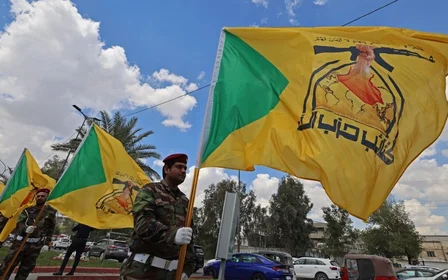
At the time, more hardline factions such as Harakat Hezbollah al-Nujaba and Kataeb Hezbollah – which, under the banner of the Islamic Resistance of Iraq (IRI), participated in recent attacks on US interests in the region – refused to disarm. These groups have cited the continued US presence in Iraq, among other factors, as a reason for retaining their weapons.
However, in late August, these groups announced conditions for placing their weapons under state control. On the day of the US-led coalition’s withdrawal from Iraq, Kataeb Hezbollah said it would halt all military activity except against hostile aircraft.
The move broadly aligns with Zaidi’s efforts to de-escalate tensions before bringing these groups under tighter state control.

There has been progress on some of the key demands put forward by these groups.
On 1 October, Ankara announced that the Bashiqa-Zelikan military camp near Mosul would be handed to the Iraqi government under an agreed mechanism and timetable, meeting a key demand of paramilitary groups for the withdrawal of Turkish troops from northern Iraq.
In parallel, efforts are underway to remove the Kurdistan Workers’ Party (PKK) from the area, another demand made by the groups.
Still, Baghdad may find it difficult to meet all of their demands. In August, the Islamic Resistance in Iraq called for the “liberation” of Iraq’s political and economic decision-making from US “hegemony”. Paramilitary groups affiliated with the IRI have previously cited US control over Iraq’s oil revenues as an example.
Since 2003, Iraq’s oil revenues have been held at the Federal Reserve Bank of New York and transferred to Iraq monthly in US dollars.
Notably, groups including Kataeb Hezbollah, Kataeb Sayyid al-Shuhada, Harakat al-Nujaba and Ansar Allah al-Awfiya have in recent months called for strengthening Iraq’s air defences and preventing foreign aircraft from using Iraqi airspace to strike neighbouring countries, including Iran.
Any renewed US strikes on Iran, particularly during the 90-day period, could therefore undermine efforts to integrate some Iraqi armed groups and increase the risk of clashes between these groups and Baghdad.
A balancing act
Iraq’s prime minister can bring paramilitary weapons under state control only if he can balance the interests of these groups with those of Washington.
The extent of state control, how far the state will go in dismantling autonomous command structures, and where these groups will fit within Iraq’s state structures remain subject to debate. The implementation of the plan will therefore depend on whether all key parties are willing to avoid maximalist positions that could stall the process.
“Washington has not expressed an opposing stance to Zaidi’s current proposal, or to the militia’s demands. But clarity around Washington’s red lines are required for the process to move forward,” Mustafa al-Saray, director of research at the Bayan Centre for Strategic Studies, an Iraq-based think tank, told Middle East Eye.
“Similarly, even though most of these militias appear receptive to Zaidi’s plan, there is always a chance that Tehran objects to the process, and this would also change the negotiation process in Iraq.”
Iran-linked groups in Iraq have already demonstrated their readiness to challenge decisions made by Baghdad.
On 25 September, Iraq suspended all flights to Iran after the US announced sweeping secondary sanctions on the Iranian aviation industry. But after a Kataeb Hezbollah security official warned that Zaidi’s government could be “brought down”, Washington granted a one-month sanctions waiver allowing Iraqi Airways to operate flights between Iran and the Shia holy city of Najaf.
Still, if Zaidi fails to manage competing interests in Baghdad and Washington, Iraqi paramilitary groups could turn against the new prime minister, who came to power in May after the US effectively vetoed their preferred candidate.
“There is a real risk that Iraq returns to the pre-2022 equation, where the militias held prime ministers directly responsible for international actions against them,” said Saray.
Renewed and sustained US strikes on Iran would also likely undermine prospects for a peaceful integration process.
As seen during the previous escalation, Baghdad would likely struggle to prevent some Iraqi armed groups from launching attacks in support of Iran, potentially derailing the current de-escalation.
Moreover, like after the US-Saudi strikes on the PMF in late July, further foreign attacks on Iraq’s paramilitaries would almost certainly harden their stance against accepting greater state oversight.
Middle East Eye delivers independent and unrivalled coverage and analysis of the Middle East, North Africa and beyond. To learn more about republishing this content and the associated fees, please fill out this form. More about MEE can be found here.