After Colombia's exit, what is left of the Hague Group?

Under former president Gustavo Petro, the Colombian state found it so difficult to halt coal shipments to Israel through diplomatic and bureaucratic channels that Petro called on the Wayuu, an Indigenous people of La Guajira, to occupy the train lines.
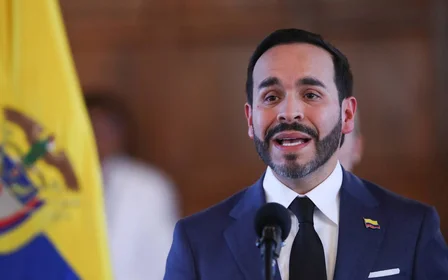
Now, his right-wing successor has signed a decree resuming those exports, and Colombia has walked away from the Hague Group, the coalition it once co-chaired to hold Israel to account for breaches of international law.
Its departure in August made it the third founding member, alongside Bolivia and Honduras, to leave the Hague Group in six months, leaving co-chair South Africa to steer the bloc alone.
The Hague Group was founded in January 2025 by these nations, joined also by Cuba, Malaysia, Namibia and Senegal.
"The Hague Group was born to advance international law in an era of impunity," South African Minister of International Relations Ronald Lamola told the meeting.
New MEE newsletter: Jerusalem Dispatch
Sign up to get the latest insights and analysis on Israel-Palestine, alongside Turkey Unpacked and other MEE newsletters
“Not only for the people of Gaza but for the future of a world where justice prevails over impunity,” the group agreed to take “coordinated legal and diplomatic measures” against Israel’s genocide in the midst of international failure to stop the carnage and complicity in Israel’s actions.
This month, at the 81st session of the UN General Assembly, 40 countries gathered to address how states can act collectively to ensure that international law is not merely proclaimed, but enforced.
“It is also important to understand that The Hague Group is not a body that drafts, consolidates or passes new norms of international law,” explained Guillaume Long, diplomatic advisor to the Hague Group. Instead, it provides “a platform for states to try and articulate strategies, coordinate measures and have discussions,” he told Middle East Eye. However, he added, “the application of international law is usually at the domestic level.”
The group is a kind of coalition of the willing attempting to ensure that international law is enforced in the face of a push by the United States and its allies to dismantle much of the global legal and humanitarian order.

Political will is therefore essential. But in Latin America, a region where pink-wave politics once galvanised government support for Palestinians rights, the rise of a new right-wing order has led to the withdrawal of three founding Hague Group members.
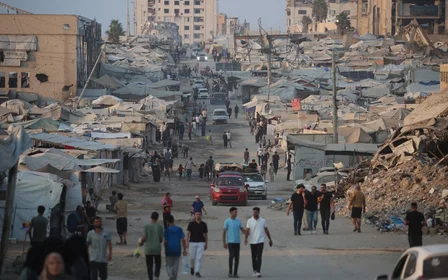
Meanwhile, as bombs continue falling on Gaza, ethnic cleansing escalates in the West Bank and the rule of law is under escalating threat from Palestine to Cuba, The Hague Group faces an up-hill battle.
Losing Latin America
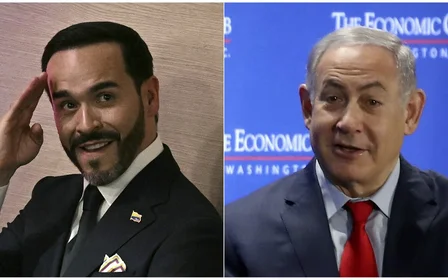
In March, founding members Honduras and Bolivia promptly withdrew following the respective presidential victories of Nasry Asfura and Rodrigo Paz. Asfura, in particular, ramped up relations and extended a warm welcome to Israeli leaders, including Prime Minister Benjamin Netanyahu, wanted for crimes against humanity by the International Criminal Court (ICC), before even entering office.
Co-chair Colombia also withdrew in August, following the election as president of right-wing populist Abelardo de la Espriella.
After less than two months in office, De La Espriella has appointed a new ambassador, recognised Israel's claim over the illegally occupied Golan Heights, abolished visa requirements for Israelis, restored the Colombia-Israel Free Trade Agreement, and withdrawn from South Africa's case against Israel at the International Court of Justice (ICJ).
'We are seeing Colombia deliver on what it offered: to boycott, sabotage, withdraw from multilateralism, and abandon its cause for Palestinian self-determination'
- Guillaume Long, diplomatic adviser to The Hague Group
But one of Petro’s former diplomats says the reversal is not simply a matter of presidential prerogative but may put Colombia in breach of its legal obligations.
“The Colombian government has international obligations and is bound by international law,” said Mauricio Jaramillo Jassir, former deputy foreign minister of Colombia under Petro.
“So while the constitution grants the president the authority and capacity to conduct diplomacy, that diplomacy must be managed within the framework of international law,” he told Middle East Eye, pointing to the binding legal obligation of third-party states to prevent and punish genocide under the 1948 Genocide Convention.
Colombia also withdrew the long-standing nomination of Colombian lawyer and former ambassador to the Netherlands, Carolina Olarte-Bacares, who co-led Colombia’s delegation in support of South Africa’s ICJ case against Israel, for an ICC judgeship.
This leaves Latin America and the Caribbean without the possibility of representation despite representing 8.2 percent of the world’s population.
“We are seeing Colombia deliver on what it offered: to boycott, sabotage, withdraw from multilateralism, and of course abandon its cause for Palestinian self-determination,” said Long.
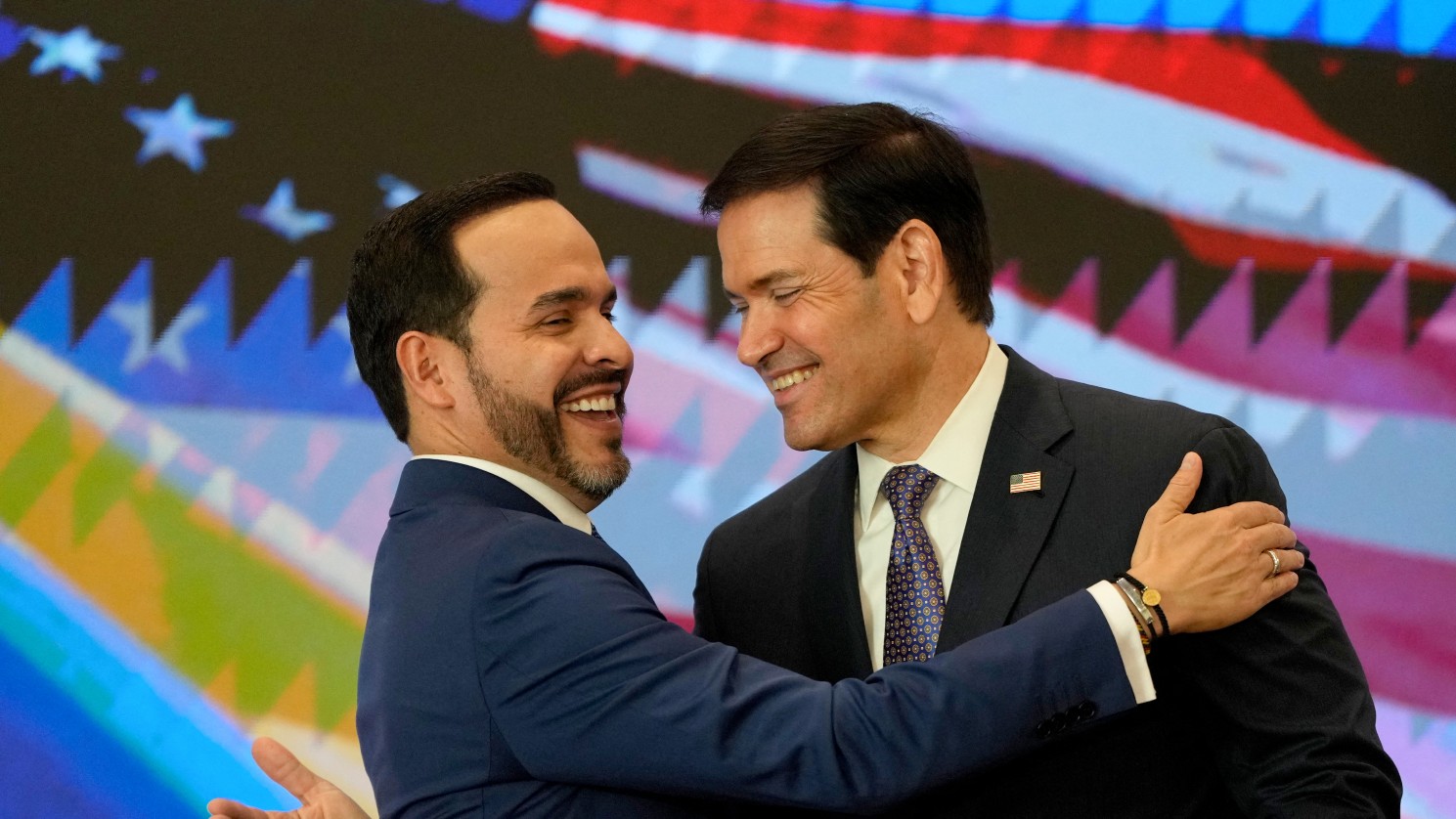
De La Espriella is following in the footsteps of US President Donald Trump who, alongside Secretary of State Marco Rubio, is ramping up efforts to dismantle the ICC, in part an effort to buttress Israeli impunity. Doubling down during his UN General Assembly address this month, Trump called on members to resign from the “evil” and “rogue” institution.
This onslaught against international institutions is not without opposition among the majority of UN member states, Long tells MEE, insisting that “there is a growing consensus that these attacks to destroy the institutions of international justice are completely outrageous”.
'Hypocrisy' at the ports
At the BRICS summit in Delhi on 12 September, in a speech focused on inclusive global governance and strengthening the multinational system, South African President Cyril Ramaphosa called for "comprehensive Security Council reform”. He pointed to the importance of accountability for atrocities, including “for the genocide committed against the people of Palestine”.
Alongside accountability, implementation was central to the agenda of the meeting at the UN General Assembly this month.
“The measures adopted in Bogota show that we are serious and that coordinated state action is possible,” announced Lamola at the summit, referring to an emergency meeting held in July 2025. Agreed upon by 13 states, those measures included a pledge to prevent the provision, transfer and transit of arms and dual-use items to Israel.
And yet, in August 2025, after Petro issued a presidential decree banning coal exports to Israel, South Africa stepped in, allowing the Anglo-Swiss mining giant Glencore, which had supplied Colombian coal to Israel for decades, to relocate its core operations.
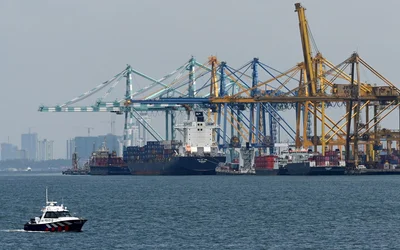
Although the state does not mine or sell the coal itself, “it exercises decisive regulatory authority over whether such exports may lawfully occur,” a report by BDS South Africa said. It added that this is a “direct contradiction” to South Africa’s Hague Group commitments and as a result “South Africa is fuelling the ongoing genocide”.
“The South African government talks ‘left’ by going to The Hague and walks ‘right’ by ignoring the sources of profit and trade,” said Patrick Bond, director of the Centre for Social Change at the University of Johannesburg. The export of coal bound for Israel from Richards Bay on South Africa's northeast coast “is the most extreme form of hypocrisy,” he explained.
Bond previously told MEE that Ramaphosa’s government has every capacity to end coal exports to Israel through a category called dangerous exports. “The coal could be switched off immediately,” he said at the time. But the ruling elite of South Africa, including President Ramaphosa himself, has close ties to the extractive industry.
In 2014, in order to assume the deputy presidency under Jacob Zuma, Ramaphosa was forced to divest his mining interests, including ownership of the Glencore-allied firm Shanduka, and his role as a local chairperson on the board of Optimum Coal, in which Glencore had a controlling interest.
To this day, his brother-in-law, Patrice Motsepe, is the founder and non-executive chairman of African Rainbow Minerals (ARM) which operates ARM Coal in partnership with Glencore. As a result, ARM Coal holds access to Glencore’s “interest and entitlement” in Richards Bay.
In contrast to South Africa's failure to halt coal exports, on 8 August, the Malaysian Border Control and Protection Agency (AKPS) seized a container of suspected strategic trade cargo intended for export to Israel at the Port of Tanjung Pelepas.
“This action demonstrates Malaysia's firm stance to ensure that our country will never serve as a conduit for trade that could support or contribute to the Israeli regime's atrocities against the Palestinian people,” said Prime Minister Anwar Ibrahim. “It is also in line with Malaysia's commitments under The Hague Group.”
One week later, Malaysian authorities seized several more Israel-bound shipments.
"It is because of the fact that states are not all in compliance with their third-state obligations that The Hague Group was created,” explained Long. “Our role in The Hague Group, regardless of what we may think or what we may personally consider to be the right course of action, is to try and consolidate coordinated state action,” he told MEE.
The Hague Group is “a complex panorama of states that have done things with complex repercussions on the politics of their countries,” said Long. South Africa, for example, lost substantial US aid after launching its ICJ case against Israel. Likewise, Colombia’s Petro had his US visa revoked after calling for an armed front to directly oppose Israel’s genocide.
Civil society
Moving forward, “the future lies in understanding that foreign policy is not the exclusive monopoly of the government,” said Colombia's Jaramillo Jassir. “I see this as an opportunity for the group to adapt and work more closely with civil society and social organisations,” he told MEE.
“The challenge lies in making membership more flexible, establishing channels with civil society, and expanding to include other governments to gain broader representation,” he explained.

In Colombia, the NGO group Resist Glencore has been at the forefront of civil society organising against the transfer of coal to Israel, which constituted 51 percent of Israel’s thermal coal supply until August 2024. It works in solidarity with the Wayuu and the Yukpa, indigenous communities heavily impacted by operations at Glencore’s massive open-pit mining complex in La Guajira, El Cerrejon.
During the Petro administration, this included pushing for a second and more exacting decree to ban thermal coal exports “without exception” due to loopholes in the original. And the impact was tangible, with Colombian supplies to Israel plummeting from 34 percent after the first decree to six percent after the second.
The decree’s quantifiable success indicates that the implementation of international law necessitates both political will and civil society pressure. “It was massively facilitated by the fact that we had a pro-Palestine government but it was also thanks to the work of social movements,” explained a representative from Resist Glencore.
In fact, “it was so difficult [for Petro] to proceed in a diplomatic, bureaucratic way, that he called for the Wayuu to occupy the train lines,” said the representative, who requested anonymity for reasons of security.
In contrast, De la Espriella has promised to expand extractive mining and apply a militarised approach to combating crime. This has created a climate of fear for indigenous communities and trade union leaders who have historically borne the brunt of these tactics. Weeks after entering office, he also signed a decree to resume coal exports to Israel.
Resist Glencore is currently working with former ministers from Petro’s government to push for a bill for an energy embargo in the Colombian Congress, where Petro's Historic Pact is the largest group.
The coal being used to power Israel’s genocide in Palestine is also destroying the local environment and leading to disproportionate child mortality at the point of extraction, the representative explained.
From Gaza to La Guajira, “these things are completely connected,” they said.
Middle East Eye delivers independent and unrivalled coverage and analysis of the Middle East, North Africa and beyond. To learn more about republishing this content and the associated fees, please fill out this form. More about MEE can be found here.