
US senator says he was denied access to damaged military base in Qatar

Democratic Senator Chris Murphy said on Tuesday that the US Department of War prevented him from visiting a US military base in Qatar, which had been attacked by Iran, in order to conceal the damage.
"This trip confirmed for me that there is an active, unprecedented, unconstitutional effort underway to hide the costs of this war and the implications of this war from Congress and the American people," Murphy told journalists in Riyadh, Saudi Arabia, which he visited after a stop in Qatar.
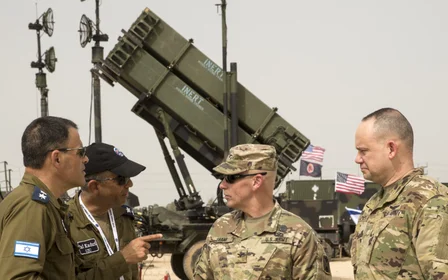
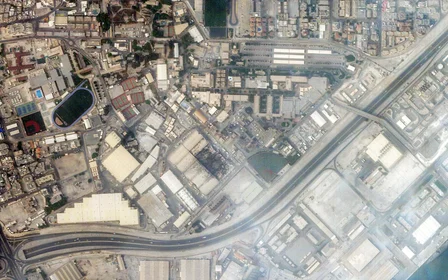
Murphy, who sits on the Senate Foreign Relations Committee, wanted to visit al-Udeid, the headquarters of US Central Command (Centcom), which oversees all US military activity in the Middle East. The base was hit by Iran in retaliation for the US-Israeli war on the Islamic Republic, which started on 28 February.
"I've never encountered anything like this in my time in the Senate, and it's part of a deliberate campaign of obfuscation that my Republican colleagues in Congress should demand an end to,” Murphy told reporters.
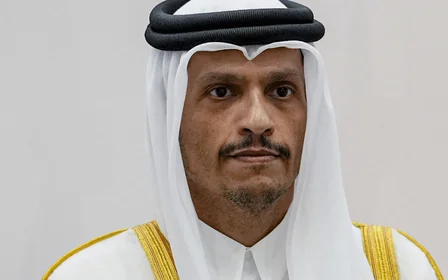
The Democratic lawmaker said US Secretary of State Marco Rubio helped facilitate his visit in the Gulf, including arranging meetings with diplomats. Murphy met with both Qatari Emir Tamim bin Hamad Al Thani and Saudi Crown Prince Mohammed bin Salman, as well as other senior Gulf officials.
New MEE newsletter: Jerusalem Dispatch
Sign up to get the latest insights and analysis on Israel-Palestine, alongside Turkey Unpacked and other MEE newsletters
Murphy said in a social media post on Monday that he saw part of the US embassy in Riyadh that had been hit by two Iranian strikes, which he said caused “significant damage”.
“It happened in the middle of the night. If the attack had happened during the workday, it would have been a mass casualty event,” he said.
While Murphy acknowledged meeting US diplomats with the State Department, he said Secretary of War Pete Hegseth’s Pentagon froze him out during his visit.
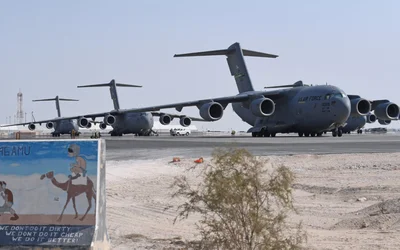
The status of US military bases in the Gulf has come under intense scrutiny.
The US Department of War’s inspector general said in a report published in September that “hundreds of buildings and structures” at US bases in Kuwait, Bahrain, Qatar, the UAE, Saudi Arabia, Iraq, Oman, and Jordan were damaged or destroyed by Iranian strikes.
Middle East Eye has reported that current and former US officials say rebuilding bases in the Middle East is not a viable solution, with Iran showing how vulnerable they are to missiles and drones.
“The truth is that we are not as inclined to occupy these bases now that we have seen what the Iranians can throw at them,” David Petraeus, a former director of the CIA and head of Centcom, told Bloomberg in May.
“This is much more than when I was commander at Central Command,” he added.
Another former head of Centcom, General Frank McKenzie, said in July that the US needs to relocate its bases in the Gulf to Israel and neighbouring countries to better protect its assets from Iran’s missiles and drones.
“No one in their right mind would ever put the Centcom forward headquarters, you know, 100 miles away from Iran, [in Qatar], yet that’s where it is,” he told the Jewish Institute for National Security of America, referring to al-Udeid.
Middle East Eye delivers independent and unrivalled coverage and analysis of the Middle East, North Africa and beyond. To learn more about republishing this content and the associated fees, please fill out this form. More about MEE can be found here.