UK Green motion on Zionism: Why we need to change the conversation


The fallout from the UK Green Party passing a motion declaring that Zionism is a form of racism has been predictable, with a chorus of condemnation across the political establishment.
Responding to this necessitates engaging with two key and interlinked questions: why is it correct to define Zionism as a racist ideology and political movement, and how do we ensure this motion takes the movement forwards and not backwards?
Let’s begin by dealing with the intense and predictable critiques of the motion, which largely fall into two camps.
The dominant one centres on the claim that there is only one definition of Zionism: the right of the Jewish people to self-determination. The other critique is that it is wrong to define Zionism as racist, because there are many competing definitions of the term, some of which are definitively not racist.
The first argues that Zionism, as a developed ideology and political movement, centred on the claim that Jews should be regarded as a people with a collective right to self-determination - one that should be recognised via the establishment of a state in Palestine.
New MEE newsletter: Jerusalem Dispatch
Sign up to get the latest insights and analysis on Israel-Palestine, alongside Turkey Unpacked and other MEE newsletters
Those who define anti-Zionism as racism suggest that to oppose Zionism is to deny the Jewish people the right to self-determination - a denial supposedly based on racist foundations. The International Holocaust Remembrance Alliance (IHRA)’s definition of antisemitism cited one example of antisemitism as “denying the Jewish people their right to self-determination, e.g., by claiming that the existence of a State of Israel is a racist endeavor”.
Questions over whether the Jewish people constitute a nation have always been debated within the Jewish community. But even if one concedes that most Jewish people conceived of themselves as a nation before 1948, that does not equate to a right to establish a state in Palestine.
Violent dispossession
Indeed, such a right did not exist unless it was recognised and accepted by the majority Arab population of Palestine at the time of the establishment of the state of Israel. The only way Zionists could enact their claim and establish a state was via the violent dispossession of the indigenous population.
This was openly acknowledged by many Zionist leaders, including Ze’ev Jabotinsky, the godfather of Likud, who wrote in 1923: “Zionist colonisation must either stop, or else proceed regardless of the native population. Which means that it can proceed and develop only under the protection of a power that is independent of the native population - behind an iron wall, which the native population cannot breach.”
None of this is to deny that Zionism emerged in large part as a response to centuries of persecution of Jewish people, and their desire to achieve liberation from that persecution. But one people’s right not to be persecuted does not grant them a right to dispossess another people.
The Green motion has achieved its task in provoking a conversation about these essential questions. Now, we must shape this conversation more broadly, outside the movement's echo chambers
This takes us to the second argument, which maintains that there are different versions of Zionism which do not support the violent dispossession of the Palestinian people. Yet while there could be strains of Zionism not rooted in conceptions of Jewish supremacist rights in Palestine, the Green Party’s motion addresses Zionism as it was realised as a political project across history, and as an ideology that justifies that outcome.
The state of Israel was established on the foundations of wholesale murder, forced dispossession and ethnic cleansing. It has always practised a system of racist domination over all Palestinians across historic Palestine, along with those it drove into exile and denied the right of return. The motion deals with what Zionism has actually meant for Palestinians.
This takes us to the question of the strategic value of the motion, which has attracted wholesale condemnation across the political establishment, and even internally within the Green Party itself, with most MPs rejecting it - all predictable developments, given the terrain we inhabit.
Being strategic means having a clear theory of change, and an understanding of how a proposed course of action can increase the size and power of a movement, or conversely diminish it.
For me, that theory of change has always rested on the belief that what is required to achieve the liberation of the Palestinian people is their ongoing resistance though all means they choose within the scope of international law, alongside external pressure placed on Israel to isolate it economiclly, politically, militarly and culturally.
Building momentum
In the UK context, this requires building a mass movement that can exert pressure to end all state complicity with Israel’s system of oppression.
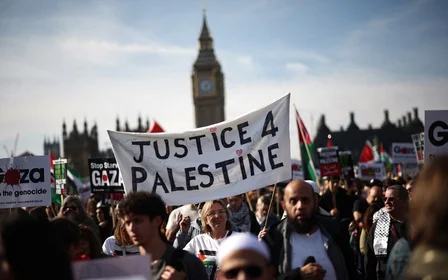
It is a strategy that has made huge gains over the past three years, in response to what people have come to see - and have been enabled to see - as a genocide. Building support for that movement has required a shift in the common public understanding of what has historically been defined as a territorial conflict, but is now recognised more widely as a framework of racist oppression backed by imperial powers.
The question is therefore: how can this motion act to advance, and not diminish, that momentum?
In terms of the current dynamics of British politics, this matters hugely. We are seeing the Labour Party, worried by its loss of support, shifting its policy on Palestine, in significant but insufficient ways. A vibrant and united Green Party is a crucial factor in enabling continued pressure on Labour to move further.
At the same time, the discourse around the motion has centred on how people define themselves, rather than on the realities of the racist oppression Palestinians face.
Some within the movement are comfortable with that focus. A year ago, I was asked at a conference whether I agreed that the problem with Zionism was not its impact upon Palestinians, but its essential character as a racist ideology. In response, I paraphrased civil rights leader Kwame Ture (formerly Stokely Carmichael): “If a man wants to lynch me, that’s his problem. If he’s got the power to lynch me, that’s my problem.”
This does not mean that we compromise on our understanding of Zionism and the realities of the oppression of Palestinians. It does mean that we avoid building roadblocks to people becoming part of the mass movement for change.
Barriers to entry
The problem we are confronting is not just a territorial conflict, but a situation where a state has institutionalised and legalised a system of racist domination. Being clear about that reality is crucial to ending complicity.
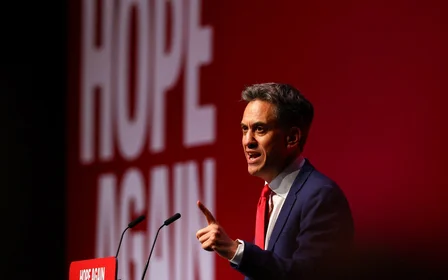
This explains why actions such as those undertaken by Foreign Secretary Ed Miliband, which focus only on the occupation, are inadequate.
But the question about whether the best route to enabling this broader understanding is a discourse about the ideology of Zionism, and how it developed, is a strategic one. Are we more likely to persuade a public body to fully divest from all complicit companies if we insist that in doing so, they must also declare themselves to be anti-Zionist?
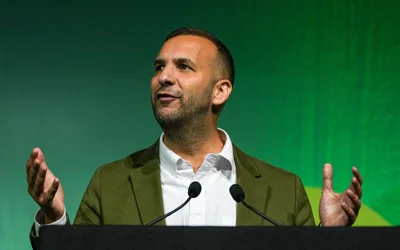
Likewise, if our question to any prospective ally becomes “do you support a single democratic state”, then we are creating barriers to entry. Green leader Zack Polanski was right to say that he would have sought to amend that part of the motion, on the basis that this issue is for Palestinians - and not external parties - to determine.
There is no single body that speaks for Palestinians, but the leadership of the Boycott, Divestment and Sanctions (BDS) movement represents the biggest consensus across Palestinian civil society. They do not declare a position on a one-state or two-state solution, but rather express a clear consensus about the rights that must be realised to achieve liberation, within a framework of antiracism.
That framework enables us to say that the realisation of Palestinian rights - to self-determination, return and equality - is not compatible with any solution that leaves intact an ethno-nationalist, Jewish supremacist state. Framing the conversation in this manner is crucial.
In recent years, the Green Party has made great strides in its positioning, with motions recognising the realities of apartheid and genocide, and supporting BDS. The party must not succumb under pressure to retreat from these positions.
The task is to shift the current terrain of debate. The conversation about a one-state solution must reinforce that this is an issue for Palestinians to determine, while making clear the problematic nature of the two-state solution endorsed by mainstream parties which would leave apartheid intact.
We must focus this conversation on the BDS campaigns needed to end complicity with Israel’s system of racist domination, and not give any space to those on the fringes of the movement who say the key targets are Jewish institutions that define themselves as Zionist.
The Green motion has achieved its task in provoking a conversation about these essential questions, but we must not be naive about our challenge in shaping this conversation more broadly, outside the movement’s echo chambers.
The views expressed in this article belong to the author and do not necessarily reflect the editorial policy of Middle East Eye.
Middle East Eye delivers independent and unrivalled coverage and analysis of the Middle East, North Africa and beyond. To learn more about republishing this content and the associated fees, please fill out this form. More about MEE can be found here.