
Iranian press review: Red carpet in Tehran for hijab-wearing students in Baku

Pro-establishment voices condemn hijab restrictions in Azerbaijan
Conservative outlets, criticising Azerbaijan's President Ilham Aliyev, have voiced strong support for teachers and students barred from schools in Azerbaijan under new rules restricting the wearing of hijab.
The Farhikhtegan, under the headline “Roll out the red carpet for Baku’s girls”, called on Iranian officials to support hijab-wearing women in Azerbaijan.
The daily urged officials to take practical steps, writing: “Alongside diplomatic efforts and a clear stance against the denial of education, [Iranian officials] should look for ways to provide these girls with opportunities to study.”
Javan, a daily funded by Iran’s Islamic Revolutionary Guard Corps (IRGC), described restrictions on religious practices and hijab-wearing women in Azerbaijan as part of a wider effort by Baku to move closer to Israel and distance itself from Muslim countries.
New MEE newsletter: Jerusalem Dispatch
Sign up to get the latest insights and analysis on Israel-Palestine, alongside Turkey Unpacked and other MEE newsletters
The daily wrote: “The crackdown on protests over hijab in Azerbaijan is not simply about school rules or even the secular leanings of Aliyev’s government. It is linked to the government’s wider concerns about the role of religion in society, which could shift the region’s geopolitical balance against the rulers in Baku.”
The Khorasan daily went further, describing the restrictions as a Zionist plan. In an article headlined “The Zionist project of Ilham”, it accused Aliyev’s government of trying to reshape the identity of religious people in Azerbaijan.
Khorasan concluded: “A government that feels threatened by a young schoolgirl’s headscarf is, in fact, showing its weak legitimacy and the hollow nature of its own claims about national identity.”
The united response from the establishment-aligned media comes despite Iran’s own hijab laws. During nationwide protests in 2022 against compulsory hijab, at least 377 people were killed by security forces and the IRGC, according to Amnesty International.
UAE under fire over its place in Netanyahu’s alliance
Israeli Prime Minister Benjamin Netanyahu’s map of the wider Middle East, which divides countries into friends and foes, has drawn a range of reactions in Iran, with particular attention focused on the United Arab Emirates and its inclusion in what he described as a "Hexagon Alliance".
While Netanyahu identified Iran and the "Axis of Resistance" as Israel’s main adversaries, the UAE’s prominent place in the proposed alliance attracted particular attention in the Iranian press.
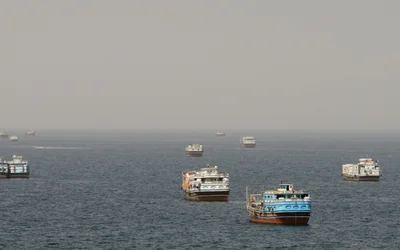
In response to the map, the Quds daily directed its criticism at the UAE. In a front-page article headlined "The United Israeli Emirates", the paper condemned countries in the Middle East that it said had aligned themselves with Israel.
Dismissing Netanyahu’s recent remarks as "delusional", Quds wrote: "The prime minister of the occupying regime speaks of emerging alliances in the Middle East, even though the countries named in this delusional plan do not dare to officially endorse it or publicly align themselves with it."
The Hamshahri daily, meanwhile, described Netanyahu’s map as evidence of the UAE’s “greatest betrayal”.
The paper focused on the UAE’s role in freezing Iranian assets abroad, describing it as an act of “economic betrayal”.
Referring to the history of Iranian merchants investing in the UAE, Hamshahri wrote: “The UAE’s role in the crime against Iran is more prominent than that of any other country. This glittering country, whose exchange houses once thrived on Iranian banknotes, has now become a tool of pressure by Washington and Tel Aviv against Tehran.”
Poverty fuels violence in Iran’s Baluch region
A rise in militant attacks in Iran’s south-eastern province of Sistan and Baluchestan has drawn the attention of local media, with the Arman daily examining the roots of the violence and how it could be addressed.
Sistan and Baluchestan is Iran’s poorest province and home to a large ethnic Baluch population. The Arman daily has identified widespread poverty as a key factor making the region, which borders Pakistan and Afghanistan, vulnerable to the growth of armed groups opposed to the establishment.
The province has seen clashes between armed groups and government forces for decades; however, attacks have risen sharply over the past three months, with casualties increasing on both sides.
Referring to a rise in armed attacks targeting political officials, police and the Islamic Revolutionary Guard Corps, the daily wrote: “Inequality and a sense of having no future can create conditions that extremist groups exploit to recruit members or justify violence.”
According to Arman, widespread poverty, limited access to medical care, unfit housing and poor access to the national education system have fuelled public discontent and created conditions in which armed groups can grow.
The daily concluded: “Improving living standards in Sistan and Baluchestan means investing in the future of people who have the right to equal opportunities in life, education and employment.”
Chabahar land proposal sparks sovereignty fears
Officials in Tehran have denied plans to transfer territory to Afghanistan after a proposal to allocate land in the southeastern port city of Chabahar for Afghan investment sparked concerns over the country’s sovereignty.
Mohammad Mehdi Shahriari, a member of parliament’s national security and foreign policy commission, said around 100 hectares could be leased to Afghanistan for two or five years to facilitate imports and the transit of goods.
Shahriari added the proposed arrangement would involve leasing land under Iranian sovereignty, allowing landlocked Afghanistan to transport goods through Iran.
His remarks followed comments by fellow MP Mohsen Zanganeh, who said an initial understanding had been reached to allocate land in Chabahar for Afghan investment. His description of the area as “a territory belonging to itself” drew widespread criticism.
Foreign ministry spokesman Esmaeil Baghaei also said that reports of a territorial handover stemmed from a misunderstanding, adding that no formal proposal had been submitted.
Chabahar Governor Alireza Noura also rejected reports of land being handed over to foreign nationals, saying foreign investment was possible subject to Iranian law and the necessary permits.
*Iranian press review is a digest of news reports not independently verified as accurate by MEE.
Middle East Eye delivers independent and unrivalled coverage and analysis of the Middle East, North Africa and beyond. To learn more about republishing this content and the associated fees, please fill out this form. More about MEE can be found here.