Hundreds to risk arrest at 'mass actions' targeting US embassies over Palestine Action ban

Hundreds of people are expected to risk arrest under the Terrorism Act at a "mass action" days before the Supreme Court hears an appeal against the ban on direct action group Palestine Action.
On Friday, the campaign group Defend Our Juries (DOJ) will announce a "mass defiance" act outside the US embassy in London on 31 October.
Over 400 people have volunteered to hold signs reading "I oppose genocide- I support Palestine Action", risking arrest under Section 13 of the Terrorism Act, which criminalises expressions of support for a proscribed organisation.
The group added that a "dual action" will take place outside the US consulate in Edinburgh.
Next week's protest will come days before a Supreme Court hearing on 4 and 5 November that will review a Court of Appeal decision earlier this year upholding the proscription as lawful.
New MEE newsletter: Jerusalem Dispatch
Sign up to get the latest insights and analysis on Israel-Palestine, alongside Turkey Unpacked and other MEE newsletters
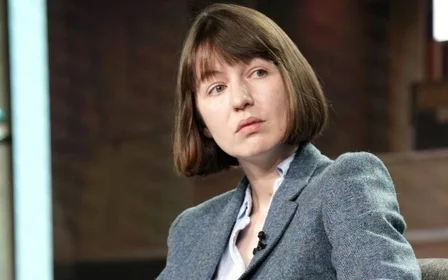
A DOJ spokesperson said the action will "lay bare the fundamental rights to free expression” at stake, pointing to the withdrawal of Sally Rooney's books from sale in the UK.
The government of former British Prime Minister Keir Starmer proscribed Palestine Action in July 2025, making membership of the group and certain expressions of support criminal offences punishable by up to 14 years in prison.
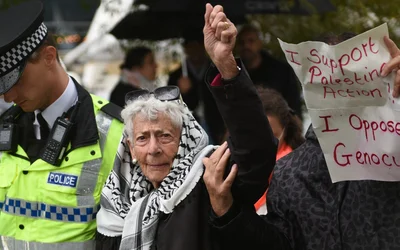
Since then, DOJ estimates that around 3,850 people have been arrested, with at least 2,250 charges brought over alleged expressions of support for the banned group.
The campaign group said staging protests outside US diplomatic premises would highlight questions about President Donald Trump's influence on the implementation of the ban after Palestine Action activists spray-painted his Turnberry golf course in Scotland.
During a judicial review of the proscription last November, it emerged that Starmer spoke to Trump on 10 and 30 March following the incident.
Around the same time, Trump denounced the activists on Truth Social as “terrorists” who had caused “serious damage” - wording that appeared to reference language in Britain’s Terrorism Act 2000 - and said they would “hopefully be treated harshly”.
Public scrutiny of the controversial ban is mounting, alongside pressure on Prime Minister Andy Burnham to reverse it.
Calls to lift the ban are also coming from within his own party, with senior Labour peer Shami Chakrabarti denouncing the move as "making a mockery" of counter-terrorism laws.
Chakrabarti told LBC's Andrew Marr that "changes in circumstances" required the home secretary to revisit the proscription.
She added that the power to proscribe organisations "should be an exceptional power", "used with great care" and "should be constantly under review".
Middle East Eye delivers independent and unrivalled coverage and analysis of the Middle East, North Africa and beyond. To learn more about republishing this content and the associated fees, please fill out this form. More about MEE can be found here.