Conjoined twins evacuated to Damascus after days of negotiations

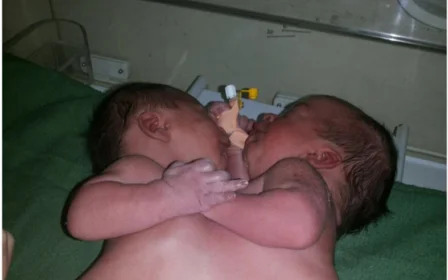
Two conjoined baby boys born in Eastern Ghouta crossed rebel lines on Friday for treatment in Damascus after a social media campaign started by an American NGO.
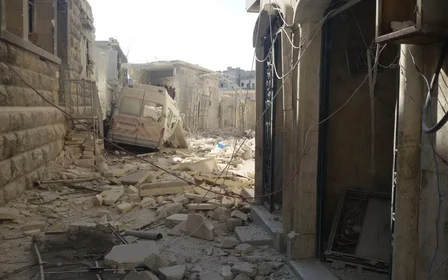
Moaz and Nawras were born on 23 July in a hospital run by the international charity Doctors Without Borders (MSF), in the rebel-held suburb of Damascus that has been under a government siege since 2013.
The babies were unable to receive life-saving surgery as local hospitals do not have the necessary equipment due to the siege.
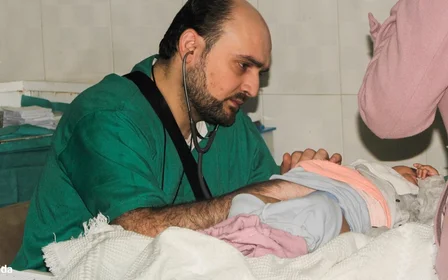
Mohamad Katoub, an advocacy manager at the Syrian American Medical Society (SAMS), who began the social media campaign, told Middle East Eye that hospitals from around the world had offered to help.
“We have been indirectly in touch with a number of hospitals who received information about the boys and have volunteered to help them,” he said.
New MEE newsletter: Jerusalem Dispatch
Sign up to get the latest insights and analysis on Israel-Palestine, alongside Turkey Unpacked and other MEE newsletters
Representatives from the medical office in Eastern Ghouta had for weeks tried to negotiate the twins' evacuation via representatives of the Syrian Arab Red Crescent.
Despite days of negotiations with international agencies, Red Crescent representatives were initially denied entry into Eastern Ghouta by Syrian army officials.
However, they were eventually allowed access and move the twins to a hospital in Damascus, from where it is hoped the babies can then be moved to Beirut in Lebanon.
The family of the twins are waiting for Syrian government ID cards to allow them to travel with their children.
“Medical evacuation cannot wait for government procedures and bureaucracies,” said Katoub.
“Eighty-five deaths have taken place in East Ghoutta because of the besiegement, [including] 64 because of malnutrition and the long process that happens when trying to evacuate emergency medical cases.”
The boys are among 20 patients who needed emergency evacuation from East Ghouta, according to the World Health Organisation.
Middle East Eye delivers independent and unrivalled coverage and analysis of the Middle East, North Africa and beyond. To learn more about republishing this content and the associated fees, please fill out this form. More about MEE can be found here.