On its 250th birthday, America must leave behind the illusion of primacy

On the fourth of July, the United States turned 250 - an event that summoned the founders who spoke of a republic seeking “a decent respect to the opinions of mankind”, rather than dominion over them.
Yet the story that matters most for our own moment does not begin in 1776. It begins 35 years ago, with the collapse of the Soviet Union - the moment the US mistook the disappearance of its main rival for a mandate to remake the world in its own image.
What followed was an overdrive of hubris. Washington read the unipolar moment of 1991 as a global manifest destiny, and set about entrenching its primacy in every region of the globe.
The mood was captured with startling candour by political scientist and former American national security adviser Zbigniew Brzezinski in The Grand Chessboard (1997), a meditation on how the US might dominate the Eurasian landmass and forestall the rise of any power capable of challenging it.
Primacy ceased to be a momentary fact and hardened into a doctrine - and, for a generation of US policymakers, an obsession that no defeat seemed able to shake.
New MEE newsletter: Jerusalem Dispatch
Sign up to get the latest insights and analysis on Israel-Palestine, alongside Turkey Unpacked and other MEE newsletters
Strangely, much of the Arab world embraced it too. Time and again, Arab governments acceded to American designs on the premise that only the US could supply what they wanted: security above all, but also advanced weaponry, technology and finance.
The bargain seemed prudent, since the Arab world would accept US leadership and enjoy American protection. Nowhere was this clearer than in the network of US bases strung across the Gulf, from the Fifth Fleet in Bahrain and Al Udeid in Qatar, to Prince Sultan in Saudi Arabia, Al Dhafra in the UAE and Ali Al Salem in Kuwait.
All those bases, and yet the question remained: who were these bases really serving?
Myth demolished
Some governments went further, entering what became, in effect, a strategic alliance with the US and Israel, on the old assumption that one should always back the strongest side. The myth of the indispensable protector became the organising principle of the Arab region’s diplomacy.
The Iran war has demolished that myth. On 28 February, the US and Israel attacked Iran, assassinating the supreme leader and many senior officials, all in brazen defiance of the United Nations Charter and with the declared aim of regime change.
And then the mightiest military on earth ran headlong into the limits of its power, military and political alike. Iran did not collapse. It named a successor to the supreme leader, struck back across the region, and closed the Strait of Hormuz, triggering a fuel crisis and wrecking the global economy.
After months of US and Israeli bombardment, billions of dollars wasted, thousands of lives squandered, and a region set aflame - from Lebanon to the Gulf - Washington settled not for the regime change that it had promised, but for a fragile and repeatedly broken truce.
The only choice left for the US is whether to accommodate a world it can still help to shape but no longer command, or to spend its remaining strength resisting the irreversible
The American-Israeli war failed, conclusively. It neither toppled the Iranian state nor subdued it; it enriched the arms industries but no one else; and it left every Gulf capital that had sheltered under the American umbrella more exposed, not less.
In failing, it taught two lessons at once about the limits of American power, and the folly of the Arab states staking their national security upon it. Every government that built its strategy on the permanence of American dominance now has reason to think again.
On this national birthday, two awakenings are overdue: one in Washington, and one in the Arab capitals that trusted it.
For the US, the lesson is that the age of forcing American and Israeli solutions on the region is over. No arsenal can any longer impose the outcomes that American power once asserted.
The honest course for the US would be to pursue, at last, what international law and justice have always required, which is a genuine solution for Palestine. This can be a two-state solution, with Israel and Palestine living in peace side by side, or a single bi-national democratic state.
In either case, it must be the end of the Greater Israel project, which aims for Israel’s permanent occupation of Palestinian lands and territories in neighbouring countries. The Greater Israel project has been the main source of the region’s perpetual wars.
The path forward
For the Arab world, the subservience to US power should end as well. There is no rational reason for the Arab world to outsource its security to a distant, unreliable and biased patron.
The path forward is Arab unity, rather than competition for Washington’s favour; to make peace with Iran, recognising that Arabs and Iranians are permanent neighbours and not proxies in someone else’s contest; and to build genuine strategic autonomy in a multipolar world, dealing with the US, China, Russia, and every power on equal terms and according to the region’s own interests.
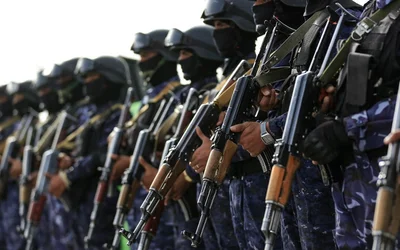
A security architecture designed in the region, rather than in Washington, is now both possible and necessary. The Gulf states in particular command the capital, the energy, and the human talent to shape their own future - and, in the coming age of clean power, to help lead it.
We live in the age of multipolarity, and that is the Arab world’s surest road to dignity, security and peace.
Two hundred and fifty years ago, the American republic announced itself to the world as a member of the human family, not as its master. The Iran war is the costly proof that global primacy was always beyond its grasp.
The unipolar moment that Washington mistook for a permanent world order has ended. The only choice left for the US is whether to accommodate a world it can still help to shape but no longer command, or to spend its remaining strength resisting the irreversible.
The wisest gift the US could give itself at 250 is to recognise multipolarity at last, and to rejoin the community of nations as one cooperative power among many.
The wisest gift the Arab world could give itself is to stop waiting for a patron - and to stand, at last, in unison, on its own feet.
Happy birthday to the United States, and for all of us, may this be a new birth of realism and peace.
The views expressed in this article belong to the author and do not necessarily reflect the editorial policy of Middle East Eye.
Middle East Eye delivers independent and unrivalled coverage and analysis of the Middle East, North Africa and beyond. To learn more about republishing this content and the associated fees, please fill out this form. More about MEE can be found here.