After Gaza, can Muslims defend Al-Aqsa Mosque?


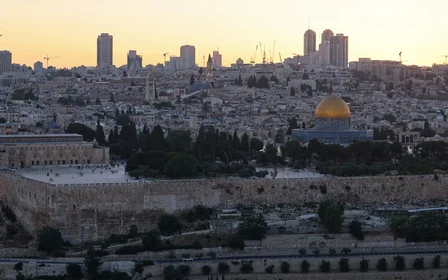
Al-Aqsa Mosque is in peril.
For decades, Muslims have been warned that the status quo surrounding Islam’s third holiest site was becoming increasingly fragile. Today, those warnings no longer seem speculative.
Discussions about altering the site’s administration, expanding non-Muslim religious access, and ultimately transforming its character have moved from the political margins towards the mainstream of Israeli public discourse.
Many Muslims fear that these developments are part of a longer-term project that seeks not merely to oversee Al-Aqsa, but to fundamentally alter it. Whether one believes such an outcome is imminent or distant, the trajectory is clear enough to provoke an urgent question: what is the global Muslim community prepared to do to prevent it?
The question is especially pressing after Gaza. For nearly three years, Muslims around the world have watched Palestinians endure extraordinary levels of violence, displacement, deprivation and destruction.
New MEE newsletter: Jerusalem Dispatch
Sign up to get the latest insights and analysis on Israel-Palestine, alongside Turkey Unpacked and other MEE newsletters
They have watched homes levelled, neighbourhoods erased, families exterminated, and political sovereignty steadily dismantled. Yet despite widespread outrage, protests and expressions of solidarity, the political balance of power has remained largely unchanged.
The significance of Gaza extends beyond Palestine itself. The war has not only recalibrated the limits of permissible violence in international politics; it has also revealed how much suffering can be inflicted upon a Muslim population without provoking a decisive and collective response from the global Muslim ummah.
The answer, it seems, is devastating: an extraordinary amount.
Global paralysis
The Prophet Muhammad is reported to have said that a time would come when nations would gather against Muslims, just as people “invite others to share their dish”. When asked the reason, he replied that it would be due to “love of the world and dislike of death”.
This hadith is strikingly relevant. How else should Muslims understand the paralysis that has characterised much of the global response to Palestine?
Why has solidarity so often stopped at the level of sentiment, outrage and symbolic gestures? Why has the suffering of Palestinians failed to produce the kind of sustained political mobilisation that the scale of the catastrophe would seem to demand?
Perhaps the answer lies not in a lack of concern, but in the priorities that govern contemporary life.
The question is no longer whether Al-Aqsa is in danger. The question is whether Muslims have learned anything from Gaza
Did our careers, businesses and professional ambitions absorb our attention, or was it our attachment to comfort, routine and personal stability? Was it the desire to avoid controversy, scrutiny or inconvenience - or perhaps a fear of legal consequences, social exclusion, professional repercussions or reputational damage?
Modern societies offer countless ways to remain occupied. School commitments, mortgages, gym memberships, family engagements, holidays, dinner parties, and endless digital distractions consume our days.
None of these things are inherently wrong. Yet together, they can cultivate a form of political and moral passivity; a condition in which comfort becomes more valuable than sacrifice, and personal security more important than collective solidarity.
The Prophet’s warning can therefore be understood not simply as a prediction of military weakness, but as a diagnosis of spiritual and political decline. A community excessively attached to worldly security becomes increasingly unwilling to bear costs for justice.
In doing so, it renders itself vulnerable. A people unwilling to risk discomfort for the defence of others will eventually discover that their own personal security is also fragile.
Collective power
The lesson of Gaza is not merely that Palestinians are vulnerable. It is that Muslims everywhere have witnessed the vulnerability of an entire people, but have struggled to translate moral outrage into collective political power.
In that sense, Gaza exposed more than Israeli military power. It exposed Muslim weakness.
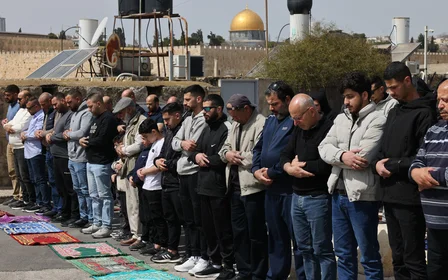
This is why the future of Al-Aqsa Mosque matters so profoundly. If the destruction unfolding in Gaza could not produce a sufficiently powerful response, what confidence should Muslims have that they will respond differently when the status of Al-Aqsa is challenged?
If Palestinians can be subjected to such devastation while the world watches, what lessons might others draw from that experience? These are uncomfortable questions, yet they must be asked.
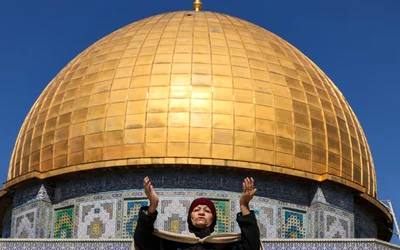
The danger facing Al-Aqsa is not only external. It is also internal. It concerns the condition of the Muslim community itself: its willingness to sacrifice, organise and act.
The past few years should force a reckoning, compelling Muslims to examine not only what was done to Palestinians, but also what they themselves failed to do. This should prompt reflection on the opportunities missed, the responsibilities neglected, and the sacrifices avoided.
Yet reflection alone is insufficient. Regret can become another form of passivity if it is not transformed into action. The purpose of self-criticism is not self-condemnation; it is renewal.
The lesson of Gaza should not be despair, but determination. Muslims cannot change what they failed to do yesterday. They can only decide what they will do tomorrow.
Al-Aqsa may become the next great test - one whose outcome depends not only on the ambitions of those who seek to transform it, but on whether Muslims are prepared to overcome the habits of comfort, fear and political passivity that have defined so much of the present moment.
The question is no longer whether Al-Aqsa is in danger. The question is whether Muslims have learned anything from Gaza.
The views expressed in this article belong to the author and do not necessarily reflect the editorial policy of Middle East Eye.
Middle East Eye delivers independent and unrivalled coverage and analysis of the Middle East, North Africa and beyond. To learn more about republishing this content and the associated fees, please fill out this form. More about MEE can be found here.