Britain must do more to align Israel policy with international law


There have been few moments in modern UK political history when the government has clearly stood up for international law with regard to Palestine. On Tuesday, Foreign Secretary Ed Miliband appeared close to doing that - but how close did he really get?
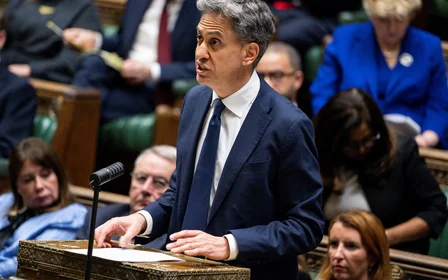
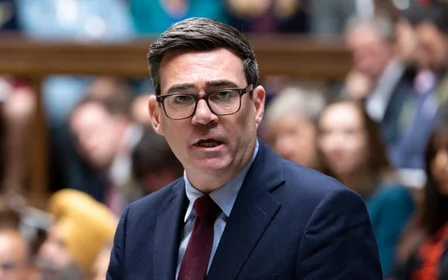
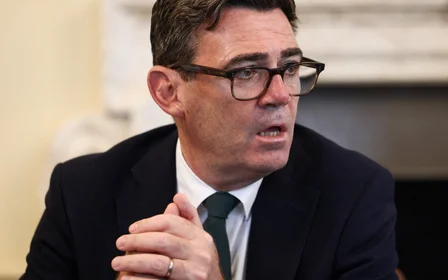
With Prime Minister Andy Burnham sitting behind him, Miliband publicly recognised - just seven weeks into their new roles - the unlawfulness of Israel’s occupation, as reaffirmed by the International Court of Justice (ICJ) in July 2024. It was a marked shift after more than two years of their predecessors’ stalling.
Language was firmer than anything heard from this despatch box in three years. The foreign secretary spoke of “settler terrorism” driving “ethnic cleansing” - the United Nations definition of which he read out - in the occupied West Bank, and cited 65 Palestinian communities displaced since 2023.
As for Gaza, Miliband said aid had been “routinely blocked”, with hospitals and clinics destroyed. He referenced a recent UN inquiry, which found that Israel is committing acts of genocide, and noted that the UK government supports the ICJ “in coming to its determination” on whether genocide has been committed.
Importantly, given the widespread silence on such vital matters, Miliband criticised Israel’s operations since the so-called ceasefire, noting that it has subsequently increased its occupation of Gaza and killed 1,200 Palestinians there.
New MEE newsletter: Jerusalem Dispatch
Sign up to get the latest insights and analysis on Israel-Palestine, alongside Turkey Unpacked and other MEE newsletters
Quite strong on the face of it, so far - particularly given the statements of former Prime Minister Keir Starmer, who, when asked in October 2023 whether cutting off Gaza’s power and water was appropriate, replied that Israel “does have that right”.
Similarly, former Foreign Secretary David Lammy ridiculed assertions that Israel was committing genocide, and gave misleading information to Parliament about it.
The above is therefore welcome progress.
Treating the symptom
For the last three years, and for decades even, supporters of international law and accountability - including many Israelis - have consistently argued that impunity will reign for ethnic cleansing and other atrocities until Israel suffers consequences for its unlawful conduct. How well will the UK’s announced policies deliver?
The ban on settlement products is a significant step forward. Long overdue, it is supported by hundreds of MPs, along with a majority of Labour members and the UK public.
Miliband further banned advertising for settlements, in the wake of the outrageous Great Israeli Real Estate Event held at a London synagogue earlier this year, which marketed land in illegal settlements. He said the government would “take action against specific companies and individuals who provide services such as construction, infrastructure, financing, or real estate for settlement expansion”, adding that “those who finance or facilitate illegal settlements … will face the full force of UK sanctions”.
Furthermore, the government vowed to extend “the existing global human rights regime such that it will enable swifter action to deter settlement expansion”.
Accountability must be pursued for many international crimes, including torture, the targeting of civilians and civilian infrastructure, war crimes and apartheid
All of these measures are welcome, but they fall short of what is required, and legally obligated, in several regards.
Israeli settlements are not a private enterprise that Israel tolerates at its margins. They are a state project planned by the government, financed through state subsidies, connected by state-built roads, and defended by the Israeli military. To sanction the contractor while exempting the government that commissions, funds and protects him is to treat the symptom as though it were the disease.
This is not a matter of opinion. In September 2025, more than 80 organisations, including the International Centre of Justice for Palestinians, published a comprehensive report detailing the Israeli state’s role.
It noted: “Through various incentives, subsidies, and tax benefits, Israel actively encourages companies to operate and invest in the [occupied Palestinian territories]. Business enterprises benefit from access to cheap land taken from Palestinians, unlawfully appropriated water and other natural resources, direct financial subsidisation and tax benefits, and extensive infrastructure built by the Israeli government, including exclusive bypass roads that ensure smooth and speedy travel for Israeli citizens and goods while restricting the movement of Palestinians … Settlements and the settlement economy are intertwined not only with the unlawful occupation economy but with Israel itself.”
Yet Miliband framed his focus on the UK’s relationship “with the occupied territories” - not with the state that occupies them.
Essential duty
For UK policy to truly uphold international law, the government must move a great deal beyond what was announced on Tuesday. The 2024 ICJ advisory opinion was equally clear about what this requires of Britain: third states must “take steps to prevent trade or investment relations that assist in the maintenance of the illegal situation created by Israel in the Occupied Palestinian Territory”.
That obligation points at things this government has not touched upon. British banks continue to finance companies identified as sustaining the occupation, investing billions of pounds yearly in loans and underwriting.
Complicit firms based abroad retain access to UK markets, up to and including the sponsorship of Premier League clubs. They remain eligible for public sector contracts. Each of these is within the government’s power to address, and none was addressed on Tuesday.
Miliband and Burnham should thus deepen and widen the UK’s actions. Despite some hardening of the UK government’s tone regarding Israel’s genocidal conduct in Gaza, Tuesday’s announcements provided little room for optimism about a broader shift in policy.
Miliband continued the Labour government’s focus on the ICJ determining whether a genocide has been taking place. This obscures the essential duty arising from the Genocide Convention, which is to prevent genocide. The ICJ warned in January 2024 that such a risk existed.
Rather than fulfilling its duty to act to prevent genocide in Gaza, the UK continues to transfer F-35 components and other arms to Israel, cooperating with Israel militarily and protecting it diplomatically. One of Burnham’s first acts as prime minister was to laud the Farnborough International Airshow, where Israeli arms companies were exhibiting their lethal weaponry. The UK continues to fly military transport planes to Israel. These are not the acts of a state endeavouring to stop genocide and ethnic cleansing.
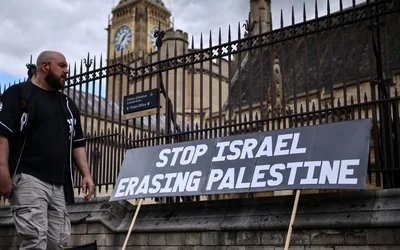
A great many other priority areas must be overhauled for UK policy to uphold international law concerning Palestine, such as investigating Britons who have served in Israel’s armed forces for possible involvement in war crimes, along with those who visit or live in illegal Israeli settlements.
Accountability must be pursued for many international crimes, including torture, the targeting of civilians and civilian infrastructure, war crimes and apartheid - not only for the past three years, but for the decades that preceded them.
Finally, something harder to legislate: read the speech again, and count whose grief and suffering is named, and whose is summarised. This is not peculiar to Miliband; it has been the register of British policy on Palestine since 1917, and it is not a matter of etiquette. Populations whose suffering is described in the passive voice are populations the law arrives late to protect.
Ethnic cleansing is easier to carry out against people who have already been made abstract and dehumanised. Miliband surely knows this from the suffering of his Jewish ancestors.
Anti-Palestinian racism and anti-Muslim hatred are real in Britain, in historic Palestine, and beyond - and they have consequences that are rarely acknowledged. The foreign secretary is respectfully advised to reflect on this as he seeks to promote international law in fairness to all.
The views expressed in this article belong to the author and do not necessarily reflect the editorial policy of Middle East Eye.
Middle East Eye delivers independent and unrivalled coverage and analysis of the Middle East, North Africa and beyond. To learn more about republishing this content and the associated fees, please fill out this form. More about MEE can be found here.