
As elections loom, Naza controversy strikes at the heart of Israel's crisis


How threatening is an Israeli film about war crimes and AI-enabled mass killing in Gaza?
Release it during an Israeli election campaign, and watch almost the entire political establishment fall over themselves to defame, shame and threaten the filmmakers, while defending Israel’s campaign in Gaza as noble, justified and praiseworthy.
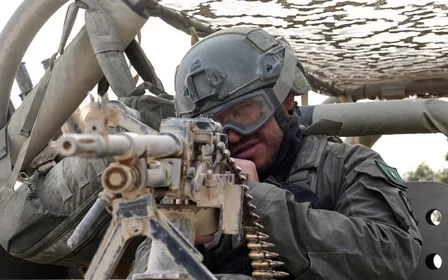
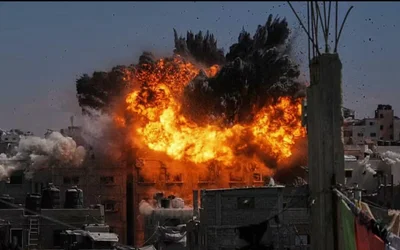
The newly released documentary, Naza, by Israeli filmmakers Yuval Abraham and Rachel Szor, details the elaborate ways in which Israeli military planners have unleashed hell on Palestinians in Gaza since 7 October 2023, with no care for the potential of civilian harm or death. In fact, the aim was a bloodbath.
The reality of this devastation has been copiously documented by Palestinian journalists in Gaza, who are being killed in unprecedented numbers by the Israeli army.
The film builds on the work done by Abraham in recent years, revealing in great detail the systems that Israel has developed to find new targets in its genocidal revenge campaign.
New MEE newsletter: Jerusalem Dispatch
Sign up to get the latest insights and analysis on Israel-Palestine, alongside Turkey Unpacked and other MEE newsletters
These tools will inevitably be sold by Israel to other nations keen to replicate its actions in Gaza, backed by Silicon Valley companies such as Palantir, Amazon and Google, who have become vital backers of Israel’s war machine.
A key Israeli goal after 7 October wasn’t to pinpoint and target Hamas “terrorists” in Gaza, but rather to engage in a campaign of mass killing and destruction. By this definition, Israel’s war aims have been achieved.
No criticism tolerated
My own Israeli sources have confirmed that the Israeli government, military and intelligence felt humiliated after the 7 October Hamas attack, and committed to wreaking carnage on all Palestinians in Gaza.
Rendering normal life impossible in the besieged territory was the goal. Israel still talks about forcibly removing all Palestinians from Gaza.
But Naza exposed dark truths about mainstream Israeli society, from the far right to the supposedly enlightened centre and left, where no criticism of the Israeli military is tolerated. Indeed, the genocidal fervour in Israel cannot be blamed solely on Prime Minister Benjamin Netanyahu.
Although virtually none of Naza’s critics have seen it, and while it’s wholly legitimate to question aspects of the film, I have lost count of the number of pro-Israel and pro-Palestine influencers aiming to slam Abraham and Szor for vastly different reasons.
The main Zionist contenders [in the election] compete for the crown of most deranged when speaking about, and not to, occupied Palestinians
But by appearing amid a heated Israeli election campaign, the first since the 7 October onslaught, the Naza debate has turned into something else: a proxy for Israeli society and how it handles dissent and criticism. On the evidence, it’s failing miserably.
This shouldn’t be surprising. It’s wholly acceptable in Israel to demonise and exclude Arab political parties. Failing to declare loyalty to Zionism is enough to get Arab parties banished.
Netanyahu’s Likud party, whose ideology is little different from the Jewish supremacism espoused by extremist minister Itamar Ben Gvir’s own party, recently announced that it was aiming to exclude all Arab parties from contesting elections, because “there is no place in the Knesset for those who harm [Israeli] soldiers”. On Wednesday, Israel’s Central Elections Committee voted to disqualify several Arab parties, although the move could be quashed in the High Court.
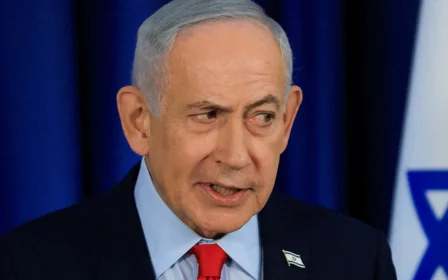
Netanyahu applied the same logic after the release of Naza, saying he hoped to pass legislation that could revoke the citizenship of anyone who defames Israel’s army. It’s a chilling possibility, more akin to a theocracy or dictatorship – and a likely outcome if Netanyahu wins the 27 October election.
Obedience and silence
Yet the profound problems in Israel haven’t been caused solely by Netanyahu. He’s the symptom of a much bigger malaise; an insularity that rewards obedience and silence.
Israel’s identity is tied up with the notion of loyalty to a particular idea of Judaism that has no interest in welcoming those with differing beliefs. Publicly questioning the ethics of the Israeli army, or accusing the state of genocide, is enough to guarantee shunning and death threats.
While much of the world rightly accuses the Israeli military of war crimes and ethnic cleansing in Gaza and the occupied West Bank, I personally witnessed the mainstream Israeli response during a recent visit there: it is either outright denial, or pride. Denial is easier to understand, though no less acceptable.
Having written about Israel and Palestine for nearly 25 years, I’ve never seen a time when Israeli crimes were so brazenly promoted, shared and applauded by mainstream Israeli audiences – not hidden or deemed shameful.
From applauding Israeli soldiers who rape Palestinian prisoners, to pro-war propagandists baying for Palestinian blood, death and displacement, the sickness within Israeli society is amplified by a state that has rarely felt any accountability for its actions.
The forthcoming Israeli elections will likely change none of this. The main Zionist contenders compete for the crown of most deranged when speaking about, and not to, occupied Palestinians. Nobody is calling for an end to ethnic cleansing. It’s often the opposite that’s demanded: more killing and barbarism.
Netanyahu’s potential departure from the scene would be welcome, but liberal Zionists in the West hoping for an image reset will be sorely disappointed. This is Israel. The world can’t unsee the last three years of its depravity across the Middle East.
Very few Israelis or Palestinians now support the two-state solution, hopefully hastening its departure from the scene. Many Americans now oppose Israeli actions, and many American Jews blame Israeli atrocities for a rise in antisemitism.
In my view, the few Israeli Jews who vigorously oppose Israeli crimes should be applauded and protected, from columnist Gideon Levy to Abraham and Szor – but they would all acknowledge that the priority is a cessation and reversal of Israeli activities in the occupied West Bank, Gaza, Lebanon, Iran and beyond.
Elections are vital in any functioning democracy. But what if most voters demand even more bloodshed and colonisation, in the name of Jewish safety?
The views expressed in this article belong to the author and do not necessarily reflect the editorial policy of Middle East Eye.
Middle East Eye delivers independent and unrivalled coverage and analysis of the Middle East, North Africa and beyond. To learn more about republishing this content and the associated fees, please fill out this form. More about MEE can be found here.