How Gulf states are refinancing sovereign wealth funds as Iran war hits revenues


Four Gulf states have rewritten the mandates of their main sovereign wealth funds since January. Officials have presented each change as long-planned institutional maturity.
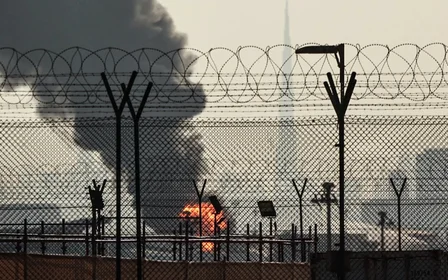
Not one has mentioned the Iran war, but wartime financial pressure signals the changes are being driven by fiscal recalculations as well.
The restructuring accelerates a prewar trend. Since October 2023, Gulf funds have been cutting back spending and shifting towards narrower revenue-generating activities, as global geopolitical turmoil has driven up costs.
In July, the state-owned Kuwait Oil Company put its crude pipeline network into a joint venture with US investment funds Blackstone and KKR, and Canada's Brookfield. The $16bn deal left the Kuwaiti side holding a 51 percent stake and leasing 13 pipelines back for 20.5 years, in exchange for a volume-based tariff. Kuwait took $7.85bn upfront.
Kuwait spent the rest of the year building the law around deals like this, with new economic courts, an amended capital markets statute, and a plan to rewrite a quarter of its legislation by December.
New MEE newsletter: Jerusalem Dispatch
Sign up to get the latest insights and analysis on Israel-Palestine, alongside Turkey Unpacked and other MEE newsletters
A few weeks ago, Kuwait issued a decree to let the treasury borrow from the Future Generations Fund, the pot set aside for the generation after oil. The 1976 law that created it had banned withdrawals outright.
Borrowing is now capped at a tenth of the fund’s net assets, recorded as a debt owed back and repayable once the budget returns to surplus.
Engine of growth
Saudi Arabia, meanwhile, ran a deficit of 160 billion riyals ($42.6bn) in the first half of the year - its worst since 2016. The Public Investment Fund (PIF) was once filled by the state from oil receipts, but there is less to give now, so it raises its own funding.
The PIF sold $2bn of sukuk, a type of financial certificate, in January, and a record $7bn of bonds in May, for which investors bid around $29bn. The money ultimately goes into companies owned by the PIF, which return some of it as dividends and taxes to state coffers.
The pressure is not expected to ease. The ministry's pre-budget statement for 2027 projects a deficit of 190 billion riyals ($50bn), around 3.6 percent of GDP, to be met by further borrowing and by what it calls alternative financing through project finance, infrastructure finance and export credit agencies.
The PIF recently ordered spending cuts across more than 100 of its companies, slowing projects and laying people off, months before the board approved its 2026-30 plan this past April, splitting the fund into three portfolios named Vision, Strategic and Financial. The plan describes the fund moving from being the primary engine of growth to the steward of platforms that let others scale, while it facilitates borrowing and foreign investment.
The funds are betting that the new borrowing will at least push the financial strain temporarily away, while new investment revenues come in before outstanding bills are due
In September, PIF executives reportedly flew to New York with representatives from the AI firm Humain, the King Abdullah Financial District, and real-estate developer Red Sea Global, where they were set to meet investors from mega funds Apollo, Blackstone, Brookfield, Carlyle, KKR, Stonepeak and the US Export-Import Bank.
The Saudis were reportedly looking for foreign backing amid cash constraints at home. Three of those firms had bought Kuwait’s pipelines two months earlier.
For Qatar, companies at home are losing their earning power, and a fund that holds them is more expensive to borrow against. On 20 September, the prime minister carved roughly one-third out of the $580bn sovereign fund into a platform called Doha Investment, holding more than 40 companies, including Qatar Airways and Qatar National Bank.
Its job is to back national champions, deepen capital markets and bring in international capital. It opened with a $60bn pipeline of opportunities, with $38.5bn in infrastructure projects, including public-private partnerships.
Separated, each half carries its own risk profile. Lenders and investors now price Doha Investment on its own rather than against the whole fund, which lets Qatar borrow against its strongest assets on better terms and bring partners into the weaker ones.
Boundaries dissolving
Earlier in 2026, Abu Dhabi folded its wealth fund ADQ, worth $263bn, into a new vehicle called L’imad, with $300bn and more than 250 group subsidiary companies. In July, it brought in Boston Consulting Group and started calling itself an operationally active shareholder, rather than an investor.
Last week, Bloomberg reported that L’imad was preparing to raise money from outside investors for a unit being built to back private equity funds and make its own deals.
The funds have not stopped their outside deals, but refocused them. Earlier in September, the US Federal Communications Commission cleared the way for 49.5 percent foreign ownership of Paramount’s takeover of Warner Bros Discovery. Of that, three Gulf funds would hold 38.5 percent of non-voting equity: PIF with 15.1 percent, L’imad with 12.8 and the Qatar Investment Authority with 10.6. The deal has not closed, and litigation could push completion into 2027.
Days later, Qatar signed a memorandum with JPMorgan Asset Management for a $20bn partnership, $5bn of it lending to mid-sized American firms. JPMorgan then helped to arrange the Qatari state’s own $3bn bond issuance.
A small group of American and Canadian firms now sit across Gulf energy infrastructure and Gulf money at the same time, lending against assets they will not operate while managing the cash those assets generate. The funds were built to hold what oil earned, and are now being run to earn what oil no longer does, while holding up budgets and state-owned companies.
Slowly, the boundaries between sovereign wealth, fiscal financing and private capital are breaking down. The funds are betting that the new borrowing will at least push the financial strain temporarily away, while new investment revenues come in before outstanding bills are due.
If so, the Gulf will have financed its transition with other people’s money, kept its savings, and come out with deeper capital markets and companies run to a standard outsiders are willing to pay for.
Yet a struggling global economy may fail to deliver expected results. If revenues and borrowing do not pick up fast enough, these states will have less room to manoeuvre, and Gulf citizens will likely foot the bill in their livelihoods, which may increase social strains. Social spending cuts, higher taxes and an overall decline in quality of life would follow.
The views expressed in this article belong to the author and do not necessarily reflect the editorial policy of Middle East Eye.
Middle East Eye delivers independent and unrivalled coverage and analysis of the Middle East, North Africa and beyond. To learn more about republishing this content and the associated fees, please fill out this form. More about MEE can be found here.