Replacing Starmer with Burnham is not enough to save Labour


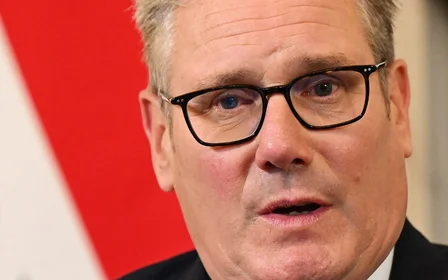
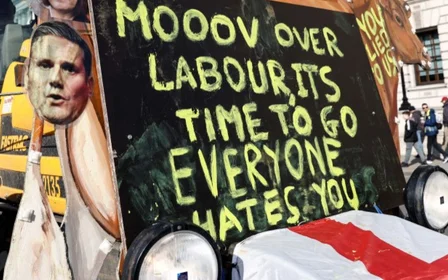
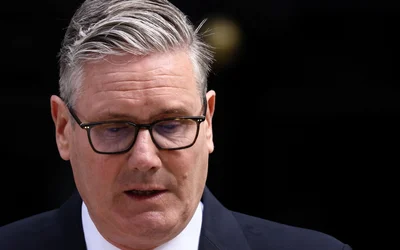
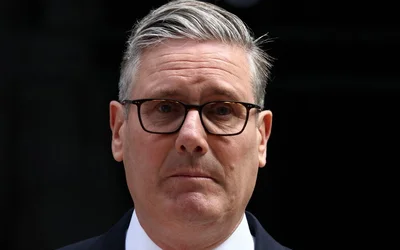
There will be few tears shed at the news of British Prime Minister Keir Starmer’s resignation, except perhaps his own. By the end of his tenure, Starmer could command neither authority nor affection, whether within the Labour Party or across the country at large.
Last month’s local, Senedd and Holyrood election results confronted Labour MPs with the reality that many of them were facing wipeout; as soon as a credible alternative candidate emerged, they were always going to move against Starmer, who had long since become an electoral liability.
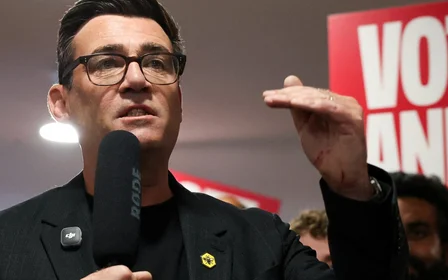
Starmer’s fate was sealed by the return of Andy Burnham to parliament in the Makerfield by-election last week. Burnham won the by-election with nearly 55 percent of the vote, defeating Reform UK candidate Robert Kenyon by a margin of more than 20 percentage points.
The Green Party, meanwhile, saw their support severely squeezed to just 308 votes, or less than one percent, although they will be hoping for a much better showing in the Greater Manchester mayoral election triggered by Burnham’s departure for Westminster.
Labour’s difficulties, however, did not start with Starmer and do not end with his departure. Despite Burnham’s comfortable win in Makerfield - a seat where Reform UK won every council ward that was contested in May - the party’s support remains fragile.
New MEE newsletter: Jerusalem Dispatch
Sign up to get the latest insights and analysis on Israel-Palestine, alongside Turkey Unpacked and other MEE newsletters
It no longer has the hold on its old industrial heartlands that it once did, while under Starmer’s leadership, it has also deeply angered and alienated left-leaning and Muslim voters through its active complicity in the Israeli genocide in Gaza.
Burnham’s supporters in the Parliamentary Labour Party will see the result in Makerfield as evidence that he can reconnect with Labour’s lost voters.
But there is a danger of reading far too much into this one by-election.
Labour has been losing support not only among older, whiter and more socially conservative voters in the former industrial heartlands, but also in younger and more multicultural constituencies, as evidenced by its defeat to the Greens in Gorton and Denton back in February.
Opposite directions
Labour has been losing support on multiple fronts. This leaves Burnham with a strategic quandary: how to reunite the party’s fragmented electoral coalition.
Part of Starmer’s undoing was his preference for chasing after Reform UK voters, leaving Labour vulnerable to attack by the Greens on its left flank. It will take much more than Burnham’s bonhomie and easygoing persona to reunite the party’s base, which has increasingly been pulling in opposite directions in recent years.
Nonetheless, Burnham is clearly Labour’s most popular national figure, and he has momentum behind him. He may yet be installed as Labour leader - and hence prime minister - without a leadership election. It certainly seems that much of the PLP, doubtless wary about airing the party’s dirty laundry in public all summer, would prefer to avoid one.
While Burnham is likely to give Labour a boost in the polls, this will be short-lived if not followed by a tangible change in political direction
A managed transition - or a coronation, if you prefer - could therefore be in the offing.
Wes Streeting, who has never concealed his own leadership ambitions, has already endorsed Burnham. MP Darren Jones has been talked about as a potential alternative candidate of Labour’s Blairite faction, but if he were to run, he would likely lose heavily; Blairism is no more popular with Labour members today than it was when Liz Kendall polled 4.5 percent of the vote as their standard-bearer back in 2015.
MP Al Carns, who recently resigned as armed forces minister, has also been touted as a possible contender, though to call him a rank outsider would be stating it mildly.
From the standpoint of party management, a coronation would certainly be easier than a genuine contest played out in full public view. From a democratic standpoint, however, it is much harder to justify.
Mounting dissatisfaction
Labour’s two years in government have been characterised by drift and mounting public dissatisfaction. A leadership election would force candidates to articulate how they intend to govern, what exactly went wrong under Starmer, and what needs to change.
The reluctance to have one is perhaps an indication that a preoccupation with presentational skill is taking priority over political substance. Too many in the Labour Party appear to assume that discarding Starmer as damaged goods, and replacing him with a more personable figure, will suffice.
But although Labour’s problems run far deeper than Starmer’s own shortcomings, there is a hesitancy to face up to them. The assumptions that brought the Labour Party to this pass in the first place risk going unchallenged.
Burnham undeniably possesses strengths that Starmer lacks. He is a much better communicator and appears far more comfortable engaging with the public. He is also rhetorically sharper than Starmer, even venturing to criticise the power of the financial markets over government policy, though he has tended to retreat when confronted with the implications of such arguments. Burnham’s economic advisers, it should be noted, are orthodox figures.
While Burnham is likely to give Labour a boost in the polls, this will be short-lived if not followed by a tangible change in political direction. There is good reason to be sceptical about this, given that Burnham appears to have cut deals with senior figures on the Labour right. Streeting’s endorsement, in particular, is unlikely to come without a quid pro quo, and it was Labour Together’s Josh Simons, of course, who made way for Burnham in Makerfield. This is bound to impose strict limits on any radicalism Burnham might aspire to.
Starmer’s resignation removes an unpopular leader and prime minister, but it leaves a lot of questions unresolved. What is Labour’s purpose in government? How would it raise living standards? How would it break with the economic orthodoxy that voters increasingly reject? Can the long-term erosion of its popular base be reversed?
A leadership election might force the party to at least begin answering these questions; a coronation would allow it to duck them, sparing some short-term soul-searching, but ultimately to its own long-term detriment.
It may be that Burnham, who has talked about bringing an end to neoliberalism, is better placed than Starmer to address these questions. But even if he is, it is far from apparent that the Labour Party has any real political will to do so. Until it does, Labour’s difficulties are likely to outlast the man who now seems poised to lead it.
The views expressed in this article belong to the author and do not necessarily reflect the editorial policy of Middle East Eye.
Middle East Eye delivers independent and unrivalled coverage and analysis of the Middle East, North Africa and beyond. To learn more about republishing this content and the associated fees, please fill out this form. More about MEE can be found here.