Russia-Ukraine war: How peace efforts are fuelling a diplomatic mess


In recent weeks, a surreal diplomatic ballet has unfolded in international politics, allegedly aimed at ending the war in Ukraine.
It dances around a leaked 28-point peace plan originally attributed to US President Donald Trump, which was likely drafted by someone with zero diplomatic experience. The same plan was later attributed to Russia, in a possible attempt to sabotage it.
It’s unclear who leaked the plan, but there are certainly figures in Washington who do not want the war to end this way. Secretary of State Marco Rubio is among the leading neoconservatives within the Trump administration.
As this was all unfolding, an embarrassing phone conversation between US envoy Steve Witkoff and Russian presidential adviser Yuri Ushakov was leaked to Bloomberg. Moscow speculated that the goal of the leak, in which Witkoff allegedly advised Ushakov on how to pitch a Ukraine peace plan to Trump, was to derail the 28-point proposal.
At the centre of one of (possibly several) negotiating teams on the American side is Army Secretary Daniel Driscoll, a protege of Vice President JD Vance, the leading Maga representative within the Trump administration.
New MEE newsletter: Jerusalem Dispatch
Sign up to get the latest insights and analysis on Israel-Palestine, alongside Turkey Unpacked and other MEE newsletters
The Europeans, in full panic mode, have issued their own plan to end the Ukraine war, in an attempt to contain the damage to their own standing and to Ukrainians. Although better drafted, however, it’s just as unrealistic.
EU policy expert Eldar Mamedov described the European plan as an attempt “to hollow out the American proposal until it becomes unacceptable to Moscow”, noting in a Responsible Statecraft column: “European leaders are offering public lip service to Trump’s efforts to end the war while maneuvering to sabotage any initiative that deviates from their maximalist - and unattainable - goals of complete Russian capitulation in Ukraine.”
Surreal atmosphere
The context of this supposed peace initiative is indeed quite messy.
In this surreal atmosphere, Russia is looking to force Ukraine’s capitulation; the EU is trying to force a total Russian surrender, in hopes of pushing regime change in Moscow; and the US is looking for the EU to cave to the political and economic terms dictated by Washington and Moscow, hoping to pave the way for Trump to earn his long-coveted Nobel Peace Prize.
The situation appears unsustainable. It is not even clear how many negotiating teams the US has involved in this peace effort, nor who to engage on the Russian side. A power struggle is clearly ongoing within the US administration between the Magas and the neocons - those allied with Vance versus those with Rubio.
But while the Russian and American positions reflect - as ugly it might appear - a clear aim based on power politics and business interests, the European plan is, unsurprisingly, detached from reality. European leaders seem incapable of offering a clear vision beyond a ceasefire, with no credible ideas for a lasting security architecture on the continent.
What European chancelleries struggle, or refuse, to understand is that Russia is not interested in simply freezing the conflict. Moscow wants to settle this permanently, and has no interest in repeating the experience of the Minsk agreements.
During their Alaska summit last August, Trump moved towards understanding some of Russian President Vladimir Putin’s arguments, probably for the first time. This does not automatically transform him into a Russian asset at the top of American power, but such cognitive empathy is a basic prerequisite for any successful negotiation.
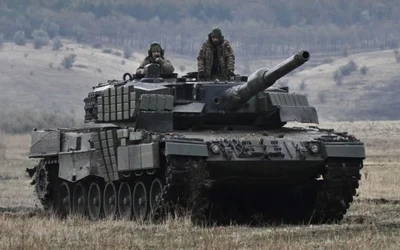
As to diplomatic practice, the first draft of any peace deal is just that; it will be subject to many amendments. Proposals usually reflect the realities on the battlefield, and on that front, the Ukrainians appear to be near the point of collapse.
To make a historical analogy, at the 1945 Yalta Conference, there were several critics of the major concessions granted to the Soviet Union. They did not take into account that the Red Army was then less than 100 kilometres from Berlin, while the Anglo-American armies were stuck in the Ardennes.
Witkoff is set to visit Moscow this week, but there are no encouraging signals coming from the Kremlin about accepting a revised version of Trump’s 28-point plan.
Ukrainian President Volodymyr Zelensky thus faces a terrible dilemma: accept a very bad deal now, or a horrible one in a few months.
The views expressed in this article belong to the author and do not necessarily reflect the editorial policy of Middle East Eye.
Middle East Eye delivers independent and unrivalled coverage and analysis of the Middle East, North Africa and beyond. To learn more about republishing this content and the associated fees, please fill out this form. More about MEE can be found here.