There is no ceasefire in Gaza


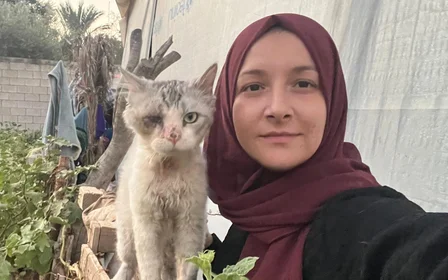
A few days ago, I was walking with a friend through the tents in al-Mawasi, southern Gaza. We were heading to a small cafe I have frequented since my roof became fabric.
The ground beneath us was mud, the winter air heavy, and the faces around us heavier still. We were talking about the formation of the US-led “Board of Peace”, in a phase of the so-called ceasefire that is supposedly defined by stability and reconstruction.
At that exact moment, the sound of an explosion tore through the air. We stopped talking, and I found myself asking: how is this a ceasefire? How can peace be declared while explosions still echo above our heads?
Since the Gaza “ceasefire” was announced, I have wondered what this word actually means. For Palestinians in the enclave, it was supposed to mean at least a brief moment of stability. Instead, very little has changed.
The first thing I imagined when I heard the word “ceasefire” was leaving our tent. In Mawasi, thousands of displaced families are still unable to return to their homes, amid the ongoing presence of the Israeli occupation in nearby communities.
New MEE newsletter: Jerusalem Dispatch
Sign up to get the latest insights and analysis on Israel-Palestine, alongside Turkey Unpacked and other MEE newsletters
Many people believed a ceasefire would be followed by an Israeli withdrawal. That has not happened.
Some houses are partially intact and technically habitable, but they sit near Israeli “yellow zones” - areas marked by daily violations. Families are afraid to return; the threat of a sudden strike or incursion outweighs the comfort of concrete walls.
Many families have chosen a cold tent sinking in rain, rather than a home overshadowed by danger. Mine is one of them.
Ongoing restrictions
We still carry the key to my relatives’ apartment. The door stands, and the walls are still there. But when I recently went back, I heard tanks moving, and explosions close enough to feel in my chest.
Many homes have been bombed since the “ceasefire” supposedly took effect. Around 2,500 more buildings have been razed in that period, which began last October.
If a ceasefire means returning home, it has not happened. If it means the destruction stops, that has not happened either.
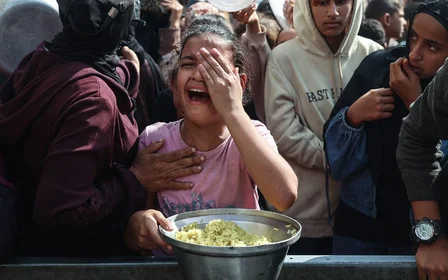
We still live under torn canvas, wait at controlled crossings, and count the names of those killed during this 'ceasefire'
A ceasefire was also supposed to mean freedom of movement - and education was my way out, my narrow opening towards a different future.
During the war - amid tents, blackouts and universities reduced to rubble - we students clung to our studies as if they were a lifeline. Schools became shelters, and campuses were destroyed, but thousands continued studying online. Education was not a luxury; it was a way to preserve meaning in the midst of erasure.
By the end of 2025, I secured university offers abroad. I believed the ceasefire would bring something concrete: open crossings for students with offers abroad, and for patients in need of urgent medical care. Instead, the crossings continue to operate in a limited and unpredictable manner.
Restrictions persist. Procedures remain opaque. Scholarships earned through years of work hang in uncertainty, and patients often face life-threatening delays for treatment abroad. Trapped at the border, thousands of people share this suspended reality.
If even the right to pursue education beyond a war zone remains blocked, what exactly has the ceasefire changed? The war separated us through displacement and danger. At the very least, we hoped the truce would mean the killing would stop.
Stark contradiction
Issa was a friend from the Rafah neighbourhood where I lived before the war. He was his family’s sole provider. During the famine, he risked going to what people here call “death traps” to get aid, despite sniper fire. He survived bombardment, bullets and hunger.
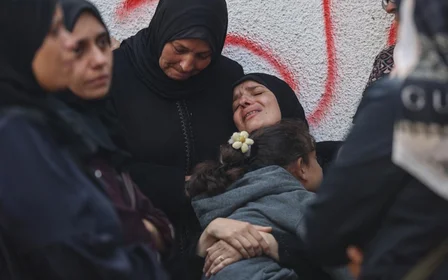
Then came the ceasefire. He had recently become engaged, and for a moment, life seemed to be cautiously resurfacing. But in January, shrapnel struck his chest during an Israeli strike on a market in Mawasi. We buried Issa during the “ceasefire”.
He is not an exception. Since the ceasefire was declared, more than 400 Palestinians have been killed and more than 1,150 injured.
The truce did not end death; it merely reduced its pace. The difference between “less” and “stopped” is not rhetorical. It is the difference between life and burial.
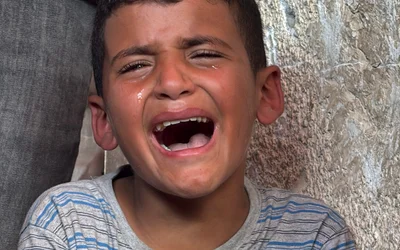
During the war, we expected death, took calculated risks, and understood the brutal logic of survival. Now, we are told the war has stopped - yet our lives have not fundamentally changed. Explosions still punctuate the night, homes continue to fall, and friends are still buried. The only thing that has shifted is the international language, not our reality.
The death toll in Gaza has surpassed 72,000 people, and that does not include thousands who are missing. In late January, the Israeli occupation acknowledged that the Palestinian health ministry’s data on this was accurate, after years of dismissal.
The acknowledgment matters, but recognition is not accountability. It does not rebuild a home. It does not return the dead.
When those responsible for repeated military campaigns and a suffocating blockade participate in frameworks branded as “peace”, the contradiction becomes stark. Peace cannot be declared while structural violence remains intact.
The problem is not simply language; it is the distance between language and lived reality. In Gaza, daily life remains defined by displacement, restriction and loss. We still live under torn canvas, wait at controlled crossings, and count the names of those killed during this “ceasefire”.
A ceasefire is not a media statement; it is the restoration of safety. And when safety is absent - when we cannot return home or move freely, and as we continue to bury our loved ones - then there is no ceasefire in Gaza.
The views expressed in this article belong to the author and do not necessarily reflect the editorial policy of Middle East Eye.
Middle East Eye delivers independent and unrivalled coverage and analysis of the Middle East, North Africa and beyond. To learn more about republishing this content and the associated fees, please fill out this form. More about MEE can be found here.