The UK government has recognised Palestine - real action must follow


The UK government’s recognition of the Palestinian state marks a welcome and historic milestone.
While the UK has taken a substantial step by reaffirming the country’s commitment to a two-state solution in the region and to upholding international law, it is crucial that we do not allow these commitments to remain in name only.
I and countless others have campaigned for this for decades.
Recent polls show nearly half of Britons support recognising Palestinian statehood, and, in July, over 220 MPs from across the political spectrum signed an open letter urging the government to act.
After decades of Palestinian displacement, dispossession and occupation, recognition is a long overdue acknowledgement of their right to self-determination. It will crucially provide Palestinians with a measure of political agency at a time when they are being systematically stripped of their rights and especially when Israel is committing a genocide against them in Gaza.
New MEE newsletter: Jerusalem Dispatch
Sign up to get the latest insights and analysis on Israel-Palestine, alongside Turkey Unpacked and other MEE newsletters
Recognition strengthens negotiations, giving Britain the credibility to press for accountability for war crimes, enforce aid access, and demand a return to meaningful talks.
It sends a clear message that international law cannot be suspended at will, and that the rights of Palestinians are not dependent on the goodwill of their occupier.
Diplomatic weight
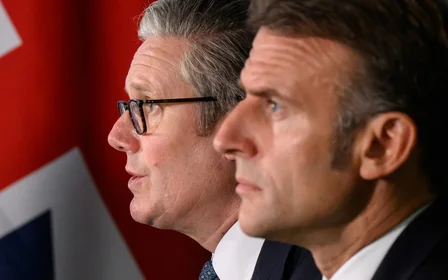
While 147 countries already recognise Palestine, the decisions by the UK, France, and Canada represent the first time that any G7 countries have taken this step. That France and the UK are permanent members of the UN Security Council adds further diplomatic weight.
Yet recognition, if left at that, risks ringing hollow as recognition alone will not change the reality on the ground for Palestinians.
Under the current Israeli government, Palestinians in Gaza continue to face a genocidal war with no ceasefire in sight as Israeli ministers discuss plans to annex parts of the strip and the West Bank.
The occupation of the West Bank is intensifying with unabated settler violence, forced displacement and settlement expansion plans that could make any future Palestinian state virtually impossible.
Last year, Israel’s Knesset passed a resolution that overwhelmingly rejected the any steps towards Palestinian statehood.
In these circumstances, it is clear, recognition must be the beginning, not the end of the UK’s work on Palestine. Recognition must come with concrete demands to protect Palestinian rights and revive a credible prospect of two states living side by side in peace and security.
This must include a full application of international law, beginning with pressure to end the genocide in Gaza. Recognising Palestinian sovereignty also requires us to strongly reject Israeli settlements and annexation while revisiting our trading relationship with Israel.
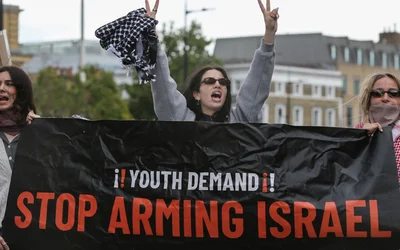
This must include banning all goods from settlements and reassessing arms export licences.
A key juncture
This is a chance to redefine the peace process as conversations can move away from debating whether Palestine can and deserves to become a state.
Our action over the coming weeks will define whether this moment becomes a turning point
With statehood as a given, discussions can now focus on how a functioning state can be constituted with borders, governance, territorial rights, and security.
Given Britain’s role in the region’s history and commitments in 1917 with the Balfour Declaration, we have a particular responsibility to uphold "civil and religious rights" of Palestine’s "existing non-Jewish communities".
More than a century later, that second promise remains unfulfilled.
And now, we are again at a key juncture. While the UK’s recognition of a Palestinian state has been long overdue, we now have the opportunity to go further and reclaim our moral standing, legal responsibility and diplomatic leadership in regards to our actions in the region.
Britain has the opportunity to lead a coordinated recognition by democracies that could create space for accountability, reconstruction and a secure, internationally backed roadmap toward a two-state settlement.
Our action over the coming weeks will define whether this moment becomes a turning point.
The views expressed in this article belong to the author and do not necessarily reflect the editorial policy of Middle East Eye.
Middle East Eye delivers independent and unrivalled coverage and analysis of the Middle East, North Africa and beyond. To learn more about republishing this content and the associated fees, please fill out this form. More about MEE can be found here.