Israel murdered Khamenei, yet the West fails to respect a nation in mourning


As a real-time Persian passion play unfolds across Iraq and Iran for the funeral ceremonies of Ayatollah Ali Khamenei, one question remains paramount: what gives a European settler colony the audacity, the vulgarity, the vicious gall to fly over a sovereign nation’s territory and murder its supreme leader?
The Israeli plot to assassinate Khamenei - which Prime Minister Benjamin Netanyahu tricked US President Donald Trump into joining, despite overwhelming American opposition to waging war on Iran - was just the latest move in a long and blood-soaked tradition, as chronicled in journalist Ronen Bergman’s boastful treatise Rise and Kill First: The Secret History of Israel’s Targeted Assassinations (2018).
Khamenei was a head of a state, and the spiritual leader of millions of Shia Muslims. But amid their vicious occupation of Palestine, the Israelis appear willing to target any head of state; any figure they deem hostile to their settler colony. What’s stopping them from going after future leaders of France, Germany, the UK or even the US?
Where is the outrage? The New York Times covered the murder of Khamenei as if reporting the weather. In fact, when there is inclement weather in the US - too hot or too cold - the country’s media uses larger and scarier fonts than those used to report on Khamenei’s assassination.
There was no outrage, no opposing-side equivalent to Bret Stephens or Thomas Friedman, going on a tirade about the murderous Israelis. Why?
New MEE newsletter: Jerusalem Dispatch
Sign up to get the latest insights and analysis on Israel-Palestine, alongside Turkey Unpacked and other MEE newsletters
Khamenei was the patriarch of a people, a figure whose biography was written long before he died by Gabriel Garcia Marquez in his masterpiece The Autumn of the Patriarch (1975), or later by the great Iranian novelist Mahmoud Dowlatabadi in The Colonel.
He was the supreme leader of a system of governance modelled on an ancient monarchy that predates Islam and Shiism. It is for the people whom he ruled to decide what to think of him.
Death of a patriarch
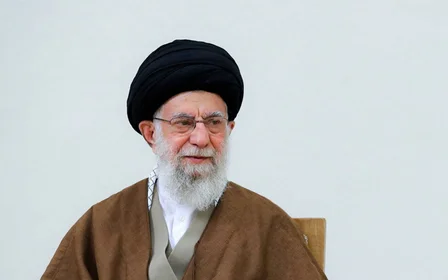
However history may ultimately judge Khamenei, he was the leader that a political culture, a nation, a country, a homeland - for better or for worse - had placed at the head of a state that emerged from a massive social revolution.
To this day, there are millions of people who loved and cherished him like a saint. No doubt, there are millions of others who considered him a tyrant. This issue was, and remains, for Iranians themselves to decide and determine.
It has nothing to do with the rulers of Israel - a murderous gang of psychopathic Zionists still engaged in a genocide in occupied Palestine, alongside barefaced land theft in Lebanon and Syria.
All political leaders have their supporters and their detractors. Neither Trump, nor any head of state anywhere in the world, is unanimously loved or hated. Does that authorise Israeli war criminals to assassinate them?
Will this disgusting, racist thuggery ever end when it comes to reporting on the public grief of other nations?
Khamenei was definitive to an ancient political culture. He should have died the dignified death of a patriarch on the fertile soil of his homeland, whether he was loved or hated by his own people.
Yet after Israel crossed the border to kill Khamenei and his family members, including his 14-month-old granddaughter, the New York Times displayed more concern about a controversial World Cup match between Belgium and the US.
As Khamenei’s funeral preparations were underway in Iran and Iraq, another Zionist stooge, commentator Laura Loomer, called for Israel to attack the mourners, who turned out in their millions.
Those who continue to blindly back Israel have lost the plot. Their hubris prevents them from seeing how the whole world, and Americans in particular, detest them.
Americans were burning Israeli flags during Fourth of July celebrations this year, demanding their country’s independence from the European settler colony. Even some corrupt American politicians appear to have finally gotten the message, and have started running away from Aipac money to save any shred of decency that might still be left in them.
Creative counting
This brings us to the utterly inane reporting of the New York Times from Tehran, which appears to have had only one purpose: to downplay the crowd and divide Iranians between those who “exalted” Khamenei and those who “despised” him - entirely oblivious to the impacts of the the Israeli-instigated military onslaught, and what it has done to Iranians’ perceptions of their own government.
The newspaper began its creative counting by assuring readers that only “tens of thousands” of mourners had gathered. Apparently realising this was ridiculous, with the world fully aware of the millions gathering, they quickly updated it to hundreds of thousands. They are shameless charlatans.
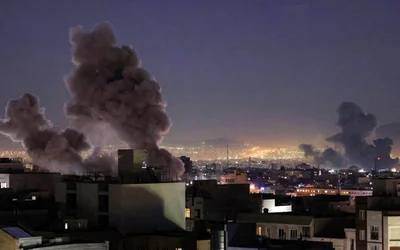
Khamenei was not despised. He was severely criticised, as all heads of state are. But this was before the most despised settler colony on this planet, Israel, instigated a war on the Iranian people, slaughtering scores of innocent children, destroying national infrastructure, and triggering Trump to threaten to annihilate Iranian civilisation. These events changed everything.
Then came this piece of jewellery: "The public mourning ceremonies have been highly choreographed and tightly controlled by the government.” Of course they have been; all state funerals are, whether for former US presidents Ronald Reagan and Jimmy Carter, or the Pope. Was the state funeral of Queen Elizabeth II entirely spontaneous, or was that, too, “tightly controlled” by police and security services?
Will this disgusting, racist thuggery ever end when it comes to reporting on the public grief of other nations?
The New York Times, along with other western media outlets that have produced similar atrocious coverage, appears set on denigrating and diminishing those who are coming out to mourn Khamenei. The subtext is clear: the slain supreme leader was a tyrant who deserved to be killed, and the Israelis did the world - and especially the Iranian people - a favour by murdering him.
Mythic moment
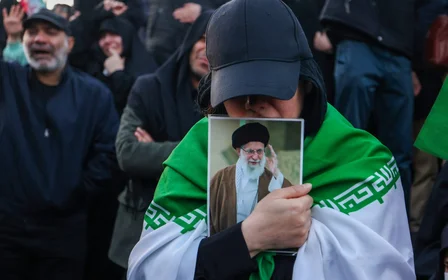
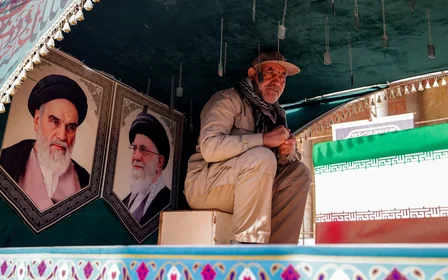
What the New York Times and its ilk failed to see unfolding in front of their eyes at the funeral ceremonies for Khamenei was the mythic moment of a nation and a culture dissolving their shared destiny into a collective consciousness.
This is a classic case of the Persian passion play, known as Ta’ziyeh, whose origins go back to the rituals of mourning for Siavash in the Shahnameh. It was performed on a massive transnational stage, not just in Iran and Iraq, but for millions of Shia watching around the globe. The importance of the event has been lost on those who limit their knowledge to the wretched propaganda pages of the New York Times.
More than 25 years ago, my late colleague, the eminent Polish scholar Peter Chelkowski, and I published a book titled Staging a Revolution, documenting the unfolding of the Shia drama during the Iranian revolution in the late 1970s. What the world has witnessed this month during Khamenei’s funeral is on a vast scale of similar proportions.
Consider the magnitude of the event: a six-day funeral procession that was set to move through Tehran and Qom in Iran, before travelling to Najaf and Karbala in Iraq, and then returning to Iran for burial in Mashhad, with millions of mourners paying their respects.
The New York Times leads American and European media in dividing Iranians into “religious” (regime supporters) and “secular” (opponents), in an apparent attempt to justify Israel’s murderous attack. But this binary does not work, and has never worked, in Iran.
Evidence of this can be found in a filmed conversation with a learned Shia religious leader, who reminisces about an encounter with the late scholar Muhammad Husayn Tabatabai, one of the most learned Shia philosophers of the 20th century and the author of the monumental Quranic commentary al-Mizan.
Here we learn how Tabatabai, while listening to a poem by Iraj Mirza about Imam Husayn and his martyrdom in Karbala, was sobbing inconsolably, and then confessed to his friends - to their utter astonishment - that he would happily give his entire Quranic commentary to Mirza in exchange for just this one poem.
His friends were baffled, as Mirza is notorious for his obscene satirical poetry. Tabatabai gently responded: “Yes, I know; I have his collected works right here in my library, but still.”
The rich, powerful, living and unfolding Iranian and Islamic cultures - from poetry to philosophy, from ancient Iran to the vast tapestry of Islamic intellectual history - are terra incognita for much of the western media, who do not read these works, let alone attempt to explain them to their audiences.
Paying respects
Was Khamenei a hero or a villain, a benevolent saint or a brutish tyrant? First and foremost, this is for Iranians inside their own homeland to decide. It is for Iranian historians, social scientists and critical thinkers to ponder and debate in the years ahead.
The nauseating Israeli officials, and their bought-and-paid-for representatives within the western media sphere who are attempting to turn our daily newsfeeds into sewers of hate, are in no position to do so.
Whatever he was, Khamenei has now rushed to meet his creator to be rewarded for whatever good he did, and punished for any evils he might have committed
Years ago, during a trip to Cairo, I paid my respects at the last resting place of the late shah of Iran. I am no monarchist, and he terrorised my childhood and youth when he ruled my homeland. But I owed his remains in Cairo’s majestic al-Rifai Mosque my dutiful respect.
I prayed for his soul, in my own way, by reciting a famous poem by the 11th-century poet Nasir Khusraw, which we had all learned in high school:
Jesus once saw a murdered man on the road,
He was bewildered and asked:
Who did you kill so you were killed so in ignominy?
Wait till we see who will kill he who killed you!
Don’t bother people by banging on their doors with your fingers,
So no one would bang at your door with a fist!
Today, I think of Khamenei’s passing in a similar way, only this time with a short yet crucial passage from the Holy Quran.
Whatever he was, Khamenei has now rushed to meet his creator to be rewarded for whatever good he did, and punished for any evils he might have committed, as noted in Az-Zalzalah 99:7-8:
So whoever does an atom’s weight of good will see it,
And whoever does an atom’s weight of evil will see it.
The views expressed in this article belong to the author and do not necessarily reflect the editorial policy of Middle East Eye.
Middle East Eye delivers independent and unrivalled coverage and analysis of the Middle East, North Africa and beyond. To learn more about republishing this content and the associated fees, please fill out this form. More about MEE can be found here.